Introduction
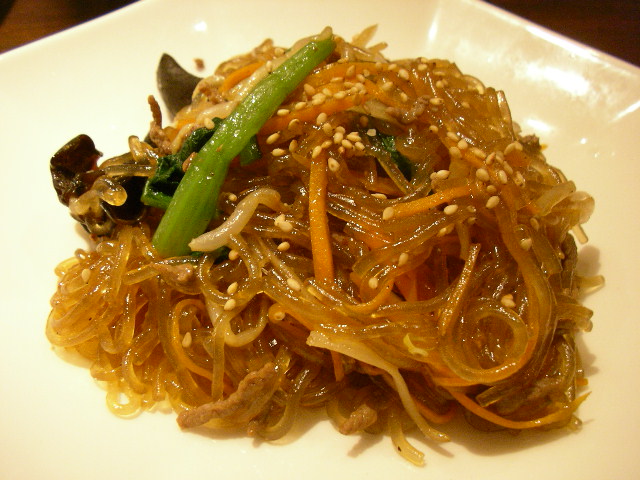
Dangmyeon (당면) are Korean glass noodles made from sweet potato starch. They are best known as the main ingredient of japchae, one of Korea’s most loved festive dishes.
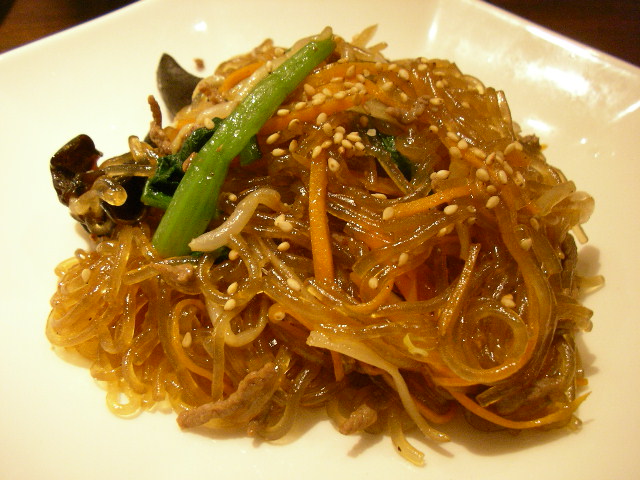
When dry, dangmyeon look grayish and stiff. Once cooked, they turn translucent, glossy, and pleasantly chewy, which is why they are often called “glass noodles.”
In Korea, dangmyeon are a pantry staple. They are used in stir-fries, soups, stews, braised dishes, and even inside Korean blood sausage (sundae).
What is Dangmyeon Made Of?
Traditional dangmyeon are made from sweet potato starch and water. The starch dough is pressed into long strands, cooked, and then dried so the noodles can be stored for a long time.
Because they are made from starch rather than wheat flour, most dangmyeon are naturally gluten-free. However, some brands mix in other starches or additives, so always check the label if you need to avoid gluten.
- Regular dangmyeon – long, thin strands sold in bundles, used for japchae and soups
- Wide dangmyeon (napjak dangmyeon) – flat, broad noodles popular in jjimdak and hot pots
- Quick-cook dangmyeon – pre-cut noodles that soften faster, convenient for busy cooks
What Does Dangmyeon Taste Like?
On their own, dangmyeon have a very mild, almost neutral taste. Their real appeal is texture: bouncy, springy, and slippery.
Because the noodles absorb liquid easily, they soak up whatever sauce or broth they are cooked in. That is why dangmyeon work so well with soy sauce, sesame oil, and savory broths.
Popular Korean Dishes That Use Dangmyeon
Japchae
Japchae is a stir-fried dish of glass noodles, vegetables, and meat seasoned with soy sauce, sugar, and sesame oil. It is served at birthdays, weddings, and holidays such as Lunar New Year and Chuseok.
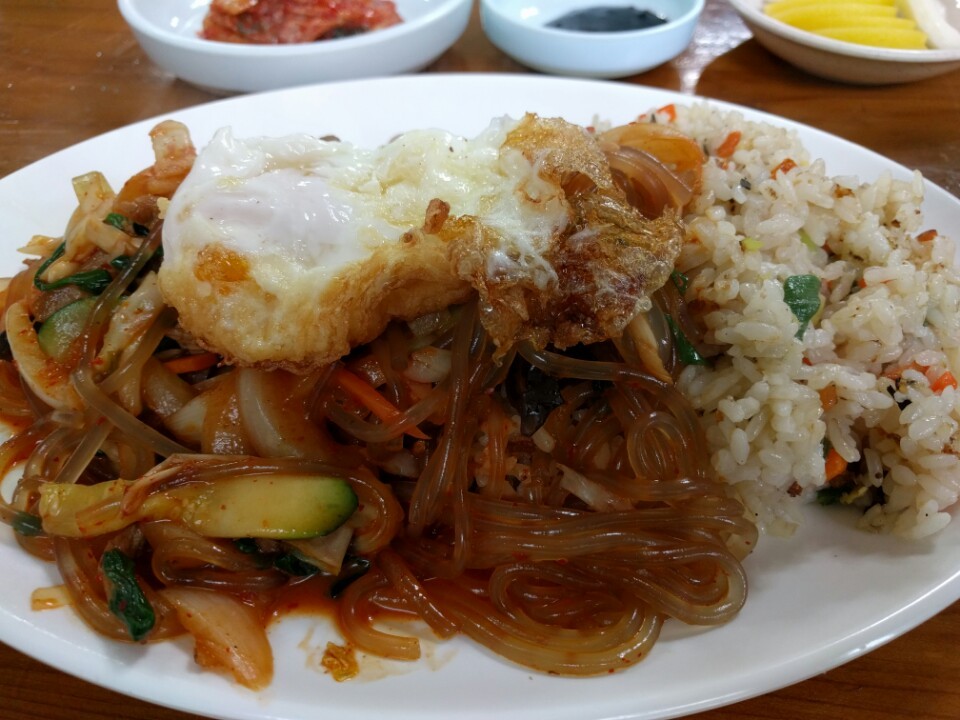
Japchae-bap
Japchae-bap is japchae served over a bowl of rice, often with a slightly saucier, Korean-Chinese style seasoning. It is a common menu item at Korean-Chinese restaurants.
Jjimdak (Braised Chicken)
Jjimdak is chicken braised in a sweet and savory soy-based sauce with potatoes and vegetables. Wide dangmyeon are added near the end so they soak up the rich sauce.
Galbitang and Korean Hot Pots
A handful of dangmyeon is often added to beef short rib soup (galbitang), dumpling soup, and hot pots (jeongol) for extra body and a satisfying chew.
Easy Japchae Recipe (Serves 4)
This home-style japchae keeps the classic method of cooking each vegetable separately, which keeps colors bright and textures distinct.
Ingredients
- 200 g dangmyeon (Korean glass noodles)
- 150 g beef (sirloin or rib-eye), cut into thin strips
- 150 g spinach
- 1 onion, thinly sliced
- 1 small carrot, cut into matchsticks
- 1 red bell pepper, thinly sliced
- 4 shiitake mushrooms, sliced
- 2 garlic cloves, minced
- Cooking oil, salt, and toasted sesame seeds
Japchae Sauce
- 4 tbsp Korean soy sauce (ganjang)
- 2 tbsp sugar
- 2 tbsp sesame oil
- ½ tsp black pepper
Instructions
- Make the sauce. Mix the soy sauce, sugar, sesame oil, and black pepper until the sugar dissolves.
- Season the beef. Toss the beef with 1 tbsp of the sauce and half the garlic. Set aside for 10 minutes.
- Cook the noodles. Boil the dangmyeon according to the package (usually 6–8 minutes) until soft and chewy. Drain, rinse briefly, and cut a few times with kitchen scissors. Toss with 1 tbsp of the sauce.
- Blanch the spinach. Dip it in boiling water for about 30 seconds, rinse in cold water, squeeze out the water, and season with a pinch of salt and the remaining garlic.
- Stir-fry the vegetables separately. In a little oil with a pinch of salt, quickly stir-fry the onion, carrot, bell pepper, and mushrooms one at a time. Move each to a large bowl.
- Cook the beef. Stir-fry the beef over high heat until no longer pink and add it to the bowl.
- Combine. Return the noodles to the pan with the remaining sauce and stir-fry for 1–2 minutes. Add everything to the bowl, mix well by hand or with tongs, and finish with sesame seeds.
Tip: Japchae tastes great warm or at room temperature, making it a perfect dish for potlucks and lunch boxes.
Where to Buy Dangmyeon
Dangmyeon are sold in Korean and Asian grocery stores and online. Look for “Korean glass noodles,” “sweet potato noodles,” or “dangmyeon” on the package.
United States
As an Amazon Associate, I earn from qualifying purchases.
Amazon
https://www.amazon.com/s?k=korean+sweet+potato+glass+noodles+dangmyeon
H-Mart
https://www.hmart.com/search?type=product&q=glass noodles
Canada
Amazon Canada
https://www.amazon.ca/s?k=korean+glass+noodles+dangmyeon
Europe
Amazon UK
https://www.amazon.co.uk/s?k=korean+glass+noodles+dangmyeon
How to Store Dangmyeon
Keep dry dangmyeon in a sealed bag or container in a cool, dry place away from humidity. Stored this way, they last for many months.
Cooked noodles and leftover japchae should be refrigerated in an airtight container and eaten within 2–3 days. Reheat gently in a pan with a splash of water so the noodles soften again.
Conclusion
Dangmyeon are chewy Korean glass noodles made from sweet potato starch. Mild in flavor but wonderful in texture, they are the heart of japchae and a favorite addition to Korean soups, stews, and braises.
If you want to start cooking Korean food at home, a pack of dangmyeon is an easy and versatile ingredient to keep in your pantry.

