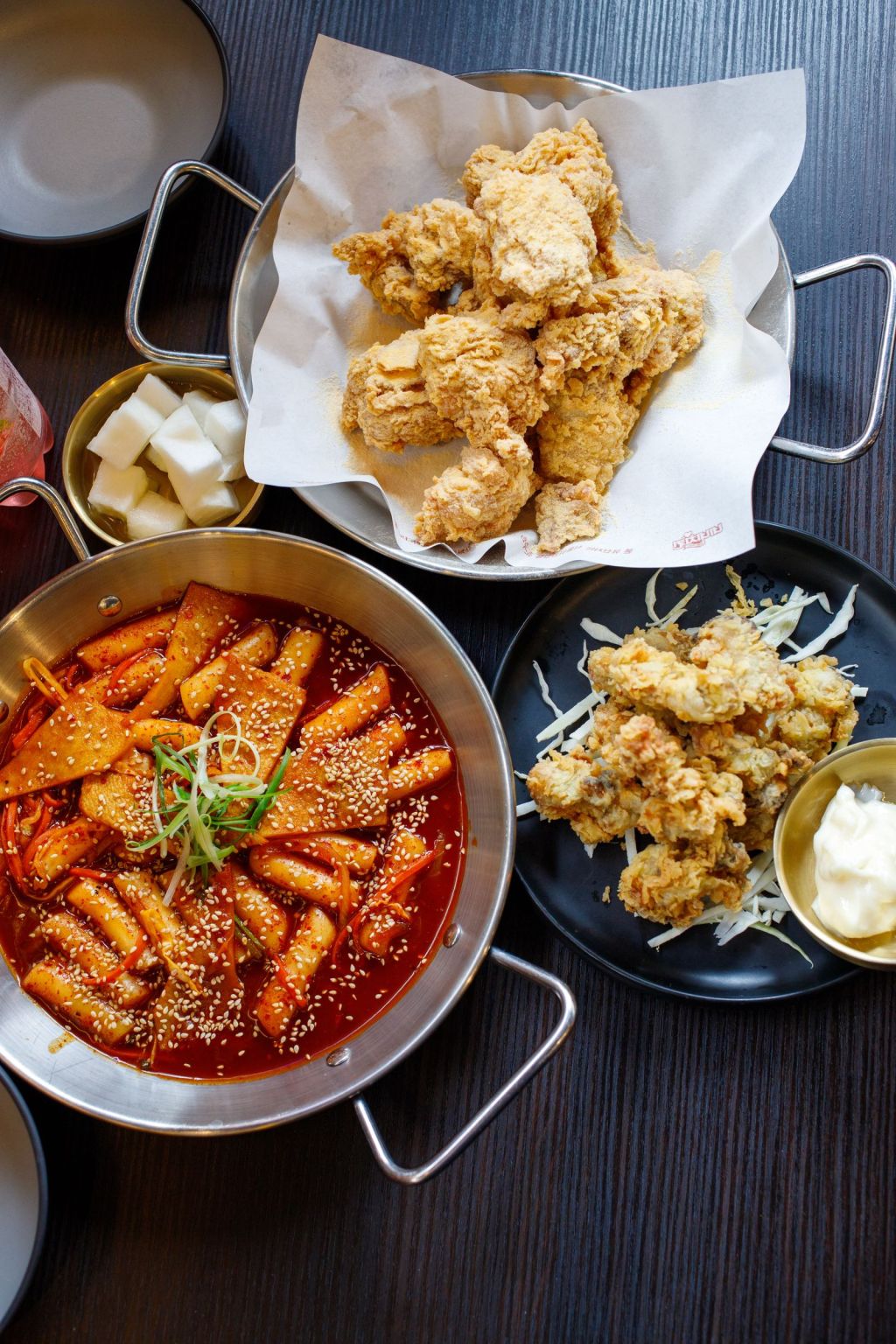
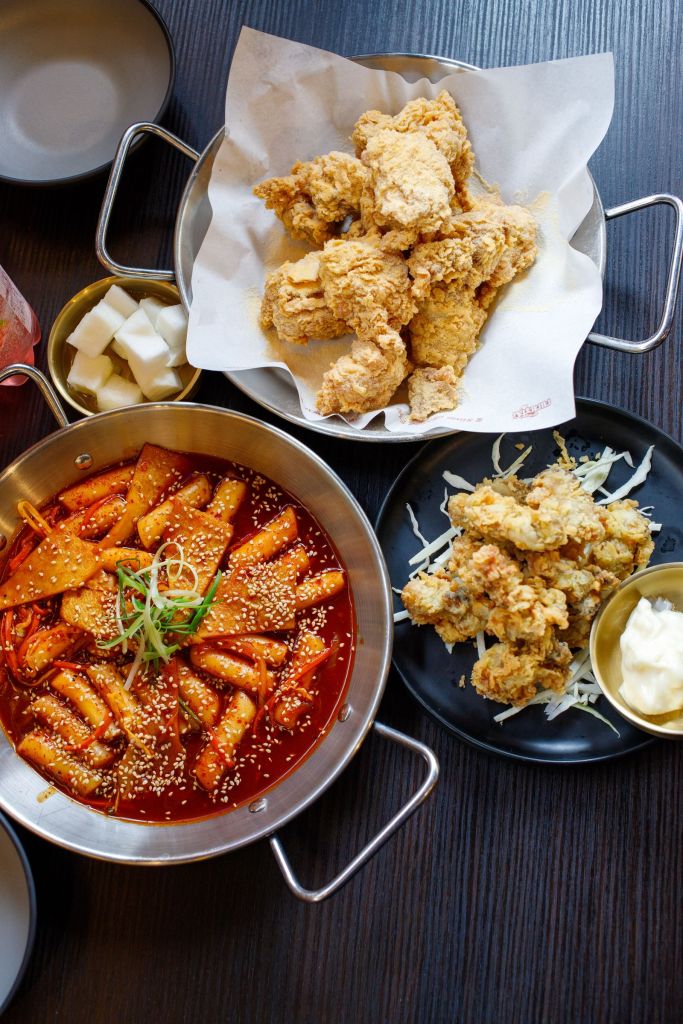
Introduction
Walk down the sauce aisle of a Korean grocery store and you will see a wall of red: tubs of gochujang, bottles of fried chicken sauce, and packets of tteokbokki sauce. They all look alike, they all contain chili, and they are easy to confuse. But each one is made for a different job.
This guide compares the three side by side so you know which one to grab. If you want the full story on the chicken sauce itself, start with our main guide: What is Yangnyeom Sauce? Korean Fried Chicken Sauce Explained.
The Short Answer
- Gochujang is the base ingredient: a thick, fermented chili paste. It is rarely eaten straight; it is used to build other sauces.
- Yangnyeom sauce is a finished glaze for fried chicken: sweet, sticky, garlicky and only mildly spicy. It usually contains gochujang plus ketchup and syrup.
- Tteokbokki sauce is a finished simmering sauce for rice cakes: hotter, saltier and thinned with broth so the rice cakes can cook in it.
Comparison Table
| Gochujang | Yangnyeom Sauce | Tteokbokki Sauce | |
|---|---|---|---|
| What it is | Fermented chili paste (a base ingredient) | Sweet and spicy glaze | Spicy simmering sauce |
| Main ingredients | Chili powder, glutinous rice, fermented soybean powder, salt | Gochujang, ketchup, sugar or syrup, garlic, soy sauce | Gochujang, gochugaru, sugar, soy sauce, broth |
| Taste | Deep, savory, slightly sweet, funky | Sweet first, tangy, gentle heat | Spicy-sweet and savory, bolder heat |
| Heat level | Mild to hot (labeled by grade) | Mild | Medium to hot |
| Texture | Very thick paste | Thick, glossy, sticky | Looser; thickens as it simmers |
| How it is used | Mixed into stews, marinades, dips, bibimbap sauce | Tossed with hot fried chicken, wings, meatballs | Simmered with tteok, fish cakes, noodles |
| Ready to eat? | No, usually diluted and seasoned | Yes | Yes, after simmering |
Gochujang: The Foundation
Gochujang is a fermented paste made from Korean chili powder, glutinous rice, fermented soybean powder and salt. Fermentation gives it a rich, savory depth that plain chili sauce does not have. Because it is so concentrated, Korean cooks almost always loosen it with other ingredients such as sugar, vinegar, garlic, sesame oil or broth.
Learn more in our guide to gochujang (Korean chili paste).
Use gochujang when…
- You are making your own sauce from scratch (bibimbap sauce, marinades, dips)
- You want to add body and heat to a stew such as kimchi jjigae
- You want control over sweetness and salt
Yangnyeom Sauce: The Chicken Glaze
Yangnyeom sauce is what turns plain Korean fried chicken into yangnyeom chicken. Ketchup and syrup make it sweeter and tangier than other red sauces, and lots of garlic gives it punch. It is cooked briefly until glossy, then tossed with hot, crispy chicken so it clings without making the crust soggy.
Use yangnyeom sauce when…
- You are coating fried or air-fried chicken, wings or popcorn chicken
- You want a kid-friendly, mildly spicy sauce
- You need a dipping sauce for fries, nuggets or fried dumplings
Ready to cook? Try our Yangnyeom Chicken Recipe (crispy double-fried) or the no-deep-fry Air Fryer Korean Fried Chicken. Prefer no heat at all? Go for Korean soy garlic chicken sauce.
Tteokbokki Sauce: The Simmering Sauce
Tteokbokki sauce combines gochujang with gochugaru (chili flakes), sugar and soy sauce, then gets thinned with water or anchovy broth. The rice cakes simmer in it, release starch, and the sauce thickens into a sticky coating. It is usually noticeably spicier and saltier than yangnyeom sauce, and it has no ketchup tang.
Use tteokbokki sauce when…
- You are cooking tteokbokki, rabokki (with ramyeon) or fish cakes
- You want a sauce that cooks with the food rather than coating it afterwards
- You like more heat
Full recipe: What is Tteokbokki Sauce? (+ Easy Tteokbokki Recipe).
Can You Swap Them?
Gochujang instead of yangnyeom sauce
Not on its own; it is too thick and salty. Turn it into a quick yangnyeom sauce: 2 tbsp gochujang, 2 tbsp ketchup, 2 tbsp syrup or honey, 1 tbsp soy sauce, 1 tbsp minced garlic and 2 tbsp water, simmered for 2–3 minutes.
Yangnyeom sauce instead of tteokbokki sauce
It works in a pinch, but the result will be sweeter and tangier. Thin it with broth and add a spoon of gochugaru and a little soy sauce to move it closer to tteokbokki flavor.
Tteokbokki sauce instead of yangnyeom sauce
Possible for spicy chicken, but reduce it until thick and add ketchup and syrup so it clings to the crust and tastes less salty.
Where to Buy These Sauces
All three are sold at Korean and Asian grocery stores and online. Gochujang comes in red tubs; ready-made yangnyeom sauce is usually labeled “Korean fried chicken sauce”; tteokbokki sauce comes in bottles or packets, often bundled with rice cakes.
United States
As an Amazon Associate, I earn from qualifying purchases.
Amazon
Korean fried chicken (yangnyeom) sauce
Gochujang
Tteokbokki sauce
H-Mart
Chicken sauce
Gochujang
Tteokbokki sauce
Canada
Amazon Canada
Korean fried chicken sauce
Gochujang
Tteokbokki sauce
Europe
Amazon UK
Korean fried chicken sauce
Gochujang
Tteokbokki sauce
FAQ
Is yangnyeom sauce the same as gochujang?
No. Gochujang is one ingredient inside yangnyeom sauce. Yangnyeom sauce adds ketchup, sweetener, garlic and soy sauce to make a ready-to-use glaze.
Which is spiciest?
Usually tteokbokki sauce, because it combines gochujang with chili flakes. Gochujang heat varies by brand, so check the heat grade on the tub. Yangnyeom sauce is normally the mildest.
Is tteokbokki sauce the same as fried chicken sauce?
They share a gochujang base but are not the same. Chicken sauce is thicker and sweeter with a ketchup tang; tteokbokki sauce is saltier, spicier and designed to be simmered.
Which one should I buy first?
Gochujang. With it plus pantry staples you can make both yangnyeom sauce and tteokbokki sauce at home.
Conclusion
Think of gochujang as the building block, yangnyeom sauce as the sweet glaze for chicken, and tteokbokki sauce as the spicy simmering sauce for rice cakes. Pick by the dish you are making and you will never mix them up again. For everything about the chicken glaze, read the full yangnyeom sauce guide, then put it to work in our yangnyeom chicken recipe.


Leave a Reply