Introduction
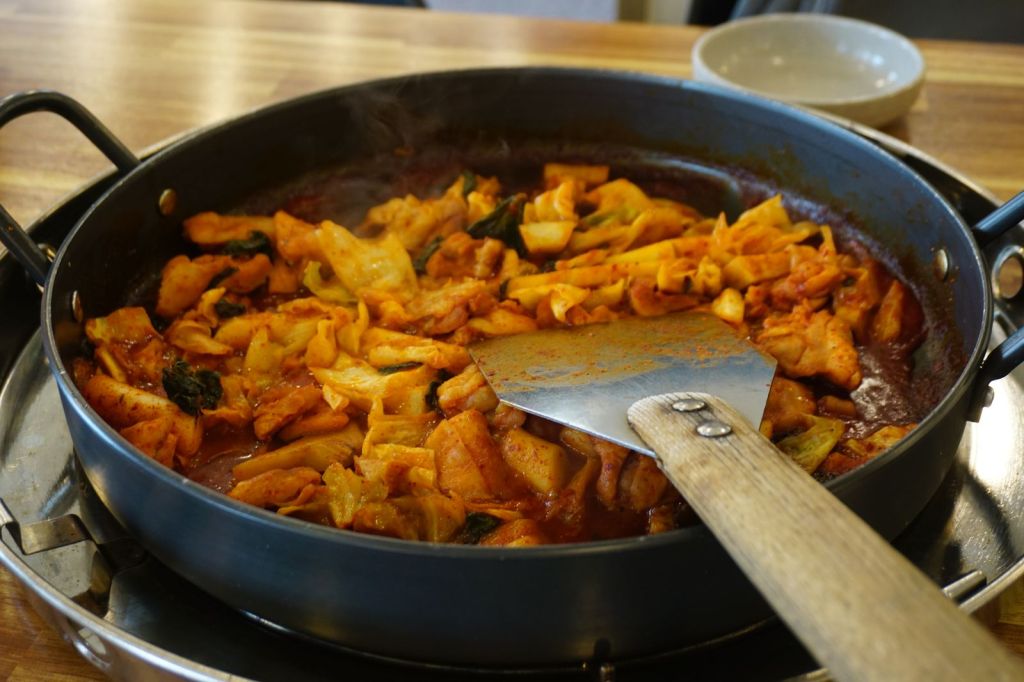
Dakgalbi sauce (닭갈비 양념) is the red, spicy-sweet marinade used for dakgalbi, Korea’s famous stir-fried chicken. The dish is strongly linked with the city of Chuncheon in Gangwon Province, where restaurants cook marinated chicken, cabbage, sweet potato and rice cakes together on a huge round iron pan at the table. The sauce is what makes it addictive: spicy from gochujang and chili flakes, sweet, garlicky and savory.
Dakgalbi Sauce at a Glance
Quick facts
- What it is: a gochujang-based marinade and stir-fry sauce for chicken
- Main ingredients: gochujang, gochugaru, soy sauce, sugar, garlic, ginger
- Taste: spicy, sweet, garlicky, savory
- Main uses: dakgalbi, spicy chicken stir-fries, fried rice finish
What is Dakgalbi Sauce Made Of?
Most homemade and restaurant versions are built on gochujang for body and gochugaru for color and heat, plus soy sauce, sugar or syrup, lots of garlic and a little ginger. Some cooks add a pinch of curry powder for an extra savory note, and grated onion or pear for natural sweetness.
Types of dakgalbi sauce
- Homemade marinade: mixed fresh, used to marinate chicken for 30 minutes to overnight.
- Bottled dakgalbi sauce: ready-made sauces sold by Korean brands; just mix with chicken.
- Grilled (sutbul) style: a thinner marinade for chicken grilled over charcoal instead of pan-fried.
- Mild version: soy-based (ganjang dakgalbi) with little or no chili.
What Does Dakgalbi Sauce Taste Like?
It tastes like a bolder, more garlicky version of gochujang sauce. The first impression is sweet and savory, followed by a building chili heat. Cooking it with cabbage and sweet potato adds more sweetness, and the sauce caramelizes slightly on the hot pan, which gives it a deep, toasty flavor.
Popular Korean Dishes That Use Dakgalbi Sauce
Chuncheon dakgalbi
The classic: boneless chicken, cabbage, sweet potato, green onion, perilla leaves and rice cakes stir-fried together in the sauce.
Cheese dakgalbi
Dakgalbi with a ring or blanket of melted mozzarella, which softens the heat.
Dakgalbi bokkeumbap
When most of the chicken is eaten, rice, chopped kimchi, seaweed and sesame oil are stir-fried in the leftover sauce on the pan. Many people say this is the best part.
Dakgalbi makguksu combo
In Chuncheon, dakgalbi is traditionally paired with makguksu, cold buckwheat noodles, to cool down the spice.
Easy Dakgalbi Recipe (Serves 3–4)
Ingredients
- 600 g (1.3 lb) boneless chicken thighs, cut into bite-size pieces
- 1/4 head cabbage, cut into large squares
- 1 small sweet potato, peeled, halved and sliced 5 mm thick
- 1/2 onion, sliced
- 2 green onions, cut into 5 cm pieces
- 1 cup tteok (cylinder rice cakes), soaked if hard
- 6–8 perilla leaves, sliced (optional)
- 1 tbsp neutral oil
Dakgalbi sauce
- 3 tbsp gochujang
- 2 tbsp gochugaru
- 2 tbsp soy sauce
- 2 tbsp sugar (or 1 tbsp sugar + 1 tbsp rice syrup)
- 1 tbsp matsul or rice wine
- 1 1/2 tbsp minced garlic
- 1 tsp grated ginger
- 1/2 tsp curry powder (optional)
- 1 tbsp sesame oil
- Black pepper to taste
Instructions
- Mix all sauce ingredients in a large bowl. Add the chicken, coat well, cover and refrigerate for at least 30 minutes (up to overnight).
- Heat oil in a large, wide pan or skillet over medium heat. Add the cabbage, sweet potato and onion first, then spread the marinated chicken on top with all the sauce.
- Cook for about 3 minutes without stirring, then stir-fry for 10–12 minutes, scraping the bottom so the sauce does not burn. Add a splash of water if it gets too dry.
- Add the rice cakes and green onions and cook 3–4 more minutes, until the sweet potato is tender and the chicken is cooked through (74°C / 165°F inside).
- Add perilla leaves, toss once and serve straight from the pan.
- Optional: push the leftovers aside, add 1 bowl of cooked rice, a little chopped kimchi, crushed gim and a drizzle of sesame oil, and stir-fry into bokkeumbap.
Tip: Use thigh meat, not breast. It stays juicy during the long stir-fry and soaks up the sauce better.
Where to Buy Dakgalbi Sauce
United States
As an Amazon Associate, I earn from qualifying purchases.
Amazon
Search dakgalbi sauce on Amazon
H-Mart
Search dakgalbi on H-Mart
Canada
Search dakgalbi sauce on Amazon.ca
Europe
Search dakgalbi sauce on Amazon.co.uk
How to Store Dakgalbi Sauce
Homemade sauce without raw chicken keeps in a sealed jar in the fridge for about 1 week. Once it has touched raw chicken, it must be cooked, never reused. Unopened bottled sauce can be stored in a cool pantry; refrigerate after opening and follow the label.
Dakgalbi Sauce FAQ
Is dakgalbi the same as galbi?
No. Galbi means ribs, usually beef or pork. Dakgalbi uses boneless chicken and a spicy gochujang sauce, while classic galbi sauce is soy-based and not spicy.
How spicy is dakgalbi?
Medium-hot for most people. Reduce the gochugaru or add cheese to make it milder.
Can I use dakgalbi sauce on pork or tofu?
Yes. It works well with pork, squid, tofu and mushrooms. Adjust cooking time for the protein.
Conclusion
Dakgalbi sauce turns simple chicken and vegetables into one of Korea’s most loved shared meals. Mix a batch, marinate overnight, and do not forget the fried rice at the end. If you love spicy-sweet chicken, also try our yangnyeom sauce for fried chicken.


Leave a Reply