Introduction
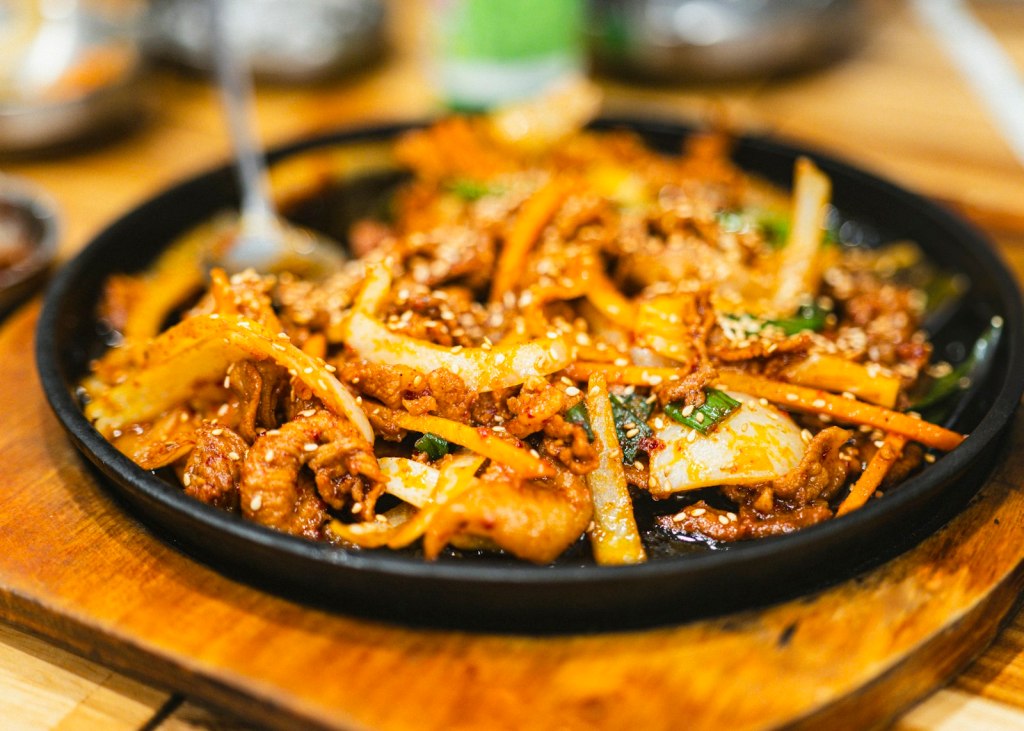
Jeyuk sauce (제육볶음 양념) is the red marinade used for jeyuk bokkeum, spicy stir-fried pork. “Jeyuk” means pork and “bokkeum” means stir-fried. It is one of the most common lunch dishes in Korea, served at home, in office cafeterias and at simple restaurants with a bowl of rice and lettuce for wrapping. The sauce is quick to mix and uses pantry staples you may already have.
Jeyuk Sauce at a Glance
Quick facts
- What it is: a spicy-sweet marinade for thinly sliced pork
- Main ingredients: gochujang, gochugaru, soy sauce, sugar, garlic, ginger, sesame oil
- Taste: spicy, sweet, savory, with a smoky edge when stir-fried hot
- Main uses: jeyuk bokkeum, ssambap (lettuce wraps), rice bowls, spicy grilled pork
What is Jeyuk Sauce Made Of?
The base is gochujang mixed with gochugaru, soy sauce and sugar. Garlic and ginger are essential because they balance the richness of pork. Many cooks add grated onion or Korean pear for sweetness and tenderness, and a splash of cooking wine to reduce porky smells.
Types of jeyuk sauce
- Gochujang jeyuk: the classic red, saucy version.
- Gochugaru-heavy jeyuk: less paste, more chili flakes, for a drier, smokier stir-fry.
- Ganjang (soy) jeyuk: a non-spicy soy-sauce marinade, close to bulgogi.
- Bottled spicy pork sauce: ready-made marinades sold by Korean brands.
What Does Jeyuk Sauce Taste Like?
Raw, it is sweet, salty and spicy, a bit like a thicker gochujang dipping sauce. Once stir-fried over high heat with pork fat and onion, the sugars caramelize and the sauce becomes deeper, slightly smoky and very savory. Heat level is medium; it is meant to be eaten with plenty of rice.
Popular Korean Dishes That Use Jeyuk Sauce
Jeyuk bokkeum
Thin pork slices stir-fried with onion, green onion and sometimes cabbage or carrot.
Jeyuk deopbap
Spicy pork served over a bowl of rice, a popular one-plate lunch.
Jeyuk ssambap
Pork wrapped in lettuce and perilla leaves with rice and a dab of ssamjang.
Ojingeo-jeyuk (osam bulgogi)
A combination of squid and pork stir-fried in a similar spicy sauce.
Easy Jeyuk Bokkeum Recipe (Serves 2–3)
Ingredients
- 500 g (1.1 lb) thinly sliced pork shoulder or pork belly
- 1 onion, sliced
- 2 green onions, cut into 5 cm pieces
- 1/2 carrot, thinly sliced (optional)
- 1 green or red chili, sliced (optional)
- 1 tbsp neutral oil
- Toasted sesame seeds, to finish
Jeyuk sauce
- 2 tbsp gochujang
- 1–2 tbsp gochugaru
- 2 tbsp soy sauce
- 1 tbsp sugar
- 1 tbsp rice syrup or honey
- 1 tbsp matsul or rice wine
- 1 tbsp minced garlic
- 1 tsp grated ginger
- 1 tbsp sesame oil
- A pinch of black pepper
Instructions
- Cut the pork into bite-size pieces. Mix all sauce ingredients in a bowl.
- Add the pork to the sauce and massage it in. Marinate for 20–30 minutes (or up to overnight in the fridge).
- Heat oil in a large pan over medium-high heat. Add the pork and spread it out. Stir-fry for 5–6 minutes until no pink remains.
- Add the onion and carrot and stir-fry 3–4 minutes until the onion softens and the sauce turns glossy. Make sure the pork is fully cooked (at least 63°C / 145°F; thin slices cook through quickly).
- Add green onion and chili, toss for 30 seconds, then turn off the heat.
- Sprinkle with sesame seeds and serve with rice and lettuce leaves.
Tip: For a restaurant-style smoky flavor, let the pork sit without stirring for 30–60 seconds at a time so the sauce lightly chars on the pan.
Where to Buy Jeyuk Sauce
United States
As an Amazon Associate, I earn from qualifying purchases.
Amazon
Search Korean spicy pork sauce on Amazon
H-Mart
Search spicy pork sauce on H-Mart
Canada
Search Korean spicy pork sauce on Amazon.ca
Europe
Search Korean spicy pork sauce on Amazon.co.uk
How to Store Jeyuk Sauce
Mix a double batch of sauce and keep it in a clean, sealed jar in the fridge for up to 1 week. Marinated raw pork can be refrigerated for 1–2 days, or frozen flat in a freezer bag for about 1 month; thaw in the fridge before cooking.
Jeyuk Sauce FAQ
Is jeyuk bokkeum the same as spicy pork bulgogi?
They are very similar, and many English menus use “spicy pork bulgogi” for jeyuk bokkeum. Classic bulgogi itself is beef in a non-spicy soy marinade.
Which pork cut is best?
Thinly sliced pork shoulder (moksal or apdari) is the most common. Pork belly is richer; leaner cuts can be used but may dry out.
Can I make it less spicy?
Yes. Leave out the gochugaru and use only gochujang, or add a little more sugar and grated onion.
Conclusion
Jeyuk sauce is a simple mix of gochujang, chili flakes, soy, sugar, garlic and ginger, and it turns ordinary sliced pork into one of Korea’s best rice dishes. Make a batch, keep it in the fridge, and you are 15 minutes away from dinner. For a chicken version of a spicy Korean stir-fry, see our dakgalbi sauce guide.


Leave a Reply