Introduction
Cheonggukjang (청국장) is a Korean fermented soybean paste that is ready in just a few days, compared with the months or years needed for doenjang. Cooked whole soybeans are kept warm until they ferment, turn sticky and develop a strong, earthy smell. It is famous for that pungent aroma, but in a bubbling winter stew it becomes deeply savory, nutty and comforting. Many Koreans also value it as a nutritious, probiotic-rich food.
Cheonggukjang at a Glance
Quick facts
- What it is: a quickly fermented whole or coarsely mashed soybean paste
- Main ingredients: soybeans, often with salt, garlic or chili added after fermentation
- Taste: earthy, nutty, savory and strongly aromatic
- Main uses: cheonggukjang jjigae, bibimbap, powdered supplements
What is Cheonggukjang Made Of?
Soybeans are soaked, boiled or steamed, then kept in a warm place, traditionally wrapped with rice straw, for about 2–3 days. Bacteria of the Bacillus subtilis group, which naturally live on rice straw, ferment the beans and produce sticky threads. The beans are then partly mashed and usually mixed with salt (and sometimes garlic and chili) so they keep longer.
Types of cheonggukjang
- Salted paste: the common block or tub form used for stew.
- Frozen cheonggukjang: portioned blocks sold in the freezer section abroad.
- Unsalted / raw: eaten like natto with rice; must be kept cold.
- Powder or pills: dried cheonggukjang sold as a health food.
What Does Cheonggukjang Taste Like?
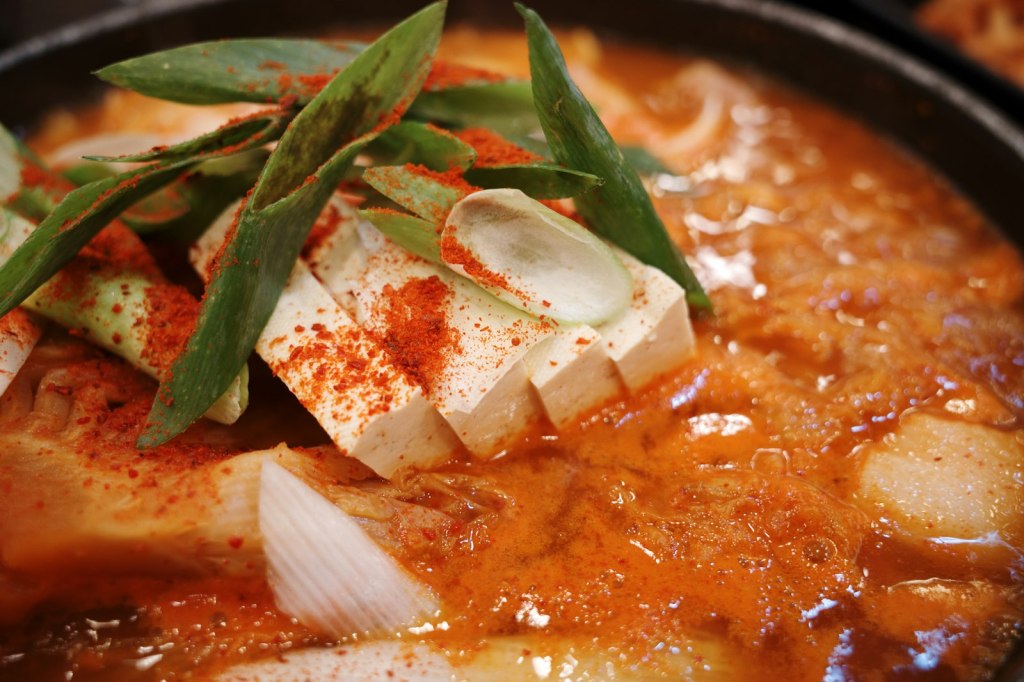
The smell is strong and funky, often compared to aged cheese or natto. The taste is milder than the smell: nutty, beany and rich in savory flavor, with a soft texture from the whole beans. Simmered with kimchi, tofu and pork, it makes one of Korea’s most soulful stews.
Popular Korean Dishes That Use Cheonggukjang
Cheonggukjang jjigae
The classic stew with tofu, kimchi and vegetables. Recipe below.
Cheonggukjang bibimbap
Rice mixed with vegetables and a ladle of thick cheonggukjang stew.
Raw with rice
Unsalted cheonggukjang stirred with soy sauce, green onion and sesame oil over rice, similar to natto.
Easy Cheonggukjang Jjigae Recipe (Serves 2–3)
Ingredients
- 4 tbsp cheonggukjang paste
- 1 tsp doenjang (optional, for depth)
- 100 g (3.5 oz) pork belly or shoulder, thinly sliced (or skip for a lighter stew)
- 1/2 cup well-fermented kimchi, chopped
- 1/2 block firm tofu, cubed
- 1/2 zucchini and 1/2 onion, diced
- 1 tsp minced garlic; 1 tsp gochugaru
- 2 cups anchovy-kelp broth or water
- 1 green onion and 1 green chili, sliced
Instructions
- In a small pot (an earthenware ttukbaegi is traditional), stir-fry the pork and kimchi over medium heat for 3–4 minutes until the pork is cooked.
- Add the anchovy-kelp broth, onion, zucchini, garlic and gochugaru. Bring to a boil and simmer 5 minutes.
- Dissolve the cheonggukjang and doenjang into the stew, add the tofu and simmer another 3–4 minutes.
- Add the green onion and chili, taste, and season with a little salt or soy sauce only if needed. Serve bubbling hot with rice.
Tip: Add the cheonggukjang near the end and do not boil it for a long time. Short cooking keeps its nutty flavor and tames the smell less than you might fear.
Where to Buy Cheonggukjang
United States
As an Amazon Associate, I earn from qualifying purchases.
Amazon
Search cheonggukjang on Amazon
H-Mart
Search cheonggukjang on H-Mart
Canada
Search cheonggukjang on Amazon.ca
Europe
Search cheonggukjang on Amazon.co.uk
How to Store Cheonggukjang
Keep cheonggukjang refrigerated in a tightly sealed container, ideally inside a second bag or box to contain the smell, and use it by the label date. For longer storage, divide it into stew-size portions and freeze; it can go straight from the freezer into the pot.
Cheonggukjang FAQ
What is the difference between cheonggukjang and doenjang?
Cheonggukjang ferments for only a few days and keeps the beans mostly whole, with a stronger smell. Doenjang is made from meju blocks aged in brine for months, producing a smooth, salty paste.
Is cheonggukjang the same as natto?
They are close relatives: both are soybeans fermented by Bacillus bacteria and both are sticky. Cheonggukjang is usually more mashed, often salted and mostly cooked in stews, while natto is eaten raw.
Why does cheonggukjang smell so strong?
Fast fermentation breaks down soybean proteins and creates strong-smelling compounds. Open a window while cooking; the flavor in the bowl is much gentler than the aroma.
Conclusion
Cheonggukjang is Korea’s boldest soybean paste: quick to ferment, strong to smell and wonderfully savory in a hot stew. If you already love doenjang jjigae, cheonggukjang jjigae is the next step. Pair it with rice and kimchi for a classic Korean winter meal.


Leave a Reply