Introduction
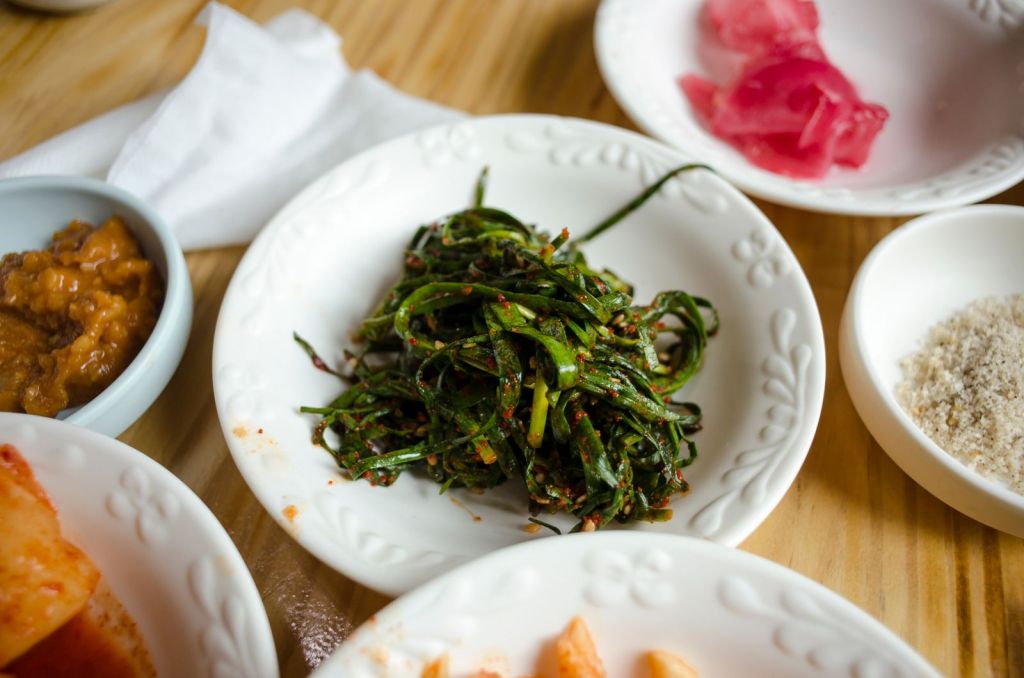
Parae (파래) is a fine, silky green seaweed often called green laver in English (scientific name Capsosiphon fulvescens). It grows on rocks along Korea’s southern and southwestern coasts and is harvested in the cold months, roughly from late fall to early spring, which makes it a true Korean winter delicacy. Parae has thin, hair-like strands, a vivid green color and a fresh, sweet sea aroma. Koreans love it in tangy radish salads, in oyster soup and in crispy pancakes.
Parae at a Glance
Quick facts
- What it is: a soft green seaweed (green laver) harvested in winter
- Main ingredients: 100% seaweed, sold fresh, frozen or dried
- Taste: fresh, briny, slightly sweet with a soft, slippery texture
- Main uses: parae muchim (seasoned salad), gul parae-guk (oyster soup), parae jeon, rice dishes
What is Parae Made Of?
Parae is a single ingredient: the seaweed itself. Fresh parae is sold in wet clumps or round bundles, and outside Korea it is easiest to find frozen or dried. It is different from gim (laver pressed into sheets) and from miyeok (sea mustard, used for birthday soup). Parae is finer and softer than both and needs very little cooking.
Types of parae
- Fresh parae: available in Korean markets in winter; the best for salads.
- Frozen parae: washed and portioned; easiest to find abroad.
- Dried parae: rehydrates in a few minutes; good for soups and pancakes.
- Parae gim: roasted seaweed sheets mixed with green parae for extra aroma.
What Does Parae Taste Like?
Parae tastes like a clean ocean breeze: lightly salty, a little sweet and very green. The texture is soft and slippery with a gentle chew. With vinegar and chili it tastes bright and refreshing; in hot soup it melts into silky ribbons and adds a deep sea flavor.
Popular Korean Dishes That Use Parae
Mu parae muchim
Parae and shredded Korean radish tossed in a sweet-sour dressing. Recipe below.
Gul parae-guk
A light winter soup of fresh oysters and parae seasoned with soup soy sauce and garlic.
Parae jeon
Thin, crispy pancakes with parae and sometimes oysters or shrimp, served with soy dipping sauce.
Parae bibimbap
Warm rice mixed with seasoned parae, sesame oil and a fried egg.
Easy Mu Parae Muchim Recipe (Serves 3–4 as a side dish)
Ingredients
- 7 oz (200 g) fresh or thawed frozen parae
- 5 oz (150 g) Korean radish (mu) or daikon, cut into thin matchsticks
- 1/2 tsp salt, for the radish
- Coarse salt, for washing the seaweed
Dressing
- 2 tbsp vinegar
- 1 tbsp sugar
- 1 tsp soup soy sauce or fish sauce
- 1 tsp minced garlic
- 1/2–1 tsp gochugaru (optional)
- 1 tsp toasted sesame seeds
Instructions
- Put the parae in a large bowl of cold water with a handful of coarse salt. Swish gently, lift it out and repeat 3–4 times with fresh water, picking out any small shells or debris. Finish with a rinse in plain cold water.
- Squeeze out the water firmly and cut the parae into shorter lengths with kitchen scissors.
- Toss the radish with 1/2 tsp salt and let it sit for 10 minutes. Squeeze out the liquid.
- Mix the dressing ingredients until the sugar dissolves.
- Combine the parae and radish, pour over the dressing and mix gently with your hands. Taste and adjust with a little more vinegar or sugar.
- Sprinkle with sesame seeds and serve right away, chilled.
Tip: Dress parae just before serving. Vinegar slowly turns the bright green color dull and the texture soft.
Where to Buy Parae
United States
As an Amazon Associate, I earn from qualifying purchases.
Amazon
Search Korean green laver (parae) on Amazon
Search dried green laver seaweed on Amazon
H-Mart
Search green laver on H-Mart
Canada
Search Korean green laver on Amazon.ca
Europe
Search Korean green laver on Amazon.co.uk
How to Store Parae
Fresh parae is very perishable: keep it wrapped in the refrigerator and use it within 1–2 days. For longer storage, wash, squeeze and freeze it in single-use portions for up to about 3 months. Dried parae should be sealed airtight and kept in a cool, dry, dark place. Dressed parae muchim is best eaten the same day.
Parae FAQ
Is parae the same as gamtae or maesaengi?
No. They are all fine green winter seaweeds and look similar, but they are different species with slightly different textures. Maesaengi is even finer and is mostly used in soup.
Do I need to cook parae?
Clean fresh or frozen parae is commonly eaten raw in muchim. If you prefer, blanch it for 5–10 seconds in boiling water, then cool in ice water before dressing.
Why is my parae gritty?
It was not washed enough. Wash it in several changes of salted water and lift it out each time so sand stays at the bottom of the bowl.
When is parae in season?
In Korea, fresh parae appears in markets during the cold months, peaking around midwinter.
Conclusion
Parae brings a fresh taste of the Korean winter sea to the table, and mu parae muchim takes only 15 minutes. If you enjoy Korean seaweed, explore our guides to gim and dasima, and dress your salads with Korean sikcho vinegar.


Leave a Reply