Introduction
If you have eaten at a Korean BBQ restaurant, you have probably seen a bowl of thin, curly green onion strands coated in a glossy red dressing. That side dish is pajeori (also called pa-muchim), and the dressing that makes it so addictive is a quick mix of chili flakes, soy sauce, vinegar, sugar and sesame oil. Pajeori dressing is sharp, sweet and spicy all at once, and it is designed to cut through the richness of grilled pork belly. Here is what goes into it and how to make it at home.
Pajeori Dressing at a Glance
What it is
- A Korean dressing for shredded green onion salad (pajeori)
Main ingredients
- Gochugaru, soy sauce, vinegar, sugar, sesame oil, sesame seeds
Taste
- Tangy, sweet, nutty and lightly spicy
Main uses
- Green onion salad for samgyeopsal and other Korean BBQ, lettuce salads, topping for grilled meat
What is Pajeori Dressing Made Of?
Pajeori dressing is built on a few pantry staples. Recipes vary from restaurant to restaurant, but most include:
- Gochugaru: Korean chili flakes for color and gentle heat.
- Soy sauce: salt and savory depth.
- Vinegar: the key to its refreshing, sharp flavor.
- Sugar: balances the vinegar and the bite of raw onion.
- Sesame oil and sesame seeds: nutty aroma.
Common variations:
- Red (spicy) pajeori dressing: the classic BBQ version with gochugaru.
- Soy-only dressing: no chili, for kids or anyone avoiding heat.
- Fish sauce version: a splash of fish sauce replaces some soy sauce for extra umami.
What Does Pajeori Dressing Taste Like?
Think of a bright vinaigrette with a Korean twist. The first taste is tangy and sweet, followed by the toasty flavor of sesame and a mild warmth from the chili flakes. On green onions it tames their raw sharpness while keeping them crisp, which is exactly what you want next to fatty grilled pork.
Popular Korean Dishes That Use Pajeori Dressing
Pajeori (Green Onion Salad)
The original use: finely shredded green onions tossed with the dressing just before serving.
Samgyeopsal and Korean BBQ
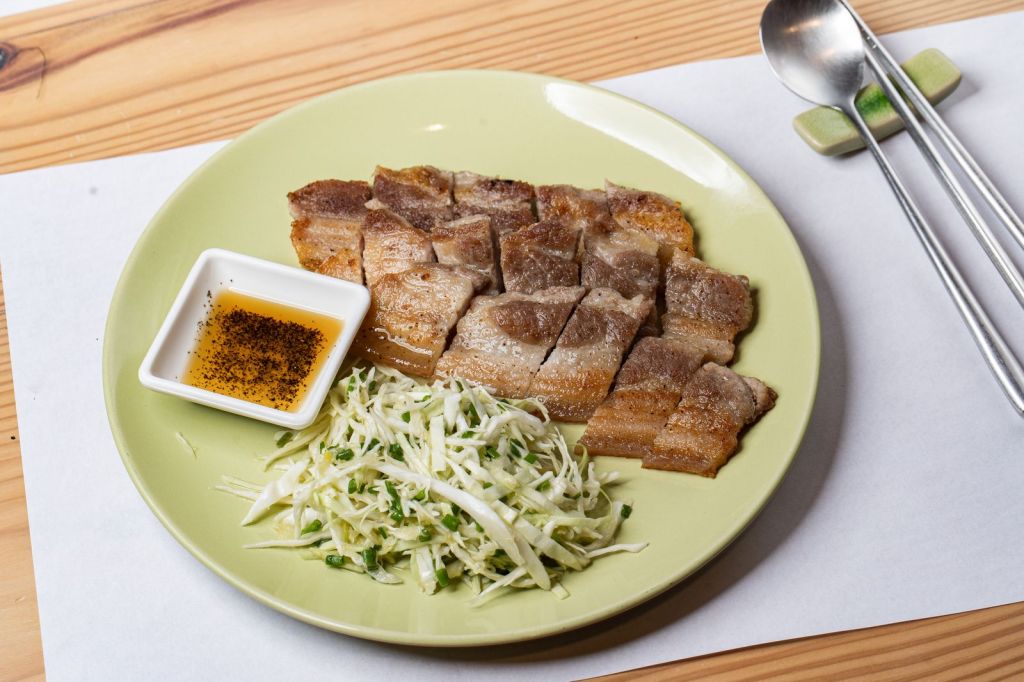
Pajeori is eaten in lettuce wraps with grilled pork belly, often alongside ssamjang.
Sangchu Geotjeori (Lettuce Salad)
The same dressing is used on torn lettuce for a quick fresh salad.
Pa-dak (Green Onion Chicken)
Korean chicken shops pile dressed shredded green onions on top of fried chicken – see our Korean chicken shop guide.
Easy Pajeori Recipe (Serves 4)
Ingredients
- 6–8 green onions (scallions), or 2 Korean daepa (large green onions)
- Ice water for soaking
Pajeori Dressing
- 1 Tbsp gochugaru
- 1 Tbsp soy sauce
- 1 Tbsp vinegar
- 1 Tbsp sugar
- 1 Tbsp sesame oil
- 1 tsp toasted sesame seeds
Instructions
- Cut the green onions into 3-inch (7 cm) lengths, then slice each piece lengthwise into very thin strips.
- Soak the strips in ice water for 10 minutes. This makes them curl, keeps them crisp and softens their raw bite.
- Meanwhile, whisk the dressing ingredients in a small bowl until the sugar dissolves.
- Drain the green onions and dry them well in a salad spinner or with paper towels.
- Right before serving, toss the onions gently with the dressing using your fingertips or chopsticks.
- Serve immediately with grilled pork belly, bulgogi or any Korean BBQ.
Tip: Dress the onions only at the last minute – once mixed, they wilt within about 20 minutes. Keep the dressing separate if you are prepping ahead.
Where to Buy Pajeori Dressing Ingredients
United States
As an Amazon Associate, I earn from qualifying purchases.
Amazon
Search gochugaru on Amazon
Search green onion shredders on Amazon
H-Mart
Search gochugaru on H-Mart
Canada
Europe
Search gochugaru on Amazon.co.uk
How to Store Pajeori Dressing
The undressed dressing keeps in a sealed jar in the refrigerator for about one week; stir before using. Shredded green onions can be cut, soaked, dried and stored in a container lined with paper towel for a day. Once the salad is dressed, eat it the same day.
Pajeori Dressing FAQ
What is pajeori?
Pajeori is a Korean salad of thinly shredded green onions dressed with chili flakes, soy sauce, vinegar, sugar and sesame oil.
Why soak green onions in water?
Soaking removes some of the harsh, slimy juices and makes the strips curl and stay crisp.
Can I make pajeori without gochugaru?
Yes. Simply leave it out for a mild soy-vinegar version.
What do you eat pajeori with?
Grilled pork belly is the classic match, but it is also great with bulgogi, galbi, fried chicken or a simple bowl of rice.
Conclusion
Pajeori dressing is one of the easiest Korean sauces you can make: six ingredients, two minutes of whisking, and your Korean BBQ night instantly tastes more like a restaurant. Keep a jar in the fridge and toss it with fresh green onions whenever you grill.


Leave a Reply