Introduction
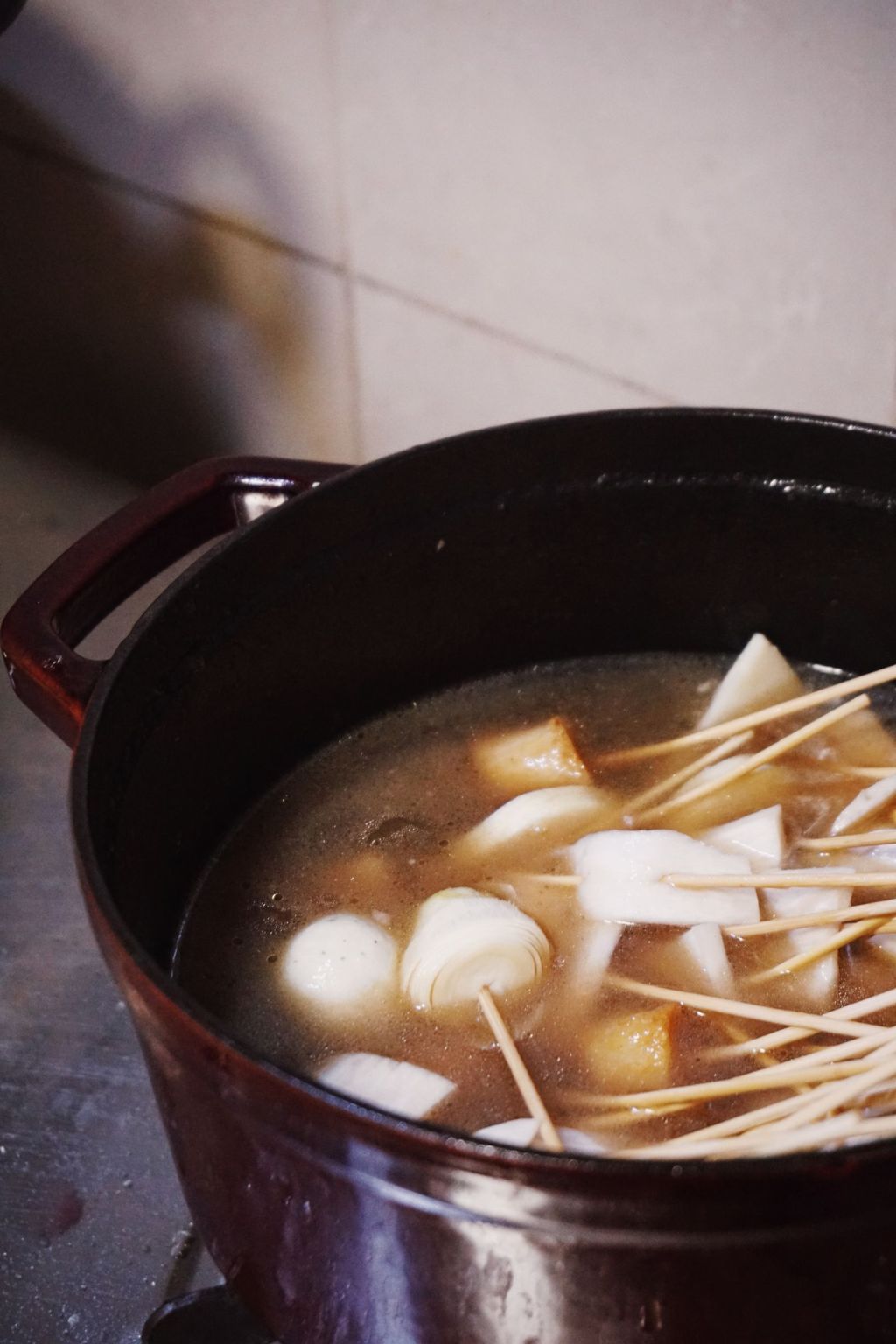
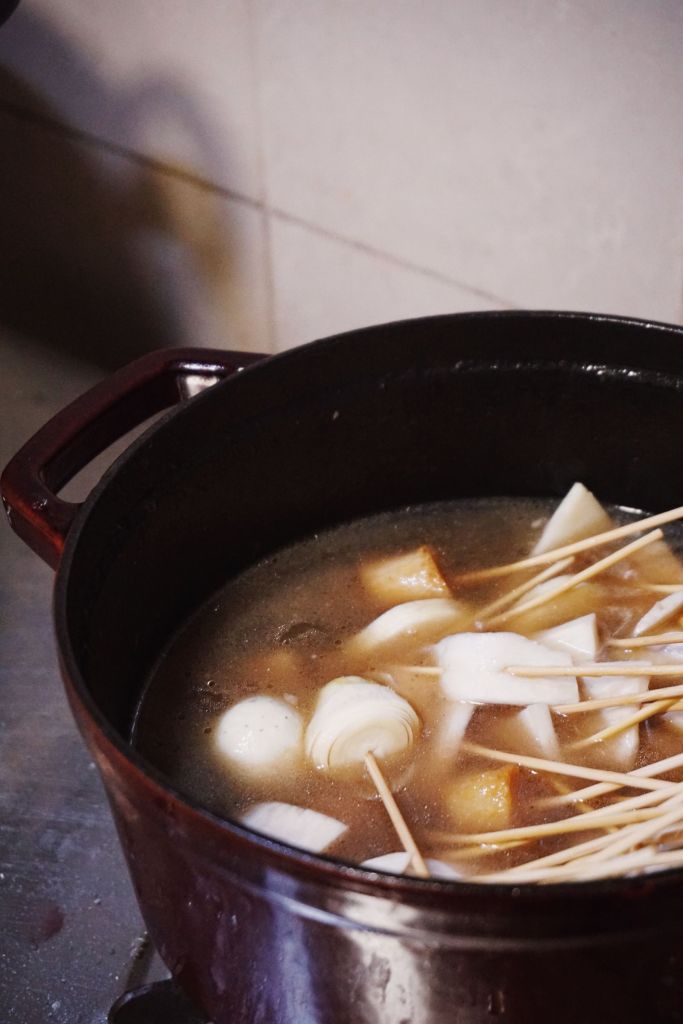
On a cold winter evening in Korea, street carts steam with long skewers of folded fish cake soaking in a big pan of clear broth. Customers grab a skewer, dip it in soy sauce and sip the hot broth from a paper cup – often for free. That dish is eomuk-tang (also called odeng-tang), and its flavor comes from a simple soup base of dried anchovies, kelp and Korean radish seasoned with soy sauce. Packaged fish cakes often come with a soup powder packet, but the homemade broth is easy and tastes cleaner. Here is how it works.
Eomuk-tang Soup Base at a Glance
What it is
- The light, savory broth used for Korean fish cake soup
Main ingredients
- Dried anchovies, dasima (kelp), Korean radish, onion, green onion, soup soy sauce, fish sauce
Taste
- Clean, savory, lightly sweet from radish, with optional chili heat
Main uses
- Eomuk-tang, fish cake skewers, broth served alongside tteokbokki, a base for udon-style noodle soup
What is Eomuk-tang Soup Base Made Of?
The foundation is the classic Korean anchovy-kelp stock. Dried myeolchi (anchovies) and dasima (kelp) give umami, while chunks of Korean radish add natural sweetness. It is seasoned with soup soy sauce (guk-ganjang), a little fish sauce and salt. Types:
- Homemade broth: simmered from scratch for the cleanest flavor.
- Broth tablets or powder: quick options such as coin yuksu dissolved in water.
- Soup packets in fish cake packages: pre-seasoned powder or liquid sold with eomuk.
- Spicy version: the same broth with gochugaru and sliced chili peppers.
What Does Eomuk-tang Soup Base Taste Like?
The broth is light and clear, not heavy or oily. It tastes of the sea in a gentle way, with a soft sweetness from radish and onion. As the fish cakes simmer, they add their own savory, slightly sweet flavor, so the broth gets better the longer it sits on the stove. Green onion and a little chili on top give it freshness and a kick.
Popular Korean Dishes That Use Eomuk-tang Soup Base
Eomuk-tang (Fish Cake Soup)
Fish cakes, radish and green onion simmered in the broth – a home and pub favorite.
Eomuk Kkochi (Fish Cake Skewers)
Street-cart skewers of folded fish cake kept warm in the broth.
Tteokbokki Side Broth
Snack shops serve a cup of fish cake broth with spicy tteokbokki to cool the palate.
Eomuk Udon
Thick wheat noodles added to the leftover broth for a quick noodle soup.
Easy Eomuk-tang Recipe (Serves 3–4)
Ingredients
- 10 oz (300 g) Korean fish cakes (sheets or assorted shapes)
- Wooden skewers (optional)
- 2 green onions, chopped; 1 green or red chili, sliced (optional)
Soup Base
- 7 cups water
- 15 large dried anchovies, heads and guts removed
- 1 piece dasima, about 4 x 4 inches (10 x 10 cm)
- 7 oz (200 g) Korean radish, cut into thin squares
- 1/2 onion, green onion roots (optional)
- 1 Tbsp soup soy sauce (guk-ganjang), 1 tsp fish sauce, salt to taste
Instructions
- Toast the anchovies in a dry pot for 1 minute to remove fishy smell. Add the water, dasima, radish and onion.
- Bring to a boil, then remove the dasima after 5 minutes so the broth does not turn slimy. Simmer the rest for 15 minutes more.
- Remove the anchovies and onion (keep the radish). Season with soup soy sauce, fish sauce and salt.
- Meanwhile, pour boiling water over the fish cakes to rinse off excess oil. Cut into bite-size pieces, or fold sheets accordion-style onto skewers.
- Add the fish cakes to the broth and simmer 5–7 minutes until puffed and heated through.
- Top with green onion and chili. Serve hot with a small dish of soy sauce for dipping.
Tip: Quick dipping sauce: 2 Tbsp soy sauce, 1 tsp vinegar, 1/2 tsp gochugaru, 1 tsp chopped green onion and a pinch of sugar.
Where to Buy Eomuk-tang Soup Base Ingredients
United States
As an Amazon Associate, I earn from qualifying purchases.
Amazon
Search Korean anchovy kelp stock on Amazon
Search Korean fish cake soup on Amazon
H-Mart
Search fish cakes on H-Mart
Canada
Search Korean anchovy soup stock on Amazon.ca
Europe
Search Korean anchovy soup stock on Amazon.co.uk
How to Store Eomuk-tang Soup Base
Cool homemade broth quickly and refrigerate for up to 3 days, or freeze in portions for up to a month. Store the fish cakes separately and add them when reheating, as they become soggy if left in the broth for long. Keep dried anchovies and kelp in the freezer or a sealed container in a cool, dry place.
Eomuk-tang Soup Base FAQ
What is the difference between eomuk-tang and odeng-tang?
They are the same soup. Odeng comes from the Japanese word oden; eomuk is the Korean word for fish cake.
Can I use the soup packet that comes with fish cakes?
Yes. Dissolve it in water as directed; adding a few slices of radish and green onion makes it taste closer to homemade.
Why rinse fish cakes in hot water?
Most fish cakes are fried, so a quick rinse removes excess oil and keeps the broth clear.
Is eomuk-tang spicy?
The classic version is mild. Add gochugaru or fresh chili for a spicy version.
Conclusion
A good eomuk-tang soup base is just anchovies, kelp and radish, but it delivers the cozy taste of a Korean street cart in winter. Make a pot, add your favorite fish cakes, and enjoy. To learn more about the fish cakes themselves, read our eomuk guide.


Leave a Reply