Introduction
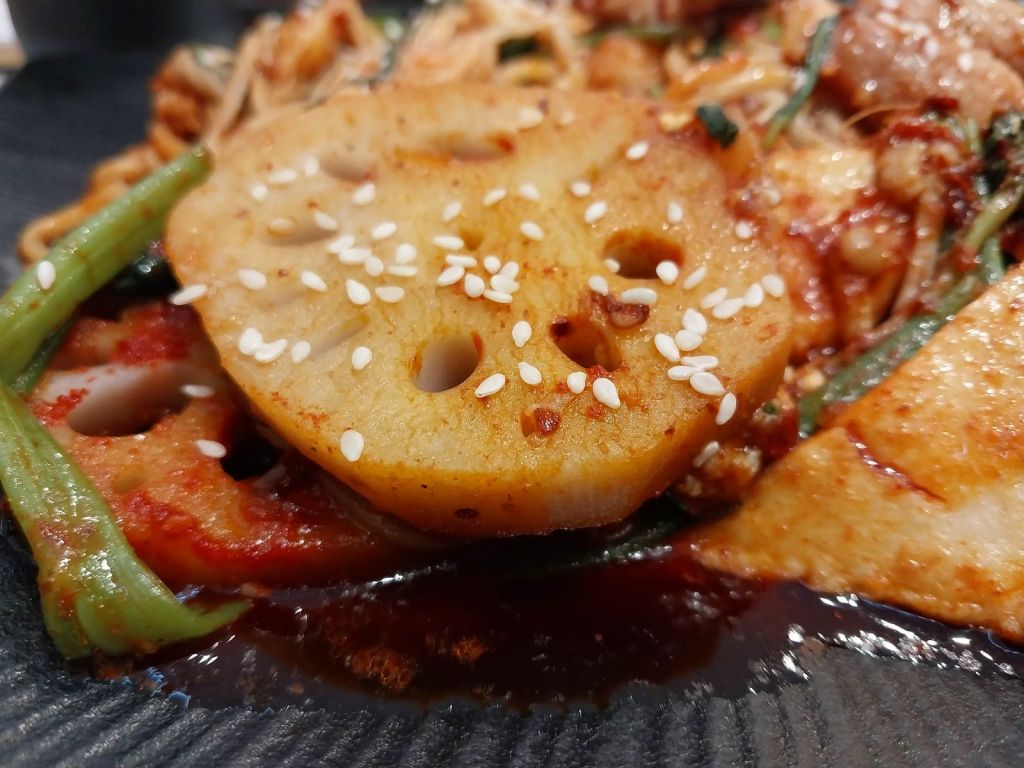
Yeongeun (연근) is the Korean word for lotus root, the long, segmented root of the lotus plant. Sliced, it shows a pretty pattern of holes, and it stays pleasantly crunchy even after cooking. In Korea it is best known as yeongeun-jorim, a sweet and glossy soy-braised side dish that shows up in lunch boxes and banchan spreads. You can find fresh lotus root in Asian markets and ready-to-cook boiled slices in vacuum packs.
Yeongeun at a Glance
What it is
- The edible root (rhizome) of the lotus plant
Main ingredients
- Lotus root (sold fresh, boiled and vacuum-packed, frozen or dried)
Taste
- Mild, slightly sweet and starchy with a crisp, crunchy bite
Main uses
- Yeongeun-jorim, lotus root jeon (pancakes), tempura, salads and lotus root tea
What is Yeongeun Made Of?
Yeongeun is simply the root itself: a pale, starchy vegetable with air channels running through it. In stores you will see it in several forms:
- Fresh lotus root: whole segments with light-brown skin; choose firm, heavy pieces without soft spots.
- Boiled sliced lotus root: peeled, sliced and vacuum-packed in water – the easiest choice for jorim.
- Frozen lotus root slices: handy for stir-fries and braises.
- Dried lotus root and lotus root tea: roasted dried slices or powder for tea.
What Does Yeongeun Taste Like?
Raw or lightly cooked lotus root is crisp like water chestnut, with a mild, slightly sweet and earthy flavor. Braised longer, it becomes a little chewy and sticky while still keeping some crunch, and it soaks up sauce beautifully – which is why sweet soy braising suits it so well.
Popular Korean Dishes That Use Yeongeun
Yeongeun-jorim
Lotus root braised in soy sauce, sugar and syrup until glossy – the recipe below.
Yeongeun-jeon
Thin slices dusted in flour, dipped in egg or batter and pan-fried, often served at holidays with cho-ganjang.
Yeongeun Salad
Blanched lotus root tossed with a creamy sesame or spicy dressing.
Yeongeun Twigim
Crispy fried lotus root slices, sometimes made into chips.
Easy Yeongeun-jorim Recipe (Serves 4 as a side dish)
Ingredients
- 14 oz (400 g) lotus root, peeled and sliced 1/4 inch (0.5 cm) thick (or a pack of boiled lotus root slices)
- 1 tbsp vinegar (for soaking and blanching)
- 1 tbsp neutral oil
- 1 tsp sesame oil and 1 tsp toasted sesame seeds
Braising Sauce
- 4 tbsp soy sauce
- 2 tbsp brown sugar
- 1 tbsp matsul or mirin
- 1 cup (240 ml) water
- 3 tbsp rice syrup, corn syrup or jocheong
Instructions
- Soak the fresh slices in cold water with a splash of vinegar for 10 minutes to prevent browning. (Skip for pre-boiled packs; just rinse.)
- Bring a pot of water with the remaining vinegar to a boil and blanch the fresh slices for 3–4 minutes. Drain.
- Heat the oil in a wide pan over medium heat and stir-fry the lotus root for 2 minutes.
- Add the soy sauce, brown sugar, matsul and water. Bring to a boil, then simmer over medium-low heat for 15–20 minutes, stirring now and then, until most of the liquid has reduced.
- Add the syrup and cook 2–3 minutes more, stirring, until the slices are glossy and sticky. Turn off the heat and mix in sesame oil and sesame seeds.
Tip: Add the syrup at the very end – it gives the best shine and keeps the lotus root from getting too hard.
Where to Buy Yeongeun
United States
As an Amazon Associate, I earn from qualifying purchases.
Amazon
Search lotus root slices on Amazon
Search lotus root tea on Amazon
H-Mart
Search lotus root on H-Mart
Canada
Search lotus root on Amazon.ca
Europe
Search lotus root on Amazon.co.uk
How to Store Yeongeun
Wrap whole fresh lotus root in damp paper towel and plastic and refrigerate; use within about a week. Once cut, keep slices submerged in water with a little vinegar in the fridge and use within 1–2 days. Opened vacuum packs should be used within a few days. Yeongeun-jorim keeps 5–7 days in an airtight container in the fridge.
Yeongeun FAQ
Why does lotus root turn brown?
Cut lotus root oxidizes quickly in air. Soaking it in water with a little vinegar keeps it pale.
Can you eat lotus root raw?
It is usually cooked or at least blanched before eating, which also softens its slightly astringent taste.
Why is my yeongeun-jorim hard?
Adding sugar syrup too early or cooking on high heat can make it tough. Simmer gently and add syrup last.
Conclusion
Yeongeun is a crunchy, pretty root vegetable that turns into one of Korea’s favorite sweet-salty banchan. Grab a pack of sliced lotus root and try the jorim above. For another classic braised root side dish, read our ueong (burdock root) guide.


Leave a Reply