Introduction
Makguksu (막국수) is a rustic buckwheat noodle dish from Gangwon Province in northeastern Korea, with the city of Chuncheon especially famous for it. “Mak” suggests something made simply or roughly, and that is the charm: earthy buckwheat noodles tossed with a spicy-sweet sauce, crunchy vegetables and a splash of chilled broth. Makguksu sauce is the seasoning that ties it together. It is related to the sauce in bibim naengmyeon, but usually softer, nuttier and meant to be loosened with cold broth at the table.
Makguksu Sauce at a Glance
What it is
- A chili-based seasoning for cold buckwheat noodles from Gangwon Province
Main ingredients
- Gochugaru, soy sauce, garlic, sugar, vinegar, sesame oil, often grated pear or onion
Taste
- Moderately spicy, sweet, tangy and nutty
Main uses
- Bibim makguksu, cold noodle salads, spicy tofu or vegetable bowls
What is Makguksu Sauce Made Of?
Most makguksu sauces are built on gochugaru rather than gochujang, which keeps them bright and less heavy. Soy sauce adds savoriness, sugar and grated pear or onion add a fruity sweetness, vinegar gives tang, and sesame oil and seeds add nuttiness. Versions you may meet:
- Bibim (spicy) sauce: the classic red seasoning described above.
- Mul-makguksu: the same noodles in a cold broth, often dongchimi mixed with beef or anchovy stock.
- Deulgireum makguksu: a non-spicy style dressed with perilla oil, soy sauce, roasted seaweed and ground perilla seeds.
- Bottled sauce: ready-made buckwheat noodle sauces sold in Korean markets.
What Does Makguksu Sauce Taste Like?
Think of a lighter, fruitier cousin of bibim noodle sauce. It opens with sweetness and tang, followed by a gentle chili warmth and a toasty sesame finish. Mixed with buckwheat’s slightly bitter, earthy flavor and a little icy broth, it becomes refreshing rather than heavy – perfect on a hot day, though Gangwon locals eat it all year.
Popular Korean Dishes That Use Makguksu Sauce
Bibim Makguksu
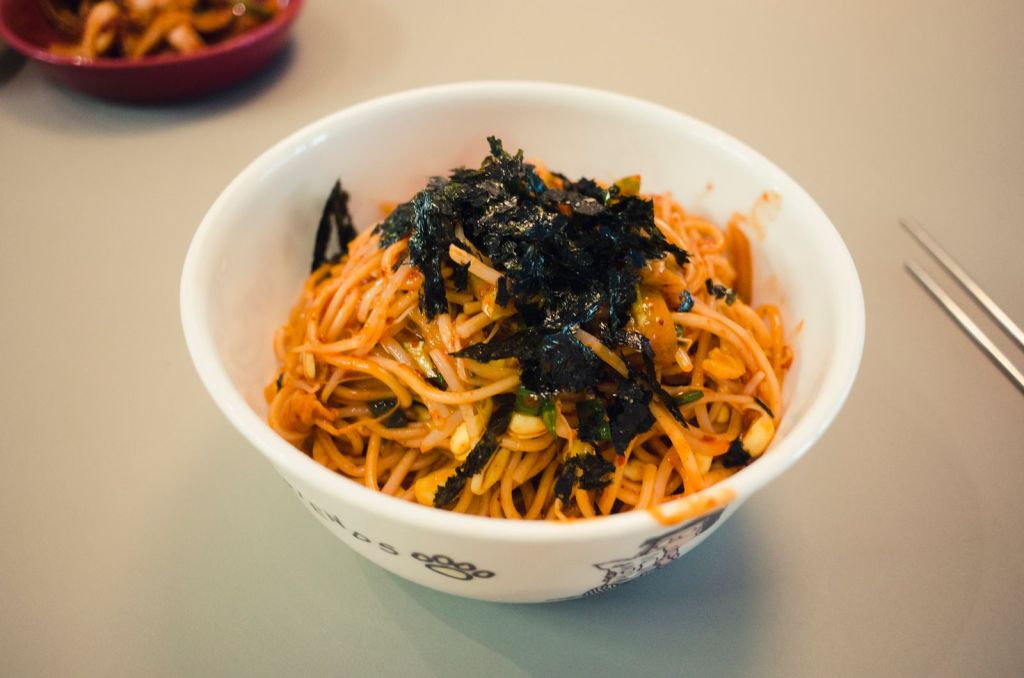
Buckwheat noodles mixed with sauce, cucumber, kimchi and a boiled egg – the recipe below.
Chuncheon Makguksu
Chuncheon restaurants serve the noodles with sauce and a kettle of cold broth so you can make it as soupy as you like, often alongside dakgalbi.
Deulgireum Makguksu
The trendy perilla oil version – read more in our deulgireum guide.
Bossam and Suyuk Pairings
Spicy buckwheat noodles are often eaten with boiled pork slices wrapped around the noodles.
Easy Bibim Makguksu Recipe (Serves 2)
Ingredients
- 7 oz (200 g) dried Korean buckwheat noodles (memil guksu or makguksu)
- 1/2 cucumber, julienned
- 1/2 cup well-fermented kimchi, chopped
- 1 boiled egg, halved
- Crushed roasted seaweed and toasted sesame seeds
- 1/2 cup chilled dongchimi broth or cold beef/anchovy stock (optional)
Makguksu sauce
- 2 tbsp gochugaru
- 2 tbsp soy sauce
- 1 1/2 tbsp sugar (or 2 tbsp rice syrup)
- 2 tbsp vinegar
- 2 tbsp grated Korean pear or onion
- 1 tbsp minced garlic
- 1 tbsp sesame oil and 1 tbsp toasted sesame seeds
Instructions
- Stir all sauce ingredients together and let rest 15 minutes (or overnight in the fridge) so the chili flakes soften.
- Boil the noodles according to the package, usually 4–5 minutes. Buckwheat noodles break easily, so stir gently.
- Drain and rinse in very cold water, rubbing gently to remove starch, then drain well.
- Divide the noodles between bowls. Top with sauce, cucumber, kimchi, egg, seaweed and sesame seeds.
- Pour a little cold broth around the edge, mix well and eat right away.
Tip: Chilling the sauce ahead of time makes the flavor rounder. If you like it sweeter and stickier, see our bibim guksu sauce, which uses gochujang.
Where to Buy Makguksu Noodles and Sauce
United States
As an Amazon Associate, I earn from qualifying purchases.
Amazon
Search Korean buckwheat noodles on Amazon
Search makguksu on Amazon
H-Mart
Search buckwheat noodle on H-Mart
Canada
Search Korean buckwheat noodles on Amazon.ca
Europe
Search Korean buckwheat noodles on Amazon.co.uk
Check the label: many “buckwheat” noodles also contain wheat flour, so people avoiding gluten should look for 100% buckwheat.
How to Store Makguksu Sauce
Homemade sauce keeps in a clean, sealed jar in the fridge for up to 1 week; the flavor improves after the first day. Store dried noodles in a cool, dry cupboard. Cooked noodles turn mushy quickly, so cook only what you will eat.
Makguksu Sauce FAQ
What is the difference between makguksu and naengmyeon?
Both use buckwheat, but naengmyeon noodles are thinner and chewier (with added starch), while makguksu noodles are softer, thicker and taste more of buckwheat.
Is makguksu spicy?
Bibim makguksu is mildly to moderately spicy. Mul and perilla oil versions are not spicy at all.
Can I use soba noodles?
Yes. Japanese soba is a good substitute for Korean buckwheat noodles.
Where is makguksu from?
Gangwon Province, where buckwheat grows well in the cool mountains. Chuncheon holds a well-known makguksu festival.
Conclusion
Makguksu sauce is an easy, pantry-friendly way to bring Gangwon’s favorite noodles home: a few spoonfuls of chili flakes, soy, vinegar and pear turn plain buckwheat noodles into a bright, refreshing bowl. For more chilled noodle ideas, read our naengmyeon guide.


Leave a Reply