Introduction
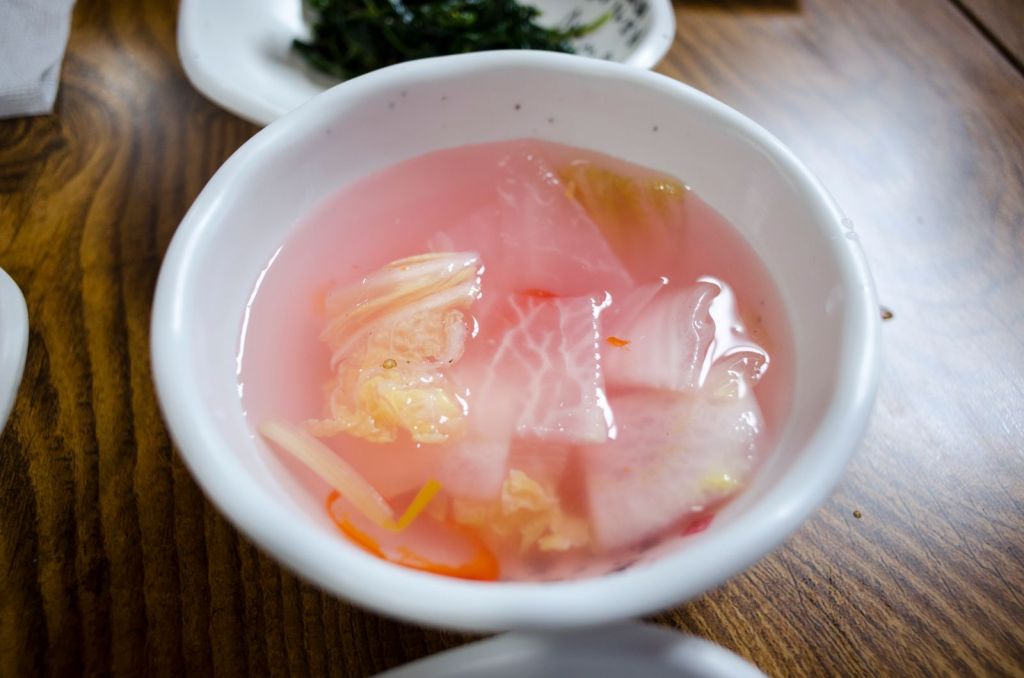
Dongchimi (동치미) is radish water kimchi: whole or sliced Korean radish fermented in a clear, lightly salted brine with garlic, ginger, pear and green onion. Unlike red cabbage kimchi, it is made without chili flakes, so it is mild, crisp and refreshing. Traditionally it was made in early winter, when Korean radish is sweetest, and the icy, tangy brine was sipped with sweet potatoes or used as the base for cold noodle soup. Today it is a favorite palate cleanser with rich, fried or spicy foods.
Dongchimi at a Glance
Quick facts
- What it is: non-spicy Korean radish kimchi in a clear brine
- Main ingredients: Korean radish (mu), salt, water, Asian pear, garlic, ginger, green onion, mild green chili
- Taste: cool, tangy, lightly salty and slightly sweet, sometimes gently fizzy
- Main uses: side dish, cold noodle broth, with sweet potatoes or rice cakes
What is Dongchimi Made Of?
The star is Korean radish, which is denser and sweeter than daikon. It is salted, then covered with a brine of water and salt flavored with sliced Asian pear, garlic, ginger, green onion and whole mild chilies (often pickled green chilies). Lactic acid bacteria ferment the natural sugars, turning the brine tangy and sometimes lightly carbonated. Some regional versions add apples, Korean chives or a little sugar.
Types of dongchimi and water kimchi
- Traditional dongchimi: whole small radishes fermented for weeks in winter.
- Quick dongchimi: sliced or cubed radish, ready in a few days.
- Nabak kimchi: thin squares of radish and cabbage in a pinkish brine colored with a little chili.
- Store-bought dongchimi: jars and pouches in the refrigerated section of Korean markets.
What Does Dongchimi Taste Like?
Dongchimi is clean and bright. The radish stays crunchy and juicy, and the brine tastes lightly salty, tangy and a little sweet from the pear, with a hint of garlic and ginger. Well-fermented dongchimi has a refreshing, almost soda-like tingle.
Popular Korean Dishes That Use Dongchimi
Dongchimi guksu
Chilled somyeon noodles in icy dongchimi broth, topped with sliced radish and egg.
Mul-naengmyeon
Traditional naengmyeon broth is often a blend of beef stock and dongchimi brine.
Goguma and dongchimi
Roasted sweet potatoes eaten with a cold bowl of dongchimi, a classic winter snack.
Dongchimi bokkeumbap side
Served alongside fried rice, fried chicken or rich meat dishes to refresh the palate.
Easy Dongchimi Recipe (Makes about 3 quarts / 3 liters)
Ingredients
- 1 large Korean radish (about 2 1/2 lb / 1.1 kg)
- 2 tbsp coarse sea salt, for salting the radish
- 8 cups (2 liters) water
- 2 1/2 tbsp coarse sea salt, for the brine (adjust to taste)
- 1/2 Asian pear, peeled and sliced
- 6 cloves garlic, sliced
- 1 small knob ginger, sliced
- 3 green onions (white parts), cut in half
- 2–3 mild green chilies, pierced with a fork
- 1 tsp sugar (optional)
Instructions
- Scrub the radish well (no need to peel). Cut into sticks about 1/2 inch thick and 2–3 inches long.
- Toss the radish with 2 tbsp salt and let it sit 1 hour, tossing once. Do not rinse; drain off the liquid into the brine.
- Stir 2 1/2 tbsp salt and the sugar into the water until dissolved. Taste: it should be slightly saltier than soup.
- Put the garlic and ginger in a small cheesecloth or tea bag so the brine stays clear. Pack the radish, pear, garlic pouch, green onion and chilies into a large clean glass jar, then pour in the brine to cover.
- Close the lid loosely and leave at cool room temperature for 1–2 days, until small bubbles appear and the brine smells pleasantly sour.
- Move to the refrigerator and wait at least 3–5 more days. Serve cold, with a ladle of brine in each bowl.
Tip: Keep the radish fully submerged (a small plate or zip bag of brine on top works) and always use clean utensils, so the dongchimi ferments cleanly.
Where to Buy Dongchimi
United States
As an Amazon Associate, I earn from qualifying purchases.
Amazon
Search dongchimi on Amazon
Search Korean sea salt for kimchi on Amazon
H-Mart
Search dongchimi on H-Mart
Canada
Europe
Search Korean water kimchi on Amazon.co.uk
How to Store Dongchimi
Keep dongchimi in the refrigerator, fully covered with brine. It is at its best after about 1 week and stays good for 3–4 weeks, getting more sour over time. Discard it if it develops mold, a slimy texture or an unpleasant smell.
Dongchimi FAQ
Is dongchimi spicy?
No. It contains no chili flakes; whole mild chilies add only a light aroma, so it is one of the best kimchi for people who avoid heat.
Can I use daikon instead of Korean radish?
Yes. Daikon is juicier and milder, so cut it a little thicker and expect a slightly softer texture.
Do you drink the dongchimi brine?
Yes. The brine is meant to be sipped like a cold soup and is often the best part.
What is the difference between dongchimi and kkakdugi?
Both use radish, but kkakdugi is cubed radish in a spicy red seasoning with little liquid, while dongchimi sits in a clear, mild brine.
Conclusion
Dongchimi is the gentle, refreshing side of the kimchi family, perfect with rich food and a great base for cold noodles. For more radish kimchi, try our kkakdugi recipe or learn about the classic cabbage kimchi.


Leave a Reply