Introduction
Makgeolli (막걸리) is a traditional Korean rice wine with a milky white color, a gentle fizz and a sweet-tangy taste. It is one of the oldest alcoholic drinks in Korea and was long the everyday drink of farmers. Today it is enjoyed everywhere, from casual pubs to craft breweries, and there is a famous Korean habit of drinking makgeolli with crispy pajeon (scallion pancakes) on rainy days. Most makgeolli is low in alcohol – commonly around 6% ABV – so it is an easy introduction to Korean drinks. Please drink responsibly and only if you are of legal drinking age.
Makgeolli at a Glance
What it is
- An unfiltered, lightly sparkling Korean rice wine
Main ingredients
- Rice (sometimes wheat), water and nuruk (a traditional fermentation starter)
Taste
- Creamy, lightly sweet, tangy and slightly fizzy, like a yogurt drink with a gentle alcohol warmth
Main uses
- Drinking with pajeon, bossam and spicy food; cocktails; some breads and batters
What is Makgeolli Made Of?
Makgeolli is made by fermenting steamed rice with water and nuruk, a dried cake of grain that carries wild yeasts and molds. The yeast turns rice starch into alcohol, and the brew is roughly strained but not fully filtered, so fine rice particles stay in the drink – that is where the milky color comes from. The name is often explained as “roughly strained.” Common types include:
- Saeng makgeolli (unpasteurized): contains live yeast, fresher and fizzier, must be refrigerated and has a short shelf life.
- Pasteurized makgeolli: heat-treated for a longer shelf life; common in export markets.
- Flavored makgeolli: made with chestnut, corn, peach, banana or other flavors.
- Craft makgeolli: small-batch, often stronger and less sweet, with no added sweeteners.
What Does Makgeolli Taste Like?
Most mass-market makgeolli is sweet, creamy and tangy with a light sparkle, a bit like a mix of rice milk, yogurt drink and dry cider. The rice sediment settles at the bottom, so it is gently swirled before pouring. Craft versions can be drier and more complex, with notes of melon, banana or grain. Compared with soju, which is clear and neutral, makgeolli is fuller, softer and lower in alcohol.
Popular Korean Foods to Pair with Makgeolli
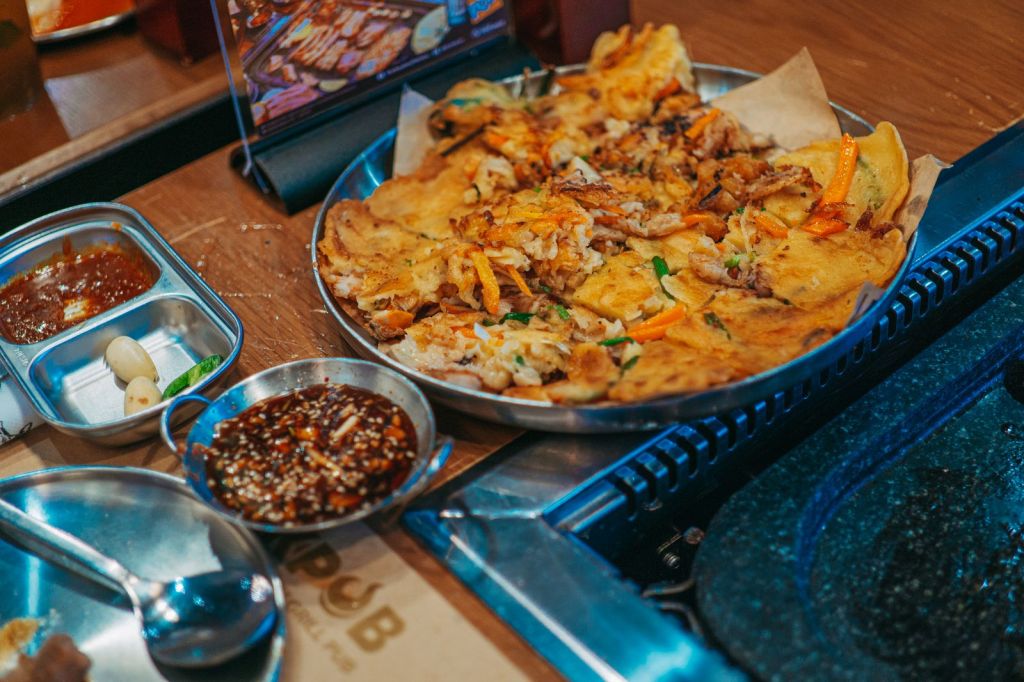
Pajeon and Kimchijeon
The classic rainy-day pairing. Try our pajeon recipe with cho-ganjang.
Dubu Kimchi
Warm tofu with stir-fried kimchi and pork is a favorite pub snack.
Bossam
Tender boiled pork wraps balance the tangy drink.
Dotorimuk Muchim
Acorn jelly salad is a traditional hiking-trail snack with makgeolli.
Easy Fruit Makgeolli Cocktail Recipe (Serves 4)
Ingredients
- 1 bottle (750 ml) plain makgeolli, well chilled
- 1 cup fresh or frozen fruit (strawberries, peach, mango or pineapple)
- 1/2 cup lemon-lime soda or sparkling water
- 1–2 tbsp honey or simple syrup (optional)
- Ice cubes and a few mint leaves
Instructions
- Gently tilt the makgeolli bottle upside down a few times to mix in the sediment. Do not shake hard – it is carbonated.
- Open the cap slowly over the sink, a little at a time, to let the gas escape without overflowing.
- Blend the fruit with the honey and about 1/2 cup of the makgeolli until smooth.
- Pour the fruit mixture into a pitcher, add the rest of the makgeolli and stir gently. Top with the soda.
- Serve over ice in bowls or glasses, garnished with mint and a piece of fruit.
Tip: Make it right before serving – the fizz fades quickly once mixed. For a creamy twist similar to our yogurt soju, add a splash of drinkable yogurt.
Where to Buy Makgeolli
United States
As an Amazon Associate, I earn from qualifying purchases.
Amazon
Search makgeolli bowl sets on Amazon
Search Korean nuruk (for home brewing) on Amazon
H-Mart
Search makgeolli on H-Mart
Canada
Search makgeolli bowls on Amazon.ca
Europe
Search makgeolli on Amazon.co.uk
Because it is alcohol, makgeolli itself is mostly sold in person at Korean grocery stores with a liquor license, liquor stores and Korean restaurants; online alcohol sales depend on local laws.
How to Store Makgeolli
Keep makgeolli in the fridge, standing upright. Unpasteurized makgeolli keeps fermenting, so it gets more sour and fizzy over time – drink it within the date on the bottle, usually a few weeks. Pasteurized makgeolli lasts longer but should still be chilled after opening and finished within a few days. Never leave a sealed bottle of live makgeolli in a warm place, as pressure can build up.
Makgeolli FAQ
How strong is makgeolli?
Most commercial makgeolli is about 6% ABV, though craft versions can be 10% or higher.
Should you shake makgeolli?
Gently turn the bottle to mix the sediment, but don’t shake it hard, and open it slowly.
Why do Koreans drink makgeolli on rainy days?
It is a popular custom to pair makgeolli with sizzling pajeon when it rains; many say the sound of frying batter is like falling rain.
What is the difference between makgeolli and soju?
Makgeolli is a cloudy, low-alcohol fermented rice wine. Soju is a clear, stronger distilled or diluted spirit.
Conclusion
Makgeolli is Korea’s friendly, milky rice wine: creamy, tangy, lightly fizzy and perfect with savory pancakes. Chill a bottle, swirl it gently, and serve it plain in bowls or blended with fruit for an easy cocktail. For a crispy partner, make a batch of pancakes with our buchim garu guide.


Leave a Reply