Introduction
Jjajang garu (짜장가루) is an instant black bean sauce powder sold in Korean supermarkets. Stir it into a pan of sautéed pork and vegetables with water and, within minutes, you have glossy jjajang sauce for noodles or rice – no frying of black bean paste required. It is the shortcut many Korean families use for weeknight jjajang-bap, school lunches and camping meals. If you want the from-scratch version, see our chunjang (black bean paste) guide.
Jjajang Garu at a Glance
What it is
- A dry powder mix that becomes Korean-Chinese black bean sauce when cooked with water
Main ingredients
- Roasted black bean paste powder (chunjang), starch, sugar, salt, vegetable fat, onion and other seasonings (check the label)
Taste
- Savory, slightly sweet and earthy, milder and smoother than homemade chunjang sauce
Main uses
- Jjajang-bap, jjajangmyeon, jjajang tteokbokki, jjajang fried rice
What is Jjajang Garu Made Of?
Jjajang garu contains dried, powdered chunjang (fermented black soybean paste) combined with starch to thicken, sugar for sweetness and fat for a glossy finish, plus seasonings. Because the starch is already in the mix, the sauce thickens on its own – just like curry powder mixes. Common types:
- Regular jjajang powder: sold in small boxes or large bags.
- Spicy jjajang powder: with added chili for a kick.
- Retort jjajang: fully cooked sauce in a pouch – heat and pour.
- Chunjang paste: the raw paste that must be fried in oil first (more authentic, more work).
What Does Jjajang Garu Taste Like?
Cooked jjajang garu tastes like a gentle version of restaurant jjajang sauce: savory and toasty with a noticeable sweetness and a thick, velvety texture. It lacks some of the smoky, wok-fried depth of chunjang made from scratch, but adding pork fat, plenty of onion and a splash of oyster sauce closes much of the gap.
Popular Korean Dishes That Use Jjajang Garu
Jjajang-bap
Black bean sauce with diced pork and vegetables over rice – a Korean school-cafeteria favorite.
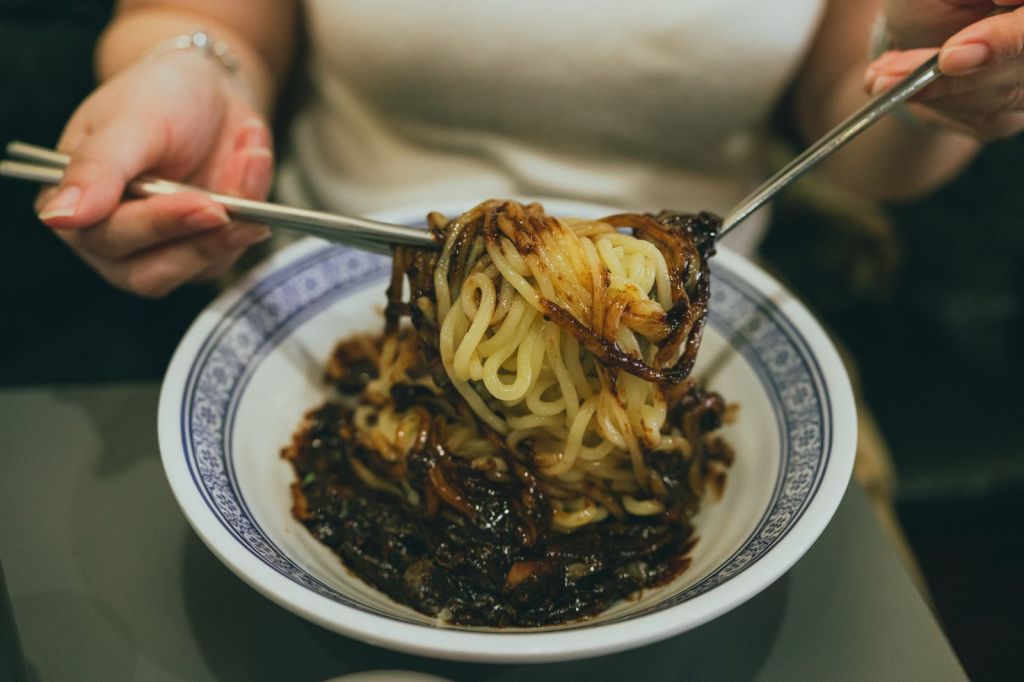
Jjajangmyeon
The same sauce poured over thick wheat noodles with cucumber strips.
Jjajang Tteokbokki
Rice cakes in black bean sauce – see our jjajang tteokbokki sauce guide.
Jjajang Bokkeumbap
Fried rice topped with a fried egg and a ladle of jjajang sauce.
Easy Jjajang-bap Recipe (Serves 3)
Ingredients
- 200 g (7 oz) pork belly or shoulder, diced (1 cm)
- 1 large onion, 1 potato, 1/2 zucchini, 1/4 cabbage (optional) – all diced
- 1 tbsp cooking oil, 1 tsp minced garlic
- 3 bowls hot cooked rice, cucumber strips and a fried egg to serve
Jjajang Sauce
- 1 box (about 100 g) jjajang garu
- About 3 cups water (follow the package amount)
- 1 tsp sugar and 1 tsp oyster sauce (optional, for extra depth)
Instructions
- Heat the oil in a deep pan and stir-fry the pork over medium-high heat until browned and cooked through.
- Add the garlic, potato and onion and stir-fry 3–4 minutes, then add the zucchini and cabbage.
- Pour in most of the water and simmer until the potatoes are tender, about 8 minutes.
- Dissolve the jjajang garu in the remaining cold water, then stir it into the pan. Keep stirring over medium heat for 2–3 minutes until thick and glossy. Add sugar and oyster sauce to taste.
- Ladle over hot rice and top with cucumber and a fried egg.
Tip: Always dissolve the powder in cold water first – adding it straight to hot liquid makes lumps. If the sauce gets too thick, loosen it with a splash of water.
Where to Buy Jjajang Garu
Look in the curry and sauce-mix aisle of Korean markets, or search online for “jjajang powder” or “black bean sauce powder”.
United States
As an Amazon Associate, I earn from qualifying purchases.
Amazon
Search Korean jjajang powder on Amazon
Search Korean black bean sauce powder on Amazon
H-Mart
Search jjajang on H-Mart
Canada
Search Korean jjajang powder on Amazon.ca
Europe
Search Korean jjajang powder on Amazon.co.uk
How to Store Jjajang Garu
Keep unopened powder in a cool, dry pantry. After opening, fold the bag tightly or move it to an airtight container and use it within a few months; keep it away from moisture so it doesn’t clump. Cooked jjajang sauce keeps 3–4 days in the fridge or 1 month frozen.
Jjajang Garu FAQ
What is the difference between jjajang garu and chunjang?
Chunjang is a thick raw paste that must be fried in oil and thickened separately. Jjajang garu is a ready mix with starch and seasoning already added, so it is faster and milder.
Is jjajang garu vegetarian?
Some products contain meat or seafood extracts, so check the ingredient label. You can make a vegetarian sauce with mushrooms instead of pork.
Is jjajang sauce gluten-free?
Usually not – most black bean pastes and powders contain wheat flour.
Can I make jjajangmyeon with the powder?
Yes. Make the sauce as above and serve it over cooked thick wheat noodles or udon.
Conclusion
Jjajang garu is the easiest route to Korea’s favorite black bean comfort food – one box, one pan and dinner is ready in 20 minutes. For a fun instant-noodle twist on the same flavor, try our jjapaguri recipe.


Leave a Reply