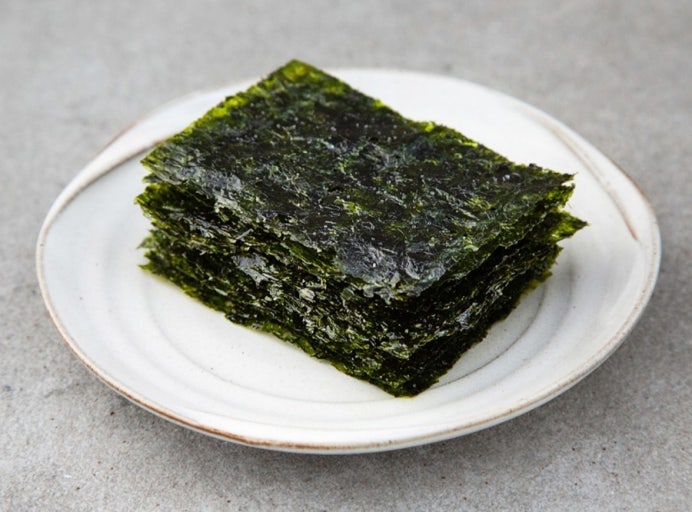
Introduction
Gim (김) is Korean dried seaweed that is widely used in Korean cuisine. It is made from edible seaweed that is harvested, dried, and sometimes roasted with sesame oil and salt.
In English, gim is often referred to as Korean seaweed or roasted seaweed sheets. It is commonly eaten as a side dish with rice or used as an ingredient in dishes like gimbap.
Because of its light texture and savory taste, gim is a popular everyday food in Korea.
Gim at a Glance
- What it is: thin, dried sheets of edible seaweed (laver)
- Main ingredients: laver; seasoned gim is also brushed with oil and sprinkled with salt
- Taste: mild, salty and savory with a light ocean flavor; nutty when roasted with sesame oil
- Used in: gimbap, eaten with rice, as a snack and as a topping for rice dishes and noodles
What is Gim Made Of?
Gim is made from laver, a type of edible red seaweed harvested from coastal waters. After harvesting, the seaweed is washed, pressed into thin sheets, and dried.
Many commercial gim products are lightly roasted and seasoned with sesame oil and salt to enhance the flavor. The result is a thin, crisp seaweed sheet that is easy to eat with rice or use in cooking.
Types of Gim
Plain Gim (Gimbap Gim)
Large, unseasoned sheets that are usually lightly roasted. These are the sheets used to roll gimbap.
Seasoned Gim
Sheets brushed with oil, sprinkled with salt and roasted, usually sold in small snack packs. They are eaten with rice or straight from the pack.
Gim Flakes
Crumbled seasoned seaweed sold in bags or jars, handy for sprinkling over rice, noodles and rice balls.
What Does Gim Taste Like?
Gim has a mild ocean flavor with a slightly salty and savory taste. When roasted with sesame oil, it also develops a nutty aroma.
The texture is thin and crispy, which makes it a popular snack as well as a cooking ingredient. Because of its light flavor, gim pairs well with rice, vegetables, and seafood.
Popular Korean Dishes That Use Gim
Gimbap
Gimbap is a Korean rice roll wrapped in gim. It contains rice, vegetables, egg, danmuji (yellow pickled radish), and sometimes meat or fish.

Rice with Roasted Seaweed
Many Koreans simply eat roasted gim with plain rice, wrapping a small bite of rice in each piece.

Seaweed Snacks
Roasted seaweed sheets are commonly eaten as a snack in Korea and are popular worldwide.

Easy Gim-gui Recipe (Serves 4)
Gim-gui is homemade seasoned roasted seaweed. It takes about 10 minutes and tastes fresher than most packaged snacks.
Ingredients
- 5 sheets plain gim (gimbap gim)
- 2 tbsp sesame oil (or 1 tbsp sesame oil + 1 tbsp neutral oil)
- About 1/2 tsp fine salt
Instructions
- Oil. Place one sheet shiny side up and brush it lightly with oil. Sprinkle with a pinch of salt. Stack the next sheet on top and repeat.
- Toast. Heat a dry frying pan over low to medium heat. Toast one sheet at a time for a few seconds per side, until it turns bright green and crisp. Do not walk away, as it burns quickly.
- Cut. Stack the toasted sheets and cut them into small rectangles with scissors or a sharp knife.
- Serve. Serve with warm rice and use each piece to wrap a bite.
Tip: Let the gim cool completely before storing, then keep it in an airtight container so it stays crisp.
Where to Buy Gim
Look for “Korean seaweed,” “roasted seaweed” or “gimbap seaweed” in Korean grocery stores and online.
United States
As an Amazon Associate, I earn from qualifying purchases.
Amazon
https://www.amazon.com/s?k=korean+seaweed
H-Mart
https://www.hmart.com/search?type=product&q=gim
Walmart
https://www.walmart.com/search?q=korean+seaweed
Canada
Amazon Canada
https://www.amazon.ca/s?k=korean+seaweed
H-Mart Canada
https://www.hmart.ca
Europe
Amazon UK
https://www.amazon.co.uk/s?k=korean+seaweed
Sous Chef
https://www.souschef.co.uk/search?q=korean+seaweed
Oriental Mart
https://www.orientalmart.co.uk/search?type=product&q=korean+seaweed
Asia Market
https://www.asiamarket.ie/?s=korean+seaweed
How to Store Gim
Gim should be stored in a cool and dry place. Because seaweed easily absorbs moisture, it should be kept in an airtight container or a tightly sealed bag. Unopened plain sheets can also be kept in the freezer.
If the seaweed becomes soft, lightly roasting it in a pan can restore its crisp texture.
Gim FAQ
Is gim the same as nori?
Both are made from laver and look very similar. Plain gimbap gim and sushi nori can usually be swapped, but Korean seasoned gim is brushed with oil and salt, which gives it a different, nuttier taste.
Can I use seasoned seaweed snacks to make gimbap?
It is not recommended. Seasoned snack sheets are small, oily and salty, and they tear easily. Use large plain gimbap sheets for rolling.
What is the difference between gim and miyeok?
Gim is thin pressed laver eaten crisp, while miyeok is sea mustard that is soaked and cooked, most famously in seaweed soup.
Why did my gim go soft?
Gim absorbs moisture from the air very quickly once opened. Reseal it right away, and re-crisp soft sheets in a dry pan for a few seconds.
Conclusion
Gim is Korean dried seaweed widely used in Korean cuisine. Its light texture and savory flavor make it a versatile ingredient used in dishes such as gimbap and seaweed snacks.
Try the easy gim-gui above, or roll your own gimbap with our danmuji and gimbap guide. For another Korean seaweed, read about dasima (dried kelp).


Leave a Reply