Introduction
Ramyeon (라면) is the Korean word for instant noodles. While the name comes from Japanese ramen, in Korea it almost always means a packet of quick-cooking noodles with a seasoning sachet, usually spicy and full of flavor.
Korea’s first instant ramyeon was released in 1963, and the country has since become one of the biggest instant noodle markets in the world. Today, Korean ramyeon is sold almost everywhere and is many people’s first taste of Korean food.
What is Ramyeon Made Of?
The noodles are made from wheat flour, starch, water, and salt. Most are steamed and then fried in oil so they dry into a block that cooks in a few minutes. Each packet comes with a soup powder and often a sachet of dried vegetables or flavored oil.
- Spicy soup ramyeon – the classic style, with a red, beefy or seafood broth
- Mild soup ramyeon – clear or creamy broths, such as chicken or beef bone flavors
- Bibim (soupless) ramyeon – noodles tossed in sauce, like spicy cold bibimmyeon or black bean jjajang ramyeon
- Cup ramyeon – noodles in a cup; just add boiling water
- Sari myeon – plain noodle blocks without seasoning, made for adding to stews and hot pots
What Does Ramyeon Taste Like?
Classic Korean ramyeon is bold and savory, with a spicy chili kick, garlic, and a deep beef or seafood flavor. The noodles are usually springy and chewy, and they hold up well in the hot broth.
Compared with many other instant noodles, Korean ramyeon tends to be spicier and thicker, which is why it pairs so well with kimchi on the side.
Popular Korean Dishes That Use Ramyeon
Budae-jjigae (Army Stew)
A spicy hot pot with ham, sausages, tofu, and kimchi, finished with ramyeon noodles cooked right in the pot.
Rabokki
Ramyeon plus tteokbokki: chewy rice cakes and instant noodles in a sweet and spicy gochujang sauce.
Jjapaguri
A mix of black bean jjajang ramyeon and spicy seafood udon-style ramyeon, made famous worldwide by a film. Some versions add pan-fried steak.
Gyeran Ramyeon (Egg Ramyeon)
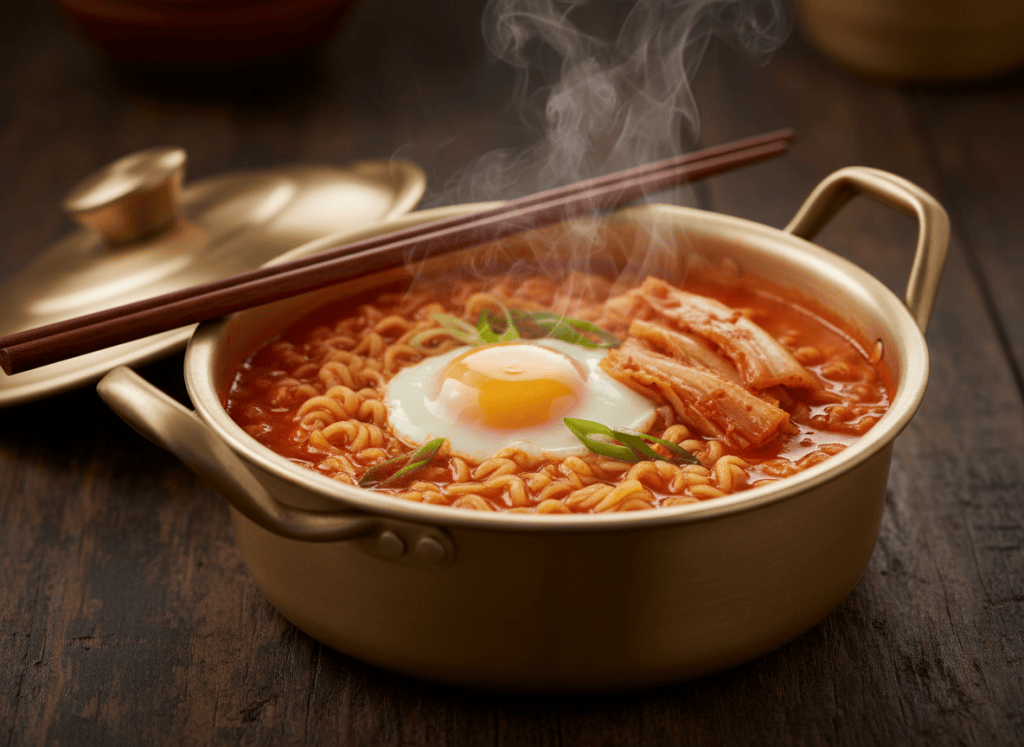
The everyday upgrade: ramyeon cooked with an egg and green onion, eaten with kimchi.
Easy Egg Ramyeon Recipe (Serves 1)
How Koreans make a packet of ramyeon taste a little more homemade, in about 6 minutes.
Ingredients
- 1 packet Korean ramyeon (with soup powder and vegetable flakes)
- 550 ml water (or the amount on the package)
- 1 egg
- 1 green onion, sliced
- 1 slice of cheese (optional)
- Kimchi, to serve
Instructions
- Boil the water. Bring the water to a boil in a small pot.
- Add seasoning and noodles. Add the soup powder, vegetable flakes, and noodle block.
- Loosen the noodles. Boil for about 2 minutes, lifting the noodles with chopsticks a few times to keep them springy.
- Add the egg. Crack the egg into the pot. Leave it whole for a soft yolk, or stir gently for a cloudy egg broth.
- Finish. Cook for 1–2 more minutes, until the noodles are tender and the egg is cooked to your liking. Add the green onion in the last 30 seconds.
- Serve. Top with a slice of cheese if you like, and serve right away with kimchi.
Tip: For chewier noodles, take the pot off the heat 30 seconds before the package time. The noodles keep softening in the hot broth.
Where to Buy Ramyeon
Korean ramyeon is sold in single packs, multipacks, and cups at Korean and Asian grocery stores and many supermarkets. Search for “Korean ramyeon” or “Korean instant noodles.”
United States
As an Amazon Associate, I earn from qualifying purchases.
Amazon
https://www.amazon.com/s?k=korean+ramyeon+instant+noodles
H-Mart
https://www.hmart.com/search?type=product&q=ramyun
Canada
Amazon Canada
https://www.amazon.ca/s?k=korean+ramyeon+instant+noodles
Europe
Amazon UK
https://www.amazon.co.uk/s?k=korean+ramyeon+instant+noodles
How to Store Ramyeon
Store ramyeon packets in a cool, dry place away from direct sunlight and strong odors. Because the noodles are fried, they can turn stale over time, so check the best-before date and use older packs first.
Conclusion
Ramyeon is Korea’s beloved instant noodle: fast, spicy, and endlessly customizable. Add an egg and green onion, or use it in budae-jjigae and rabokki, and a simple packet becomes a satisfying Korean meal.


Leave a Reply