Introduction
Aekjeot (액젭) is Korean fish sauce: the clear, amber liquid drained from salted, fermented seafood. The name literally means “liquid jeotgal,” and it is one of the quiet workhorses of Korean cooking. Most homemade kimchi gets its deep savory flavor from a splash of aekjeot.
Beyond kimchi, Korean cooks use it like a seasoning salt with extra umami, adding it to soups, stews and seasoned vegetables.
Aekjeot at a Glance
What it is
- A liquid seasoning made from fermented, salted fish
Main ingredients
- Anchovies or sand lance, and salt
Taste
- Very salty, deeply savory (umami), with a briny, fishy aroma that mellows in cooking
Main uses
- Kimchi, geotjeori, namul, soups and stews, dipping sauces
What is Aekjeot Made Of?
Small fish are layered with a large amount of salt and left to ferment for a long time, often a year or more. Over time the fish break down into a liquid, which is filtered to become aekjeot. The solid version that stays chunky is called jeotgal, like saeujeot (salted shrimp).
- Myeolchi aekjeot (멸치액젭) – anchovy fish sauce, the most common type
- Kkanari aekjeot (까나리액젭) – sand lance fish sauce, slightly lighter and cleaner; popular for kimchi
- Chamchi aekjeot (tuna extract) – a milder, sweeter tuna-based seasoning sauce, used more like a soup base
What Does Aekjeot Taste Like?
Straight from the bottle, aekjeot smells strongly of the sea and tastes intensely salty. Cooked or mixed into a dish, the fishiness fades and what remains is a rounded, savory depth that makes food taste fuller. Compared with Thai or Vietnamese fish sauce, Korean anchovy aekjeot often tastes a bit darker and more pungent, but the two can usually be swapped.
Popular Korean Dishes That Use Aekjeot
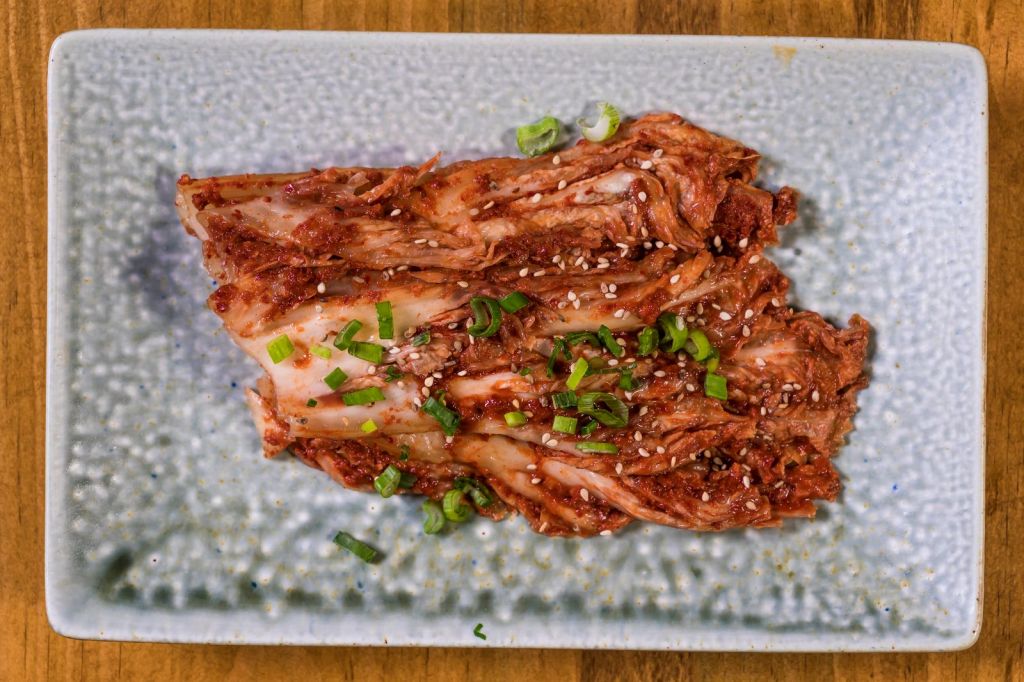
Baechu Kimchi
Classic napa cabbage kimchi uses aekjeot in the chili paste for flavor and fermentation.
Geotjeori
Fresh, unfermented kimchi salad eaten the same day, often with boiled pork or noodles.
Kkakdugi
Cubed radish kimchi, seasoned with chili flakes, garlic and fish sauce.
Soups and Namul
A few drops replace some of the salt in seaweed soup, bean sprout soup and seasoned vegetable side dishes.
Easy Geotjeori Fresh Kimchi Recipe (Serves 3–4)
Geotjeori is the fastest way to taste kimchi at home: no fermenting, ready in about 40 minutes.
Ingredients
- ½ small napa cabbage (about 1 lb / 450 g), or 1 head of baby napa cabbage
- 1½ tbsp coarse sea salt
- 2 green onions, cut into 1-inch pieces
- ¼ onion, thinly sliced
Seasoning
- 2 tbsp gochugaru
- 1½ tbsp aekjeot (Korean fish sauce)
- 1 tbsp minced garlic
- 1 tsp sugar
- 1 tsp sesame oil
- 1 tsp toasted sesame seeds
Instructions
- Cut the cabbage. Tear or cut the leaves into bite-size pieces. Rinse and drain.
- Salt. Sprinkle the salt over the cabbage, toss, and let it sit for 30 minutes, tossing once halfway, until the thick white parts bend without snapping.
- Rinse. Rinse the cabbage 2–3 times in cold water and squeeze gently to drain well.
- Season. In a large bowl, mix the gochugaru, aekjeot, garlic and sugar. Add the cabbage, green onion and onion and toss with gloved hands until evenly red.
- Finish. Drizzle with sesame oil, sprinkle with sesame seeds, taste, and add a few more drops of aekjeot if needed. Serve right away.
Tip: Add aekjeot little by little. It is much saltier than soy sauce, and you can always add more but cannot take it out.
Where to Buy Aekjeot
Korean fish sauce is sold in plastic bottles at Korean grocery stores. Look for “anchovy sauce” (myeolchi aekjeot) or “sand lance sauce” (kkanari aekjeot) on the label.
United States
As an Amazon Associate, I earn from qualifying purchases.
Amazon
https://www.amazon.com/s?k=korean+fish+sauce+anchovy
H-Mart
https://www.hmart.com/search?type=product&q=fish sauce
Canada
Amazon Canada
https://www.amazon.ca/s?k=korean+fish+sauce
Europe
Amazon UK
https://www.amazon.co.uk/s?k=korean+fish+sauce
How to Store Aekjeot
Because it is so salty, aekjeot keeps for a long time. Close the cap tightly and store it in a cool, dark place or in the refrigerator after opening (which also keeps the smell contained). Follow the best-by date on the bottle; salt crystals at the bottom are normal.
Aekjeot FAQ
Can I use Thai fish sauce instead of Korean fish sauce?
Yes, in most recipes. The flavor is slightly different, but Thai or Vietnamese fish sauce works well in kimchi and soups. Use the same amount and adjust to taste.
What is the difference between aekjeot and jeotgal?
Jeotgal is salted fermented seafood with its solids, like salted shrimp. Aekjeot is the filtered liquid made from fermented fish.
What can I use instead of fish sauce for vegan kimchi?
Use soy sauce or Korean soup soy sauce mixed with a little kelp broth, or a mushroom-based seasoning, for umami without fish.
Myeolchi or kkanari aekjeot: which is better for kimchi?
Both are used. Anchovy sauce is the most common and gives a bolder flavor; sand lance sauce is a bit cleaner. Many cooks simply use what their family prefers.
Conclusion
Aekjeot is the salty, savory backbone of kimchi and many everyday Korean dishes. A single bottle lasts a long time, and once you start adding a few drops to soups and vegetables, it quickly becomes a pantry essential. Pair it with dried anchovies and gochugaru and you are ready to make real Korean kimchi.


Leave a Reply