Introduction
Dadaegi (다대기) is a thick, red seasoning paste made from chili flakes, garlic and other aromatics. In Korean restaurants you often see it in a small bowl on the table next to milky beef bone soups like seolleongtang or pork-and-rice soups like dwaeji gukbap, so each person can make the soup as spicy as they like. In Korean, it is also called dajin yangnyeom (다진 양념), meaning “minced seasoning.” At home, dadaegi is also the flavor base for spicy stews such as maeuntang.
Dadaegi at a Glance
Quick facts
- What it is: a spicy seasoning paste for soups, stews and noodles
- Main ingredients: gochugaru, garlic, soy sauce or fish sauce, broth or water, sometimes ginger, green onion and sesame
- Taste: hot, garlicky, savory, not sweet
- Main uses: seolleongtang, gukbap, sundaeguk, kalguksu, maeuntang
What is Dadaegi Made Of?
Most dadaegi starts with gochugaru and a lot of minced garlic, moistened with soy sauce, a little fish sauce or broth so it becomes a paste. Restaurants each have their own recipe, adding ginger, black pepper, chopped green chili, green onion or sesame. Unlike gochujang, dadaegi is not fermented and is usually not sweet.
Types of dadaegi
- Table dadaegi: a small bowl served with bone broth soups and gukbap.
- Stew dadaegi: mixed in larger amounts and cooked into maeuntang or spicy soups.
- Noodle dadaegi: a spicy spoonful for kalguksu or janchi guksu.
- Gochujang-blend dadaegi: some cooks add a little gochujang for body.
What Does Dadaegi Taste Like?
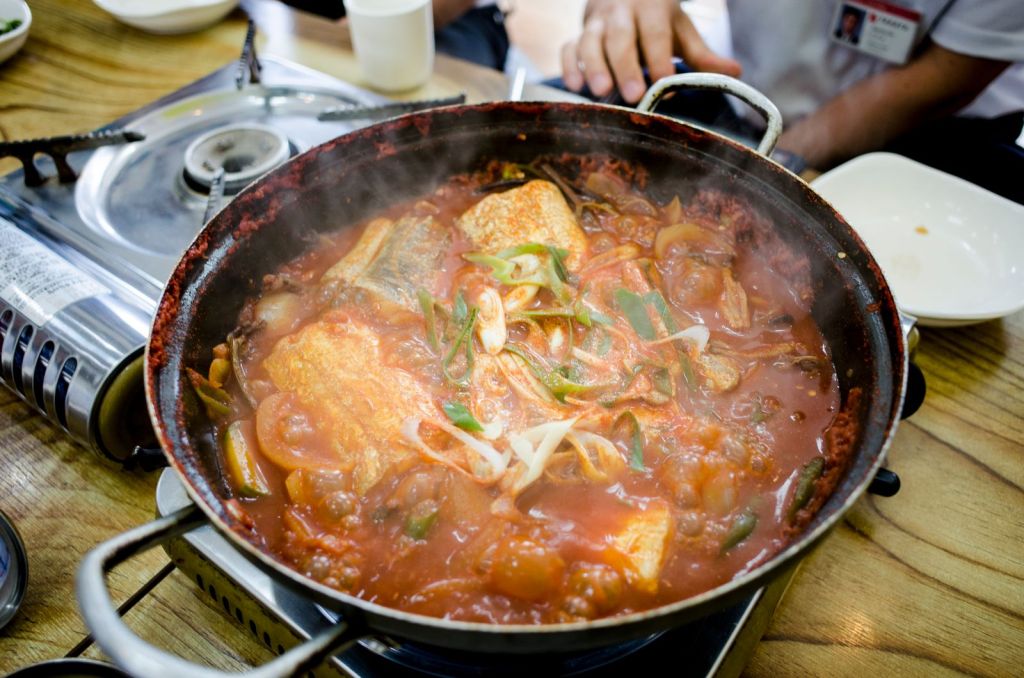
On its own it is very garlicky, salty and spicy. Stirred into a mild, milky beef or pork broth, it turns the soup orange-red and adds heat and depth without sweetness. Cooked into a fish stew, it mellows and gives the broth a clean, sharp spiciness.
Popular Korean Dishes That Use Dadaegi
Seolleongtang and gomtang
Mild beef bone soups that many people season with a spoonful of dadaegi.
Dwaeji gukbap and sundaeguk
Pork soups with rice, often served with dadaegi, salted shrimp (saeujeot) and chives.
Kalguksu
Knife-cut noodle soup that gets a kick from a little dadaegi.
Maeuntang
Spicy fish stew, where dadaegi is the main seasoning. Recipe below.
Easy Maeuntang Recipe (Serves 3–4)
Ingredients
- 600 g (1.3 lb) white fish (cod, pollock or similar), cleaned and cut into large pieces
- 5 cups anchovy-kelp broth or water
- 200 g Korean radish (mu), sliced into thin squares
- 1/2 zucchini, sliced into half-moons
- 1/2 block tofu, cut into thick pieces
- 1/2 onion, sliced
- 2 green onions, cut into 5 cm pieces
- 1 green chili and 1 red chili, sliced
- A handful of crown daisy (ssukgat) or watercress (optional)
Dadaegi
- 3 tbsp gochugaru
- 1 tbsp gochujang (optional)
- 2 tbsp minced garlic
- 1 tsp grated ginger
- 1 tbsp soy sauce (soup soy sauce if you have it)
- 1 tbsp fish sauce
- 1 tbsp matsul or rice wine
- 3 tbsp broth or water
- A pinch of black pepper
Instructions
- Mix all dadaegi ingredients into a paste and let it sit for 10 minutes so the chili flakes soften.
- Put the broth and radish in a wide pot and bring to a boil. Simmer for 8–10 minutes until the radish turns slightly translucent.
- Stir in the dadaegi, then add the fish pieces. Simmer gently for 6–8 minutes without stirring much, so the fish does not break apart. Skim off any foam.
- Add zucchini, tofu and onion and cook 3–4 minutes more, until the fish is opaque and flakes easily (63°C / 145°F inside).
- Add green onion and chilies, taste and season with a little salt or fish sauce if needed.
- Top with crown daisy, turn off the heat and serve bubbling hot with rice.
Tip: Mix dadaegi a day ahead and keep it in the fridge. The flavors blend and the paste tastes rounder.
Where to Buy Ingredients for Dadaegi
Dadaegi is mostly homemade. The key ingredient is good Korean gochugaru; coarse flakes give the classic texture.
United States
As an Amazon Associate, I earn from qualifying purchases.
Amazon
Search Korean gochugaru on Amazon
H-Mart
Search gochugaru on H-Mart
Canada
Search Korean gochugaru on Amazon.ca
Europe
Search Korean gochugaru on Amazon.co.uk
How to Store Dadaegi
Keep homemade dadaegi in a clean, airtight jar in the fridge and use it within about 1 week, since it contains fresh garlic. For longer storage, freeze small portions in an ice cube tray, then move the cubes to a freezer bag.
Dadaegi FAQ
Is dadaegi the same as gochujang?
No. Gochujang is a fermented, sweet-savory chili paste. Dadaegi is a fresh, unfermented mix of chili flakes and garlic, and it is not sweet.
How much dadaegi should I add to soup?
Start with 1 teaspoon per bowl, stir and taste. Add more gradually; it gets spicy fast.
Can I make dadaegi without fish sauce?
Yes. Use soy sauce and a pinch of salt instead for a vegetarian-friendly version.
Conclusion
Dadaegi is the simplest way to add Korean-style heat to soups and stews: chili flakes, garlic and a splash of seasoning, mixed into a paste. Keep a jar in the fridge for gukbap nights, or use it to build a bubbling pot of maeuntang. For a sweeter, fermented chili flavor, compare it with gochujang.


Leave a Reply