Introduction
Mulyeot (물엿) is a thick, clear Korean cooking syrup made from starch. The name means “liquid yeot” (yeot is a traditional Korean taffy-like sweet). If a Korean recipe for a glossy side dish, a sticky glaze or a braise asks for “corn syrup” or “starch syrup,” this is what it means. It is less sweet than sugar and gives food the shiny, sticky coating you see on banchan in Korean restaurants.
Mulyeot at a Glance
Quick facts
- What it is: a clear starch syrup used as a sweetener and glazing agent
- Main ingredients: usually corn starch (sometimes other starches) broken down into sugars
- Taste: mildly sweet, neutral, no strong flavor of its own
- Main uses: jorim (braised dishes), bokkeum (stir-fried side dishes), glazes, sauces, sweets
What is Mulyeot Made Of?
Most mulyeot sold today is made by breaking down corn starch into a syrup of glucose and other sugars, similar to light corn syrup. It is different from jocheong (rice syrup), which is traditionally made from rice and malt and has a light amber color and a toasty flavor. In everyday Korean cooking the two are often used interchangeably.
Types of Korean cooking syrup
- Mulyeot (starch syrup): clear, neutral and the most common.
- Jocheong (rice syrup): made from rice, lightly golden, with a nutty taste.
- Oligosaccharide syrup (ollido): a popular lower-sugar syrup used the same way.
- Allulose syrup: a newer, low-calorie option sold by Korean brands.
What Does Mulyeot Taste Like?
Mulyeot is gently sweet and clean-tasting, noticeably less sweet than sugar or honey. Its job is less about flavor and more about texture: it makes sauces thick and glossy, helps them cling to food, and keeps glazed dishes moist and shiny after they cool.
Popular Korean Dishes That Use Mulyeot
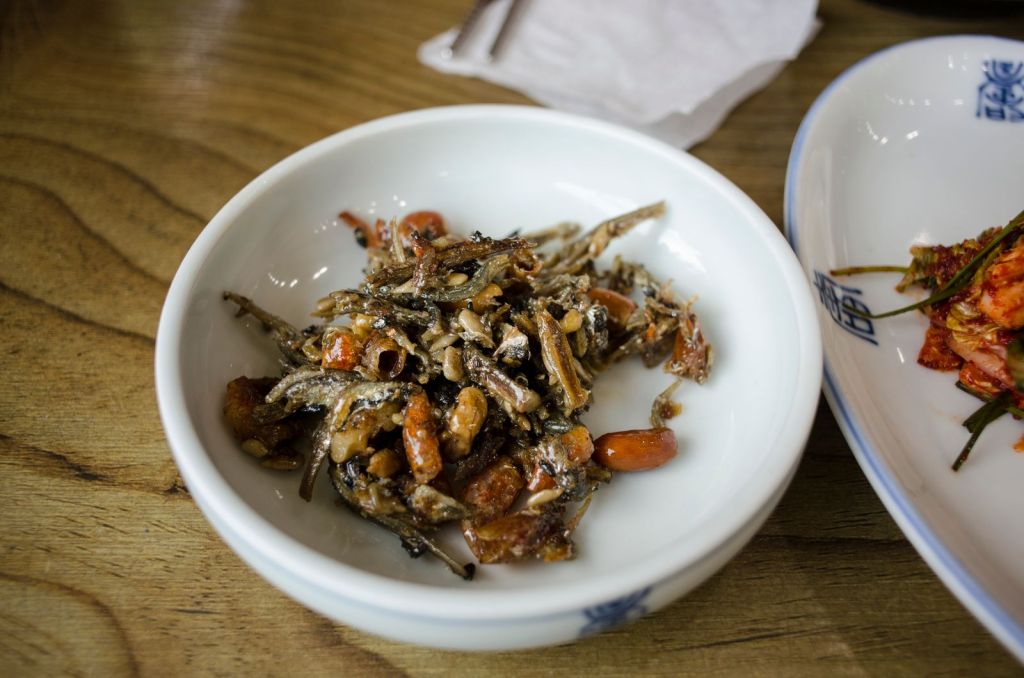
Myeolchi bokkeum
Stir-fried dried anchovies glazed with syrup. See our full myeolchi guide.
Jangjorim and gamja jorim
Soy-braised beef, eggs or potatoes finished with a spoon of syrup for shine.
Korean fried chicken glazes
Starch syrup gives yangnyeom sauce and dakgangjeong their sticky coating.
Mattang
Fried sweet potato chunks coated in a crunchy sugar-syrup glaze.
Easy Myeolchi Ttangkong Bokkeum Recipe (Serves 4 as a side dish)
This is stir-fried small anchovies with peanuts, a classic lunch-box banchan where mulyeot does the important work of glazing.
Ingredients
- 1 cup (about 60 g) small dried anchovies (jiri myeolchi)
- 1/2 cup roasted unsalted peanuts (or almonds, walnuts)
- 1 tbsp neutral oil
Glaze
- 1 tbsp soy sauce
- 1 tsp sugar
- 1 tbsp matsul or rice wine
- 1 tsp minced garlic
- 2 tbsp mulyeot
- 1 tsp sesame oil
- 1 tsp toasted sesame seeds
Instructions
- Put the anchovies in a sieve and shake off dust and broken bits.
- Toast the anchovies in a dry pan over medium-low heat for 2–3 minutes until crisp and fragrant. Tip them onto a plate.
- Add oil to the pan with the soy sauce, sugar, matsul and garlic. Let it bubble for about 30 seconds.
- Return the anchovies, add the peanuts and stir-fry for 1–2 minutes until coated.
- Turn off the heat, then add the mulyeot and toss quickly. Adding the syrup off the heat keeps the side dish glossy and stops it from turning hard.
- Stir in sesame oil and sesame seeds. Spread on a plate to cool, then store in a container.
Tip: If your batch turns hard and clumpy after cooling, it was cooked too long after the syrup went in. Next time add the syrup last, off the heat.
Where to Buy Mulyeot
United States
As an Amazon Associate, I earn from qualifying purchases.
Amazon
Search Korean corn syrup (mulyeot) on Amazon
H-Mart
Search corn syrup on H-Mart
Canada
Search Korean corn syrup on Amazon.ca
Europe
Search Korean corn syrup on Amazon.co.uk
How to Store Mulyeot
Keep mulyeot tightly closed at room temperature in a cool, dry place. It lasts a long time; check the best-before date on the bottle. Wipe the cap after each use so it does not stick, and do not refrigerate it, as it becomes too thick to pour.
Mulyeot FAQ
Is mulyeot the same as corn syrup?
They are very similar. Most Korean mulyeot is a corn-starch syrup, so American light corn syrup is the closest substitute.
What is the difference between mulyeot and jocheong?
Mulyeot is a clear, neutral starch syrup, usually from corn. Jocheong is traditionally made from rice and malt and has a golden color and a light grain flavor. Both glaze food the same way.
Can I use honey instead of mulyeot?
Yes, but use a little less because honey is sweeter, and add it off the heat. The dish will taste more floral and be slightly less glossy.
Conclusion
Mulyeot is the quiet helper behind Korea’s shiny, sticky side dishes and glazes. Keep a bottle next to your soy sauce and you can make glossy myeolchi bokkeum, braises and chicken glazes like a Korean home cook. For the traditional rice-based version, read our jocheong guide.


Leave a Reply