Introduction
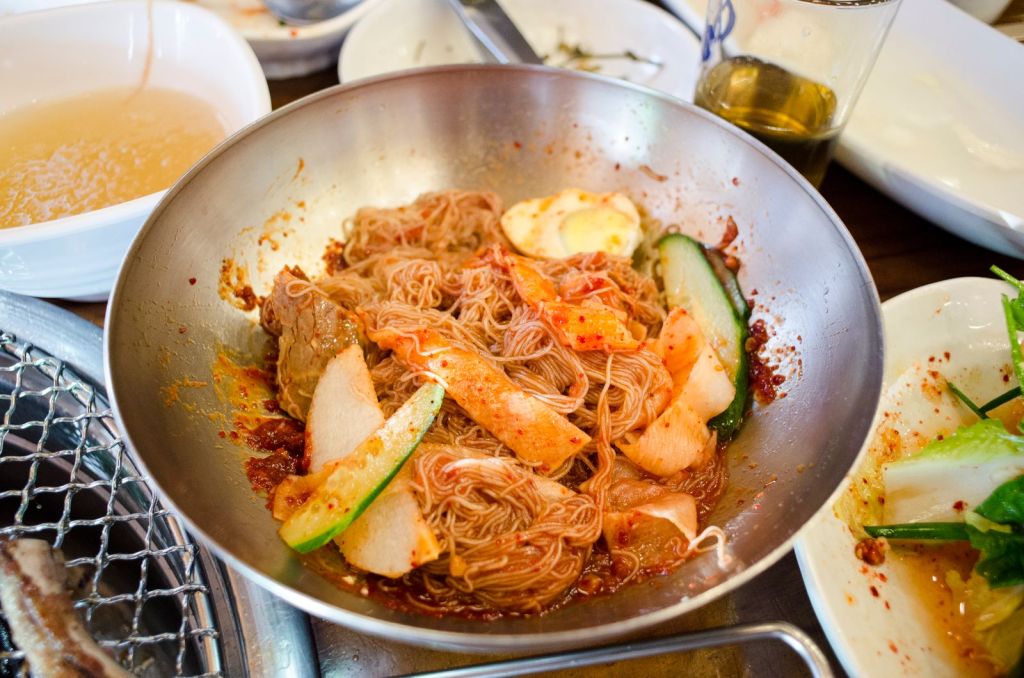
Jjolmyeon (쫔면) are thick, extra-chewy Korean noodles. The name comes from jjolgit-hada, the Korean word for chewy and springy, plus myeon (noodles). Jjolmyeon was born in Incheon in the 1970s and became a favorite snack-bar dish: chilled noodles piled with crunchy vegetables and a boiled egg, then mixed with a sweet, spicy and tangy gochujang sauce. Today you can buy the noodles in the refrigerated or frozen section of Korean grocery stores.
Jjolmyeon at a Glance
Quick facts
- What it is: thick, very chewy Korean wheat noodles
- Main ingredients: wheat flour, starch, water, salt
- Taste: neutral and springy; takes on the flavor of the sauce
- Main uses: cold spicy jjolmyeon, mixed with vegetables, added to tteokbokki
What is Jjolmyeon Made Of?
Jjolmyeon is made from wheat flour mixed with starch, which gives it a much firmer, bouncier bite than regular wheat noodles such as somyeon. The dough is extruded into thick round strands, usually sold fresh or frozen in portion packs.
Types of jjolmyeon products
- Fresh/refrigerated noodles: sold in packs, quick to cook.
- Frozen noodles: long-keeping portions, cook from frozen.
- Meal kits: noodles packaged with a spicy sauce pouch.
- Dried versions: less common, need longer cooking.
What Does Jjolmyeon Taste Like?
The noodles themselves are mild. What makes them special is the texture: dense, elastic and satisfying to chew. In the classic dish, the sauce is spicy, sweet and sour all at once, and the crisp cabbage, cucumber and bean sprouts keep each bite fresh.
Popular Korean Dishes That Use Jjolmyeon
Spicy jjolmyeon
Cold noodles with vegetables and gochujang sauce. Recipe below.
Tteokbokki with jjolmyeon
Snack bars often add a handful of chewy noodles to tteokbokki.
Jjolmyeon with gimbap
A classic bunsik (snack bar) combo: spicy noodles and a roll of gimbap.
Golbaengi muchim with noodles
Spicy sea snail salad, often served with chewy noodles to mix in at bars.
Easy Spicy Jjolmyeon Recipe (Serves 2)
Ingredients
- 2 portions (about 14 oz / 400 g) jjolmyeon noodles
- 1 cup shredded green cabbage
- 1/2 cucumber, cut into matchsticks
- 1/2 carrot, cut into matchsticks
- 1 cup bean sprouts
- 1 hard-boiled egg, halved
- 1 tsp toasted sesame seeds
Jjolmyeon sauce
- 3 tbsp gochujang
- 1 tbsp gochugaru
- 2 1/2 tbsp vinegar
- 1 1/2 tbsp sugar
- 1 tbsp corn syrup or honey
- 1 tbsp soy sauce
- 1 tsp minced garlic
- 1 tbsp sesame oil
- 1 tbsp lemon-lime soda or water to loosen (optional)
Instructions
- Mix all the sauce ingredients and let them sit for 10 minutes so the chili flakes soften.
- Blanch the bean sprouts in boiling water for 2 minutes, then cool in cold water and drain.
- Gently separate the noodle strands and cook in plenty of boiling water following the package (usually 3–5 minutes), stirring so they do not stick.
- Drain and rinse the noodles under cold running water, rubbing them to remove surface starch, until fully chilled. Drain well.
- Place the noodles in bowls and top with cabbage, cucumber, carrot, bean sprouts, half an egg and a generous spoon of sauce.
- Sprinkle with sesame seeds and mix everything well before eating.
Tip: Rinse the noodles thoroughly in very cold water (or ice water). This is what gives jjolmyeon its signature firm, bouncy chew.
Where to Buy Jjolmyeon
United States
As an Amazon Associate, I earn from qualifying purchases.
Amazon
Search jjolmyeon noodles on Amazon
H-Mart
Search jjolmyeon on H-Mart
Canada
Search Korean chewy noodles on Amazon.ca
Europe
Search Korean chewy noodles on Amazon.co.uk
How to Store Jjolmyeon
Keep fresh jjolmyeon refrigerated and use it by the date on the pack; frozen noodles stay in the freezer for several months and can be cooked straight from frozen. Cooked noodles harden in the fridge, so cook only what you will eat. The sauce keeps in a sealed jar in the fridge for about 2 weeks.
Jjolmyeon FAQ
What is the difference between jjolmyeon and naengmyeon?
Naengmyeon are thin noodles made with buckwheat or sweet potato starch, while jjolmyeon are thicker wheat-and-starch noodles with a denser chew.
What can I use instead of jjolmyeon?
Thick udon or Korean naengmyeon noodles are the closest substitutes, though neither is quite as chewy.
Is jjolmyeon spicy?
The noodles are not, but the classic sauce is moderately spicy. Reduce the gochugaru and add more sugar and vinegar for a milder version.
Conclusion
Jjolmyeon is all about texture: springy, chewy noodles chilled in cold water and tossed with crunchy vegetables and a bold sweet-sour gochujang sauce. Keep a pack in the freezer for a quick summer lunch. If you love cold noodles, try our bibim naengmyeon next.


Leave a Reply