Introduction
Yeotgireum (엿기름) is Korean barley malt powder, made from barley that has been sprouted, dried and ground. It looks like a coarse beige flour, but its real value is invisible: the enzymes formed during sprouting break down starch into sugar. That is how Korean cooks make the sweet rice punch sikhye, traditional rice syrup and even homemade gochujang without much added sugar. Despite the name (“yeot” is Korean taffy and “gireum” sounds like the word for oil), it contains no oil at all.
Yeotgireum at a Glance
Quick facts
- What it is: dried, ground sprouted barley (barley malt powder)
- Main ingredients: 100% malted barley
- Taste: mildly sweet, nutty and grainy
- Main uses: sikhye, jocheong and yeot (rice syrup and taffy), homemade gochujang, sikhye ice
What is Yeotgireum Made Of?
Yeotgireum is made only from barley. The grains are soaked, allowed to sprout for several days, then dried and ground. Sprouting activates amylase enzymes, which convert the starch in cooked rice into maltose sugar when the two are kept warm together. It is used by soaking the powder in water, straining it and using the cloudy “malt water” rather than eating the powder itself. The same process is used to make jocheong, Korea’s traditional rice syrup.
Types of yeotgireum
- Fine powder (gaeru): the most common bag at Korean markets, easy to steep.
- Coarse ground: slightly chunkier, often preferred for sikhye.
- Tea-bag yeotgireum: pre-portioned pouches that skip the straining step.
- Whole dried malt (sprouted barley): sold in some shops to grind at home.
What Does Yeotgireum Taste Like?
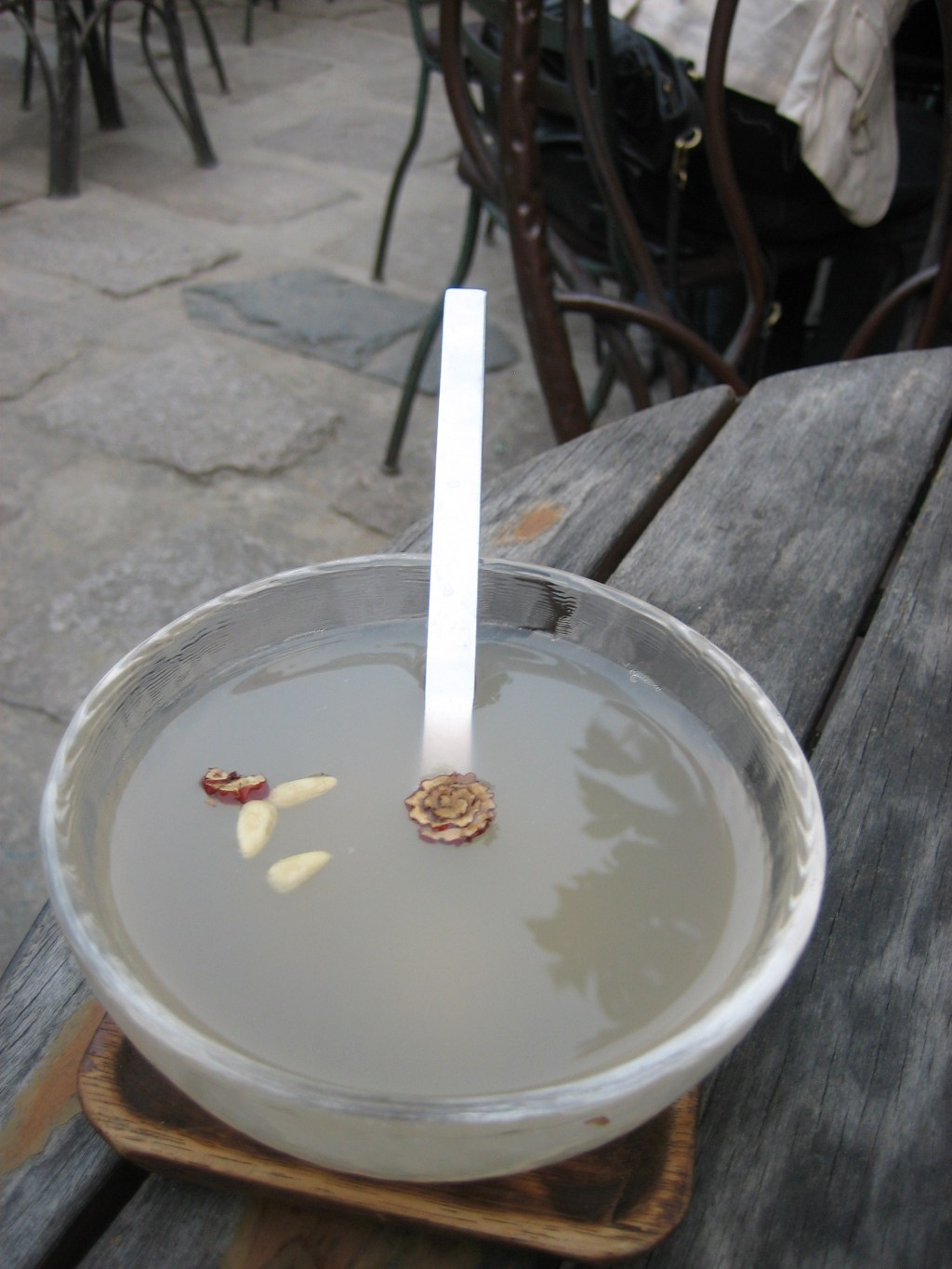
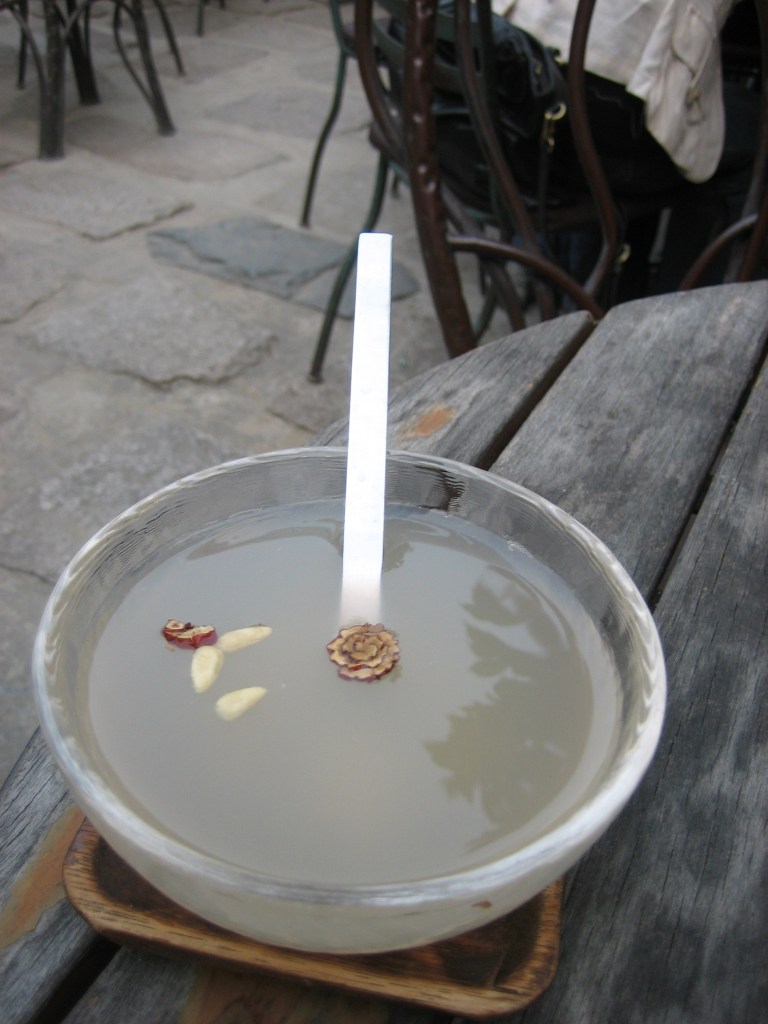
On its own it tastes like mild, slightly sweet cereal with a grassy, toasted note. Its flavor comes through gently in sikhye, which tastes sweet, malty and refreshing, with soft rice grains floating on top.
Popular Korean Dishes That Use Yeotgireum
Sikhye
Sweet rice punch served cold after meals and at holidays. Recipe below.
Jocheong and yeot
Malt water and rice cooked down for hours into rice syrup, or further into chewy Korean taffy.
Homemade gochujang
Traditional gochujang uses malt water to sweeten glutinous rice before mixing in chili and fermented soybean powder.
Hobak-sikhye
A pumpkin version of sikhye with a golden color.
Easy Sikhye Recipe (Makes about 10 cups)
Ingredients
- 1 1/2 cups (about 150 g) yeotgireum
- 12 cups (about 3 liters) lukewarm water
- 2 cups cooked short-grain rice (slightly firm)
- 1/2 to 3/4 cup sugar, to taste
- 1 small piece of ginger, sliced (optional)
- Pine nuts, to serve (optional)
Instructions
- Put the yeotgireum in a fine mesh bag or cheesecloth and soak it in the lukewarm water for 30 minutes. Squeeze and rub the bag well to release the milky malt water, then remove the bag.
- Let the malt water stand for 1–2 hours so the sediment settles. Carefully pour off the clear liquid on top and discard the cloudy sediment; this keeps the sikhye clear.
- Put the cooked rice in a rice cooker and pour in the clear malt water. Stir, close the lid and set it to “keep warm” for 4–6 hours.
- It is ready when about 10 or more rice grains float to the surface. Scoop out the floating rice, rinse it in cold water and keep it in the fridge.
- Pour the liquid into a pot, add the sugar and ginger, and bring to a boil. Skim off the foam and simmer 5 minutes.
- Cool completely and refrigerate. Serve very cold with a spoonful of the reserved rice and a few pine nuts on top.
Tip: Keep the temperature warm but not hot (around 130–140°F / 55–60°C). If the rice cooker gets too hot, the enzymes stop working and the rice will not float; leave the lid slightly open or check every hour.
Where to Buy Yeotgireum
United States
As an Amazon Associate, I earn from qualifying purchases.
Amazon
Search yeotgireum barley malt powder on Amazon
Search sikhye on Amazon
H-Mart
Search barley malt on H-Mart
Canada
Search Korean barley malt powder on Amazon.ca
Europe
Search Korean barley malt powder on Amazon.co.uk
How to Store Yeotgireum
Keep unopened yeotgireum in a cool, dry place. After opening, seal the bag tightly and store it in the refrigerator or freezer to protect its enzymes and keep bugs away; use within a few months. Homemade sikhye keeps about 1 week in the refrigerator and can be frozen into slushy sikhye ice.
Yeotgireum FAQ
Is yeotgireum the same as malt powder for baking?
It is similar to diastatic barley malt powder, which also contains active enzymes. Non-diastatic malt powder or malted milk powder will not work for sikhye.
Is yeotgireum gluten-free?
No. It is made from barley, which contains gluten.
Why didn’t my sikhye rice float?
Usually the temperature was too high or too low, or the malt was old. Keep it gently warm and give it more time.
Can I make sikhye without sugar?
Yes. The malt already creates natural sweetness, so you can reduce or skip the sugar for a lighter, more grainy drink.
Conclusion
Yeotgireum is a humble bag of barley malt that unlocks some of Korea’s most traditional sweets, from sikhye to rice syrup and homemade gochujang. If you enjoy grain-based Korean drinks, try misutgaru or roasted barley tea, boricha, next.


Leave a Reply