Introduction
Outside Korea, Spam is often seen as a basic pantry item. In Korea, it is something closer to comfort food – pan-fried slices on hot white rice, chunks in spicy army stew, and neatly boxed gift sets during the Chuseok and Lunar New Year holidays. Canned ham (often called haem or simply “Spam” in Korean) arrived with the U.S. military after the Korean War, when meat was scarce, and it has stayed a household favorite ever since. Today the Spam sold in Korea is produced locally under license. Here is what it is, how Koreans eat it, and an easy recipe.
Korean Spam at a Glance
What it is
- Canned, fully cooked pork luncheon meat
Main ingredients
- Pork, ham, salt, water, starch, sugar and curing agents
Taste
- Salty, savory and rich, with crispy edges when pan-fried
Main uses
- Fried slices with rice, budae jjigae, kimchi fried rice, gimbap, lunchbox side dishes
What is Korean Spam Made Of?
Spam is made from chopped pork and ham mixed with salt, water, potato starch, a little sugar and sodium nitrite, then sealed and cooked in the can. Because it is fully cooked, it can be eaten straight from the can, but Koreans almost always fry or simmer it. Common types you will find in Korean grocery stores include:
- Classic Spam: the original, saltiest version.
- Lower-sodium or “lite” Spam: a milder choice for frequent use.
- Other Korean canned hams: similar luncheon meats from Korean food companies, often sold in multi-can gift sets.
What Does Korean Spam Taste Like?
Spam tastes like a soft, salty ham with a smooth texture. Pan-frying transforms it: the outside turns golden and crisp while the inside stays tender. In Korean cooking that saltiness is a feature – a small piece seasons a whole spoonful of plain rice, which is why “Spam and rice” is such a classic pairing. In stews it adds a smoky, meaty richness.
Popular Korean Dishes That Use Spam
Budae Jjigae (Army Stew)
Spam, sausages, kimchi, ramyeon noodles and cheese in a spicy broth – see our budae jjigae sauce guide.
Spam Gui with Rice
Simple pan-fried slices, sometimes dipped in beaten egg first, eaten with rice and kimchi.
Spam Kimchi Fried Rice
Diced Spam makes kimchi fried rice extra savory.
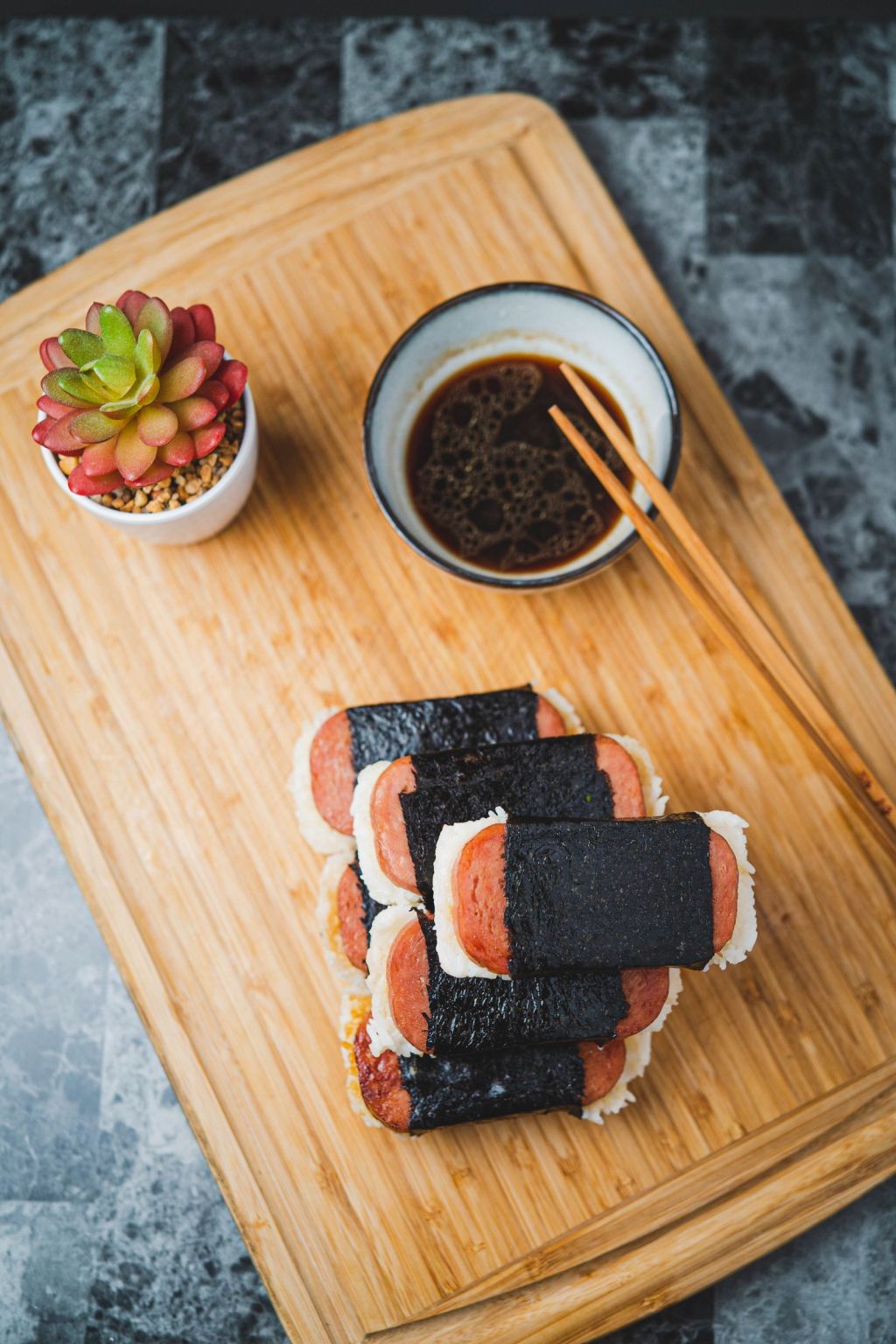
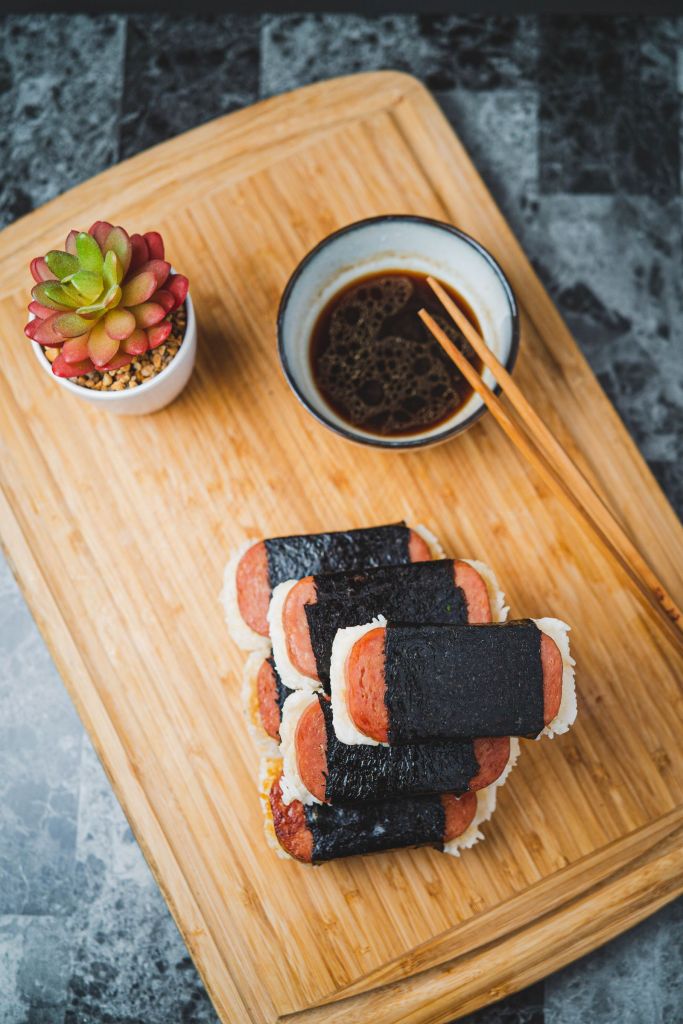
Spam Gimbap and Rice Rolls
Strips of fried Spam rolled with rice and seaweed, a favorite for picnics and convenience-store snacks.
Easy Spam Rice Roll Recipe (Serves 2–3, makes 8 pieces)
Ingredients
- 1 can (12 oz / 340 g) Spam, cut into 8 slices
- 3 cups cooked short-grain rice, warm
- 4 sheets gim (roasted seaweed), cut in half
- 2 eggs, beaten with a pinch of salt
- 1 tsp sesame oil, 1/2 tsp salt, 1 tsp sesame seeds (for the rice)
Glaze (optional)
- 1 Tbsp soy sauce, 1 Tbsp sugar, 1 Tbsp water
Instructions
- Season the warm rice with sesame oil, salt and sesame seeds.
- Pan-fry the Spam slices in a dry nonstick pan over medium heat for 2–3 minutes per side until golden. If using the glaze, pour it in and let it bubble until it coats the slices.
- Wipe the pan, add a little oil and cook the beaten egg as a thin omelet. Cut it into 8 pieces about the size of the Spam slices.
- Use the empty Spam can (lined with plastic wrap) or your hands to press a rice block the same size as a Spam slice.
- Stack rice, egg and Spam, then wrap the middle with a half-sheet of gim, sealing the end with a grain of rice.
- Serve warm or at room temperature with kimchi.
Tip: To reduce saltiness, blanch the Spam slices in boiling water for 30 seconds and pat dry before frying.
Where to Buy Korean Spam
United States
As an Amazon Associate, I earn from qualifying purchases.
Amazon
Search Spam on Amazon
Search Korean canned ham on Amazon
H-Mart
Search Spam on H-Mart
Canada
Europe
How to Store Spam
Unopened cans keep in a cool, dry pantry until the date printed on the can. Once opened, move leftovers to an airtight container, refrigerate and use within 3–4 days. You can also freeze sliced Spam for up to a couple of months; thaw in the fridge before frying.
Korean Spam FAQ
Why is Spam so popular in Korea?
It became a valued source of meat after the Korean War, and it pairs perfectly with rice and kimchi, so it stayed a comfort food.
Why do Koreans give Spam as a gift?
Canned ham gift sets are practical, long-lasting and widely liked, which makes them a popular holiday present for Chuseok and Seollal.
Do you need to cook Spam?
No, it is fully cooked in the can, but frying or simmering gives much better flavor and texture.
Is Korean Spam different from American Spam?
It is the same product idea, made locally in Korea under license; flavors and sodium levels can differ slightly by product line.
Conclusion
Spam may be humble, but in Korea it is a beloved part of home cooking, from army stew to lunchbox rice rolls. Keep a can in the pantry and you are always 10 minutes away from a satisfying Korean-style meal.


Leave a Reply