Introduction
Muchim (무침) is a whole family of Korean side dishes made by tossing raw or blanched vegetables, seaweed or seafood with seasoning – the word comes from muchida, “to mix by hand.” The muchim sauce is the quick dressing that does the work: usually gochugaru, vinegar, sugar, garlic and sesame, with soy sauce or fish sauce for salt. Once you know the basic ratio, you can turn almost any vegetable into banchan in five minutes.
Muchim Sauce at a Glance
What it is
- An all-purpose seasoning for Korean tossed side dishes
Main ingredients
- Gochugaru and/or gochujang, vinegar, sugar, soy sauce or fish sauce, garlic, sesame oil, sesame seeds
Taste
- Bright, sweet-sour and spicy with a nutty sesame finish
Main uses
- Garlic chive, cucumber, radish, lettuce, bean sprout, acorn jelly and dried squid side dishes
What is Muchim Sauce Made Of?
There is no single bottled muchim sauce – every Korean kitchen mixes its own from pantry staples. The most common styles are:
- Spicy gochugaru muchim: chili flakes, vinegar, sugar, soy or fish sauce and garlic – light and fresh, for fast vegetable salads.
- Gochujang muchim (chojang style): chili paste, vinegar and sugar – thicker and sweeter, for seafood, dried squid and acorn jelly.
- Ganjang muchim: soy sauce, vinegar, sugar and sesame oil with no chili, for kids or delicate greens.
- Salt and sesame oil: the simplest seasoning, used for namul like bean sprouts and spinach.
What Does Muchim Sauce Taste Like?
A good spicy muchim sauce tastes lively rather than heavy: sour first, then sweet and salty, with gentle chili heat and fragrant sesame. Because it is not cooked, garlic and green onion stay sharp and fresh. It is meant to season, not drown, the vegetables – just enough to coat each piece.
Popular Korean Dishes That Use Muchim Sauce
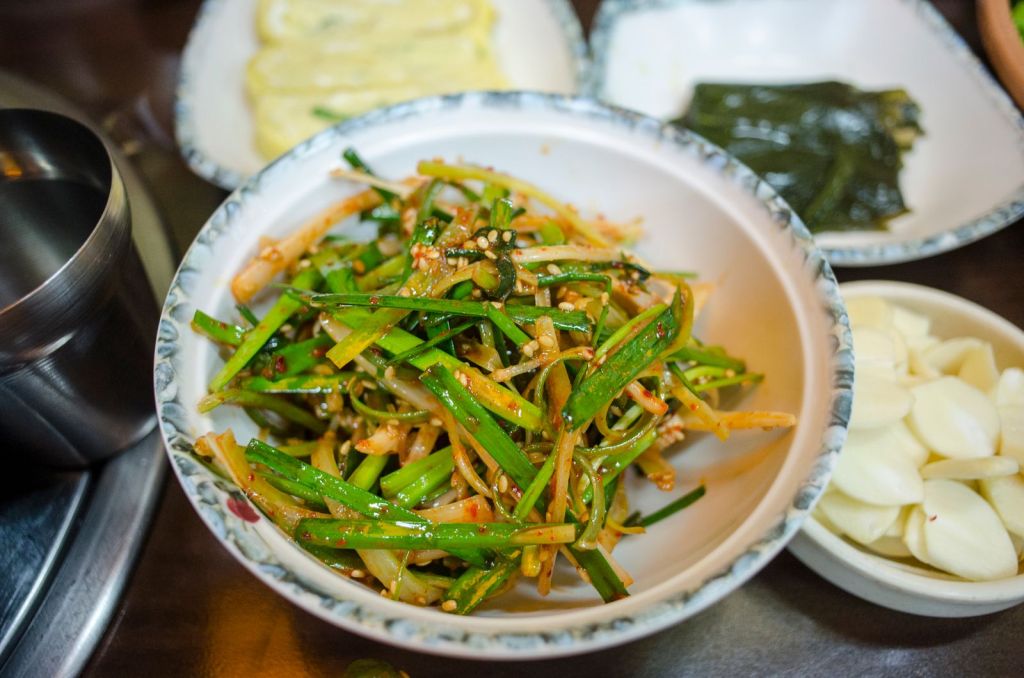
Buchu Muchim (Garlic Chive Salad)
A spicy, garlicky side that is perfect with grilled pork and boiled meats.
Oi Muchim (Spicy Cucumber Salad)
Our gochugaru guide includes an easy oi muchim recipe.
Dotorimuk Muchim
Acorn jelly tossed with vegetables in a soy-chili dressing – see our dotorimuk guide.
Ojingeochae Muchim
Shredded dried squid in a sweet gochujang muchim sauce, a lunchbox classic.
Easy Buchu Muchim Recipe (Serves 3–4 as a side)
Ingredients
- 1 bunch garlic chives (buchu), about 5 oz / 150 g
- 1/4 onion, thinly sliced
Spicy Muchim Sauce
- 1 1/2 tbsp gochugaru
- 1 tbsp soy sauce
- 1/2 tbsp fish sauce (or another 1/2 tbsp soy sauce)
- 1 tbsp vinegar
- 1 tsp sugar
- 1 tsp minced garlic
- 1 tbsp toasted sesame oil, 1 tsp toasted sesame seeds
Instructions
- Rinse the chives, shake off as much water as possible and pat dry. Cut into 2-inch (5 cm) lengths.
- Soak the sliced onion in cold water for 5 minutes to soften its bite, then drain and pat dry.
- In a large bowl, mix all sauce ingredients except the sesame oil and seeds.
- Add the chives and onion and toss very gently with your fingertips (or chopsticks) so the chives don’t bruise.
- Drizzle with sesame oil, sprinkle with sesame seeds and serve immediately.
Tip: Toss muchim right before serving. Salt draws water out of vegetables, so a muchim made too early becomes watery and limp.
Where to Buy Muchim Sauce Ingredients
United States
As an Amazon Associate, I earn from qualifying purchases.
Amazon
Search Korean gochugaru on Amazon
Search Korean sesame oil on Amazon
H-Mart
Search gochugaru on H-Mart
Search garlic chives on H-Mart
Canada
Search Korean gochugaru on Amazon.ca
Europe
Search Korean gochugaru on Amazon.co.uk
How to Store Muchim Sauce
Mix a jar of the sauce base (everything except sesame oil, seeds and fresh garlic, if you prefer) and refrigerate it for up to 1 week. Add the garlic and sesame just before tossing. Finished muchim is best eaten the same day; leftovers keep 1–2 days in the fridge but will soften.
Muchim Sauce FAQ
What is the difference between muchim and namul?
Namul usually means seasoned greens or sprouts, often blanched and dressed with salt or soy and sesame oil. Muchim is broader and often spicier and tangier, and can include raw vegetables and seafood.
What is the basic muchim sauce ratio?
A handy starting point is 1 part soy or fish sauce, 1 part vinegar, 1/2 part sugar and 1 to 1 1/2 parts gochugaru, plus garlic and sesame. Adjust to taste.
Can I make muchim without chili?
Yes. Use the ganjang style: soy sauce, vinegar, sugar, garlic and sesame oil.
Which vegetables work best?
Crisp or leafy ones: cucumber, radish, lettuce, garlic chives, green onions, bean sprouts, seaweed and blanched broccoli.
Conclusion
Muchim sauce is the everyday workhorse of Korean home cooking – learn one ratio and you can make fresh banchan from whatever is in your fridge. Try it with garlic chives first, then explore more side dishes like kongnamul muchim and ojingeochae muchim.


Leave a Reply