Introduction
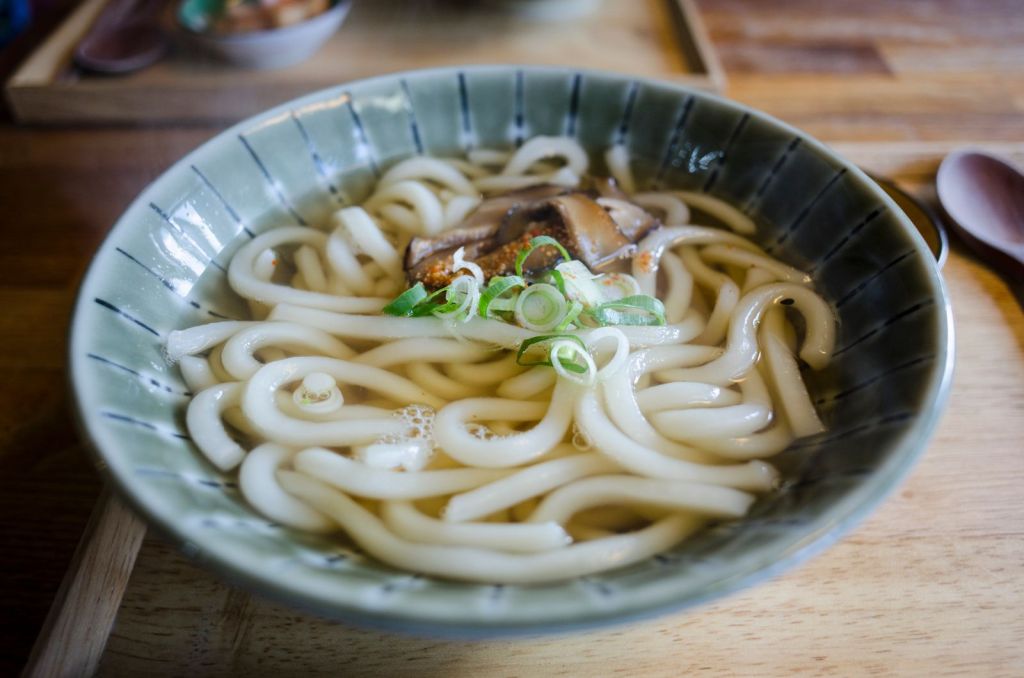
Udong (우동) is the Korean name for thick, chewy wheat noodles known in Japan as udon. The noodles came from Japanese cooking, but Korean udong developed its own style: a light, savory broth made from anchovy and kelp, topped with eomuk (fish cake), green onion, seaweed flakes and a sprinkle of chili flakes. It is a comfort food at bunsik snack shops, highway rest stops and train stations, and packaged udong noodles are a staple in Korean grocery stores.
Udong at a Glance
What it is
- Thick wheat noodles and the Korean noodle soup made with them
Main ingredients
- Wheat flour, water and salt (noodles); anchovy, kelp and soy sauce (broth)
Taste
- Soft and chewy noodles in a clean, savory, lightly sweet broth
Main uses
- Eomuk udong, tempura udong, stir-fried udong, added to tteokbokki and hot pots
What is Udong Made Of?
The noodles are made from wheat flour, water and salt, rolled thick and cut. In stores you will find them in a few forms:
- Fresh or vacuum-packed udong: pre-cooked noodles that only need 1–2 minutes in boiling water – the most common type.
- Frozen udong: very chewy; cook straight from frozen.
- Instant udong bowls: noodles with a soup base packet and dried toppings.
- Dried udong: shelf-stable, needs longer boiling.
The Korean broth is usually based on anchovy-kelp stock seasoned with soy sauce, rather than the bonito-heavy dashi used in many Japanese versions.
What Does Udong Taste Like?
The noodles are thick, soft and bouncy. Korean udong broth is clear and savory with a gentle sweetness, a light seafood depth from anchovy, and a pop of heat if you add gochugaru. Toppings like fish cake and crunchy tempura bits make it hearty but still light.
Popular Korean Dishes That Use Udong
Eomuk Udong
Udong in anchovy broth with fish cake – the recipe below.
Gaksu Udong
A simple udong traditionally sold at train station counters, with fried tofu, green onion and seaweed flakes.
Bokkeum Udong
Stir-fried udong with vegetables and pork in a sweet soy or spicy gochujang sauce.
Udong Sari
Udong noodles added to tteokbokki, jjimdak or hot pot near the end of the meal.
Easy Eomuk Udong Recipe (Serves 2)
Ingredients
- 2 packs (about 7 oz / 200 g each) fresh or frozen udong noodles
- 2 sheets Korean fish cake, sliced
- 1 green onion, sliced
- A handful of crown daisy (ssukgat) or spinach (optional)
- Roasted seaweed flakes, tempura crumbs and gochugaru, for topping
Udong Broth
- 5 cups (1.2 L) water
- 10 large dried anchovies, heads and guts removed
- 1 piece dried kelp (about 4 x 4 inches)
- 1/4 onion
- 2 tbsp soy sauce (or 1 tbsp soup soy sauce + 1 tbsp regular)
- 1 tbsp rice wine (matsul or mirin)
- 1 tsp sugar
- Salt, to taste
Instructions
- Put the water, anchovies, kelp and onion in a pot. Bring to a boil, remove the kelp after 5 minutes, and simmer the rest 10 minutes more. Strain.
- Season the broth with soy sauce, rice wine, sugar and salt to taste. Add the fish cake and simmer 3 minutes.
- In a separate pot, boil the udong noodles for 1–2 minutes (or as the package says), loosening them with chopsticks. Drain.
- Divide the noodles between two big bowls and pour the hot broth and fish cake over them.
- Top with green onion, greens, seaweed flakes, tempura crumbs and a pinch of gochugaru. Serve immediately.
Tip: Short on time? Dissolve one or two coin yuksu broth tablets in the water instead of making anchovy stock.
Where to Buy Udong Noodles
United States
As an Amazon Associate, I earn from qualifying purchases.
Amazon
Search Korean udon noodles on Amazon
Search dried anchovies for broth on Amazon
H-Mart
Search udon on H-Mart
Search fish cake on H-Mart
Canada
Search Korean udon noodles on Amazon.ca
Europe
Search Korean udon noodles on Amazon.co.uk
How to Store Udong Noodles
Vacuum-packed udong is shelf-stable or refrigerated depending on the brand – follow the label and use within a day or two after opening. Frozen udong keeps for months in the freezer; cook it straight from frozen. Leftover broth keeps 3 days in the fridge, but cook noodles fresh, because they turn mushy when stored in soup.
Udong FAQ
Is udong the same as udon?
The noodles are the same type. “Udong” is the Korean pronunciation, and Korean versions usually use anchovy-kelp broth and Korean toppings like fish cake and gochugaru.
How is udong different from kalguksu?
Udong noodles are thicker, rounder and bouncier. Kalguksu noodles are flat, knife-cut and cooked directly in the soup, which makes the broth slightly thick.
Are udong noodles gluten-free?
No. They are made from wheat flour.
Conclusion
Udong is the cozy Korean version of udon: chewy noodles in a light anchovy-kelp broth with fish cake and a dash of chili. With a pack of noodles and a quick stock, you can have a bowl of rest-stop comfort food in 20 minutes. For more Korean noodles, explore our ramyeon guide.


Leave a Reply