Introduction
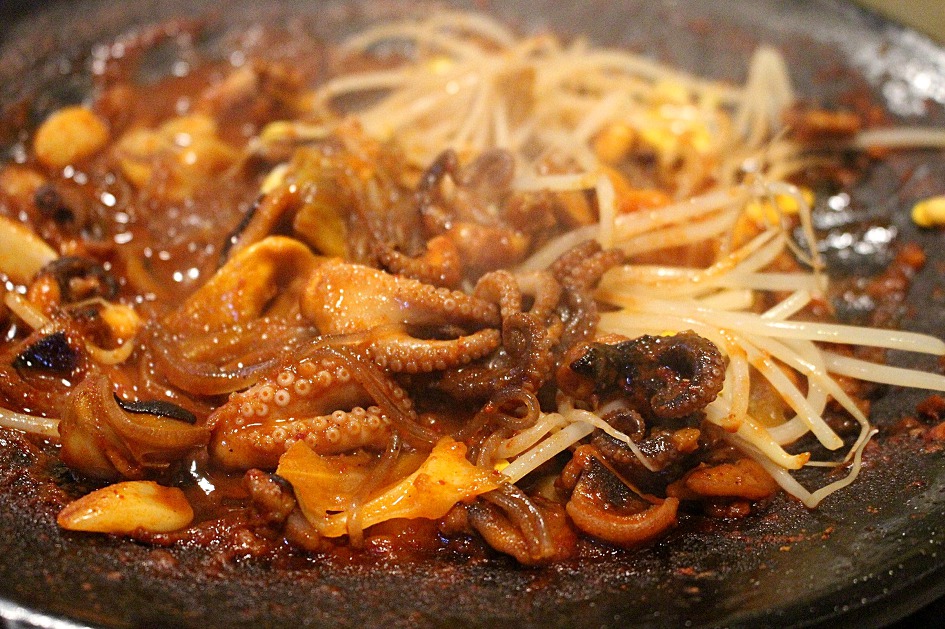
Jjukkumi (주꾸미) is webfoot octopus, a small octopus a little bigger than your thumb, and jjukkumi bokkeum is one of Korea’s favorite spicy dishes: the tender octopus stir-fried over high heat in a sticky red sauce with a smoky, charred edge. Restaurants often pair it with grilled pork belly (jjukkumi samgyeop) and finish the pan with fried rice. The sauce is close to the one in our nakji bokkeum guide, but jjukkumi versions are usually hotter, smokier and a little sweeter.
Jjukkumi Bokkeum Sauce at a Glance
What it is
- A spicy stir-fry sauce for webfoot octopus, often cooked with pork belly
Main ingredients
- Gochugaru, gochujang, soy sauce, garlic, sugar or syrup, ginger, sesame oil
Taste
- Hot, sweet, garlicky and smoky
Main uses
- Jjukkumi bokkeum, jjukkumi samgyeop, squid or shrimp stir-fries, fried rice
What is Jjukkumi Bokkeum Sauce Made Of?
The base is a generous amount of gochugaru mixed with gochujang, soy sauce, plenty of garlic, a little ginger, sugar or corn syrup and sesame oil. Many recipes add rice wine to remove fishiness and black pepper for extra bite. Common variations:
- Classic: gochugaru and gochujang, stir-fried with onion, cabbage and green onion.
- Bulmat (fire-flavor) style: stir-fried so hot that the sauce chars, or finished with a kitchen torch.
- Jjukkumi samgyeop: octopus and pork belly cooked together so the pork fat enriches the sauce.
- Frozen meal kits: pre-marinated jjukkumi sold frozen at Korean markets.
What Does Jjukkumi Bokkeum Sauce Taste Like?
It hits sweet first, then garlicky and very spicy, with a savory gochujang depth underneath. The best versions have a smoky, slightly charred flavor from high heat. Jjukkumi itself is tender and springy with a mild sweetness, and in spring the heads are often full of rice-like eggs that Koreans prize.
Popular Korean Dishes That Use Jjukkumi Bokkeum Sauce
Jjukkumi Bokkeum
Octopus stir-fried with vegetables and served with rice and cooling sides.
Jjukkumi Samgyeop
Octopus plus samgyeopsal in one pan – the recipe below.
Bokkeumbap Finish
Leftover sauce in the pan is mixed with rice, seaweed flakes and sesame oil to make fried rice.
Ojingeo Bokkeum
The same sauce works for spicy stir-fried squid.
Easy Jjukkumi Samgyeop Recipe (Serves 2–3)
Ingredients
- 1 lb (450 g) jjukkumi (cleaned, thawed if frozen) or baby octopus
- 8 oz (225 g) pork belly, cut into bite-size pieces
- 1/2 onion, sliced, and 1 cup cabbage, chopped
- 2 green onions, cut into 2-inch pieces
- 2 tbsp flour and 1 tsp salt, for cleaning
Jjukkumi sauce
- 3 tbsp gochugaru
- 1 1/2 tbsp gochujang
- 2 tbsp soy sauce
- 2 tbsp corn syrup or rice syrup and 1 tbsp sugar
- 1 1/2 tbsp minced garlic and 1/2 tsp minced ginger
- 1 tbsp rice wine, 1 tbsp sesame oil and a pinch of black pepper
Instructions
- If the octopus is not pre-cleaned, turn the heads inside out and remove the innards, eyes and beak (keep any eggs if you like). Rub with flour and salt for 1 minute, then rinse well.
- Blanch the octopus in boiling water for 30 seconds, drain and cut large ones in half. This keeps the stir-fry from getting watery.
- Mix the sauce and toss half of it with the octopus.
- In a large pan over medium-high heat, cook the pork belly until browned and cooked through, 5–6 minutes. Pour off some fat if there is a lot.
- Add the onion, cabbage and remaining sauce and stir-fry 2 minutes. Add the octopus and stir-fry on high heat for 2–3 minutes until it is opaque and firm. Add green onion and serve right away.
Tip: Do not overcook – octopus turns rubbery after a few minutes on high heat. Serve with lettuce wraps, bean sprouts or a mild gyeran-jjim to cool the heat.
Where to Buy Jjukkumi and Sauce Ingredients
United States
As an Amazon Associate, I earn from qualifying purchases.
Amazon
Search gochugaru on Amazon
Search Korean spicy stir fry sauce on Amazon
H-Mart
Search baby octopus on H-Mart
Canada
Europe
Search gochugaru on Amazon.co.uk
Look for frozen “baby octopus” or “webfoot octopus” (주꾸미) in the seafood freezer of Korean and Asian supermarkets; many packs come already cleaned.
How to Store Jjukkumi Bokkeum Sauce
Unused sauce keeps in a sealed jar in the fridge for about 1 week or in the freezer for 1–2 months. Keep frozen octopus frozen until the day you cook it and thaw it in the fridge. Cooked jjukkumi bokkeum is best eaten fresh; leftovers keep 1–2 days refrigerated.
Jjukkumi Bokkeum Sauce FAQ
What is the difference between jjukkumi and nakji?
Jjukkumi (webfoot octopus) is small with short arms, while nakji (long-arm octopus) has a slightly larger body and long, thin arms. Both are cooked in similar spicy sauces.
When is jjukkumi in season?
Spring is the peak season in Korea, when many jjukkumi are full of eggs. Frozen jjukkumi is available all year.
How spicy is jjukkumi bokkeum?
Restaurant versions are very spicy. At home, cut the gochugaru to 1–2 tbsp for a milder dish.
Can I use squid or shrimp instead?
Yes. Squid, shrimp or a mix of seafood all work with this sauce; adjust cooking time so they do not overcook.
Conclusion
Jjukkumi bokkeum sauce delivers big, smoky heat in minutes, and pairing it with pork belly makes it a full Korean feast. Keep a bag of frozen baby octopus on hand, cook it fast over high heat, and save the last spoonfuls of sauce for fried rice. For a similar dish with long-arm octopus, see our nakji bokkeum sauce guide.


Leave a Reply