Introduction
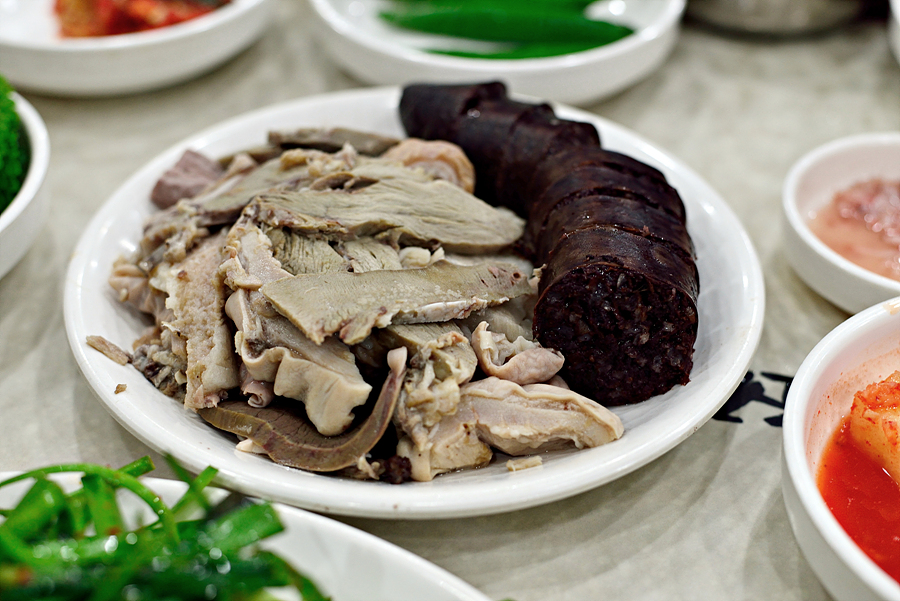
Sundae (순대, pronounced “soon-deh” – nothing to do with ice cream) is Korean blood sausage, one of the country’s most loved street foods. Thick, dark slices of sausage stuffed with chewy glass noodles are steamed and sold from market stalls next to tteokbokki and fried snacks, often with slices of liver and lung on the side. It also stars in soups and spicy stir-fries, and you can buy ready-to-steam packs at Korean grocery stores.
Sundae at a Glance
What it is
- A Korean sausage made with pork intestine casing, usually filled with glass noodles and pork blood
Main ingredients
- Dangmyeon (glass noodles), pork blood, glutinous rice, vegetables, seasonings
Taste
- Mild, savory and earthy with a soft, chewy texture
Main uses
- Steamed street snack, sundae-guk soup, sundae bokkeum, with tteokbokki
What is Sundae Made Of?
The everyday street version is filled mostly with dangmyeon mixed with pork blood, a little glutinous rice and seasoning, then stuffed into cleaned pork intestine (some mass-produced types use other casings) and steamed. Regional styles are richer and more varied:
- Market (dangmyeon) sundae: the common, noodle-filled type sold with tteokbokki.
- Byeongcheon sundae: from Cheonan, with a thinner casing and more vegetables and rice.
- Abai sundae: a large, North Korean–style sundae associated with Sokcho, stuffed with rice and vegetables.
- Baek-sundae: a “white” sundae made without blood, linked to Yongin.
- Ojingeo-sundae: a seafood cousin – whole squid stuffed with a rice and vegetable filling.
What Does Sundae Taste Like?
Sundae is milder than many people expect. The noodles give a soft, bouncy chew, the blood adds an earthy, slightly iron-rich savoriness, and the casing has a gentle snap. On its own it is lightly seasoned, which is why it is always eaten with a dip. What you dip it in depends on where you are: seasoned salt with pepper and chili in Seoul, makjang or ssamjang in Busan and Gyeongsang, and chogochujang in parts of Jeolla.
Popular Korean Dishes That Use Sundae
Steamed Sundae with Tteokbokki
The classic bunsik combo – many people dip sundae straight into tteokbokki sauce.
Sundae-guk
Sundae and pork in a milky pork bone broth, served with rice.
Sundae Bokkeum
Sundae stir-fried with cabbage and perilla leaves in a spicy sauce – Seoul’s Sillim-dong is famous for it. Recipe below.
Modeum Sundae Platter
A mixed plate of sundae with liver, lung and boiled pork, often shared with soju.
Easy Sundae Bokkeum Recipe (Serves 2–3)
Ingredients
- 1 lb (450 g) store-bought sundae, cut into 1/2-inch slices
- 2 cups cabbage, chopped; 1/2 onion, sliced
- 1/2 carrot, sliced (optional)
- 8–10 perilla leaves, sliced; 1 green onion
- 2 tbsp cooking oil and 1/4 cup water
Sauce
- 2 tbsp gochujang and 1 tbsp gochugaru
- 1 tbsp soy sauce and 1 tbsp sugar (or syrup)
- 1 tbsp minced garlic
- 1 tbsp deulkkaegaru (perilla seed powder, optional) and 1 tsp sesame oil
Instructions
- If the sundae is frozen or refrigerated, steam it for 10–15 minutes until heated through and soft, then slice. (Cold sundae is firm and can crumble in the pan.)
- Mix the sauce ingredients in a bowl.
- Heat the oil in a wide pan over medium-high. Stir-fry the cabbage, onion and carrot for 2–3 minutes until just soft.
- Add the sundae, sauce and water. Toss gently for 3–4 minutes until the sauce coats everything and the sundae is piping hot.
- Turn off the heat, add the perilla leaves, green onion and sesame oil, and serve right away.
Tip: Stir gently with a spatula rather than chopsticks so the slices stay whole. Leave a little sauce in the pan and stir in a bowl of rice, crushed seaweed and sesame oil for fried rice.
Where to Buy Sundae
United States
As an Amazon Associate, I earn from qualifying purchases.
Amazon
Search Korean sundae sausage on Amazon
Search Korean glass noodles on Amazon
H-Mart
Search sundae on H-Mart
Canada
Search Korean sundae sausage on Amazon.ca
Europe
Search Korean sundae sausage on Amazon.co.uk
Sundae is perishable, so it is most often found in the refrigerated or frozen section of Korean grocery stores, labeled “Korean sausage” or 순대.
How to Store Sundae
Keep refrigerated sundae sealed and use it by the date on the package. Frozen sundae keeps for months; steam it straight from frozen (about 15–20 minutes) rather than microwaving, which makes it tough. Wrap leftover cooked sundae tightly, refrigerate and eat within 2 days, reheating until steaming hot.
Sundae FAQ
What does Korean sundae taste like?
It is mild and savory with a chewy noodle texture and a light earthy note from the blood – not strong or gamey.
Is sundae already cooked?
Store-bought sundae is usually pre-cooked, but it should be steamed until hot all the way through before eating. Check the package directions.
What do you dip sundae in?
Salt mixed with black pepper and chili powder is the Seoul classic; ssamjang, makjang, salted shrimp and tteokbokki sauce are all popular too.
Why is it called sundae?
It is a Korean word unrelated to the ice cream dessert; the similar English spelling is just a coincidence of romanization.
Conclusion
Sundae is chewy, savory and endlessly versatile – steamed with a salt dip, simmered in soup or stir-fried in spicy sauce. Grab a pack from the freezer section and try sundae bokkeum for an easy Korean pub-style dinner. Pair it with homemade tteokbokki for the full street-food experience.


Leave a Reply