Introduction
Maepssal-garu (멥쌀가루) is Korean rice flour made from regular, non-glutinous short-grain rice – the same rice Koreans cook every day. It is the foundation of many traditional rice cakes (tteok), including the half-moon songpyeon made for Chuseok, the Korean harvest holiday. It is easy to confuse with chapssal-garu (sweet or glutinous rice flour), but the two behave very differently: maepssal-garu gives a soft yet firm, clean-cutting bite, while sweet rice flour turns stretchy and sticky.
Maepssal-garu at a Glance
What it is
- Flour ground from non-glutinous Korean short-grain rice
Main ingredients
- Short-grain rice; wet-milled types often include a little salt
Taste
- Mild, lightly sweet rice flavor; soft and chewy-firm when steamed
Main uses
- Songpyeon, baekseolgi, garaetteok-style cakes, rice porridge, gluten-free batters
What is Maepssal-garu Made Of?
It is simply rice. Traditionally, rice is soaked overnight, drained, lightly salted and ground at a mill into a damp, fluffy flour. That fresh, wet-milled flour is what Korean rice cake shops use, and it is also sold frozen in Korean groceries. Dry-milled versions are shelf-stable and easier to find. Common types:
- Wet-milled (frozen) maepssal-garu: damp, usually pre-salted; the best choice for tteok.
- Dry-milled maepssal-garu: shelf-stable; needs a bit more water when making dough.
- Hyeonmi-garu: brown rice flour with a nuttier taste.
- Chapssal-garu: sweet (glutinous) rice flour – a different flour, not a substitute.
What Does Maepssal-garu Taste Like?
Raw it has almost no flavor, but once steamed it tastes like a clean, gently sweet bowl of rice. The texture is the key: rice cakes made from maepssal-garu are soft and slightly springy without being gooey, which is why they can be shaped, sliced or stuffed neatly.
Popular Korean Dishes That Use Maepssal-garu
Songpyeon
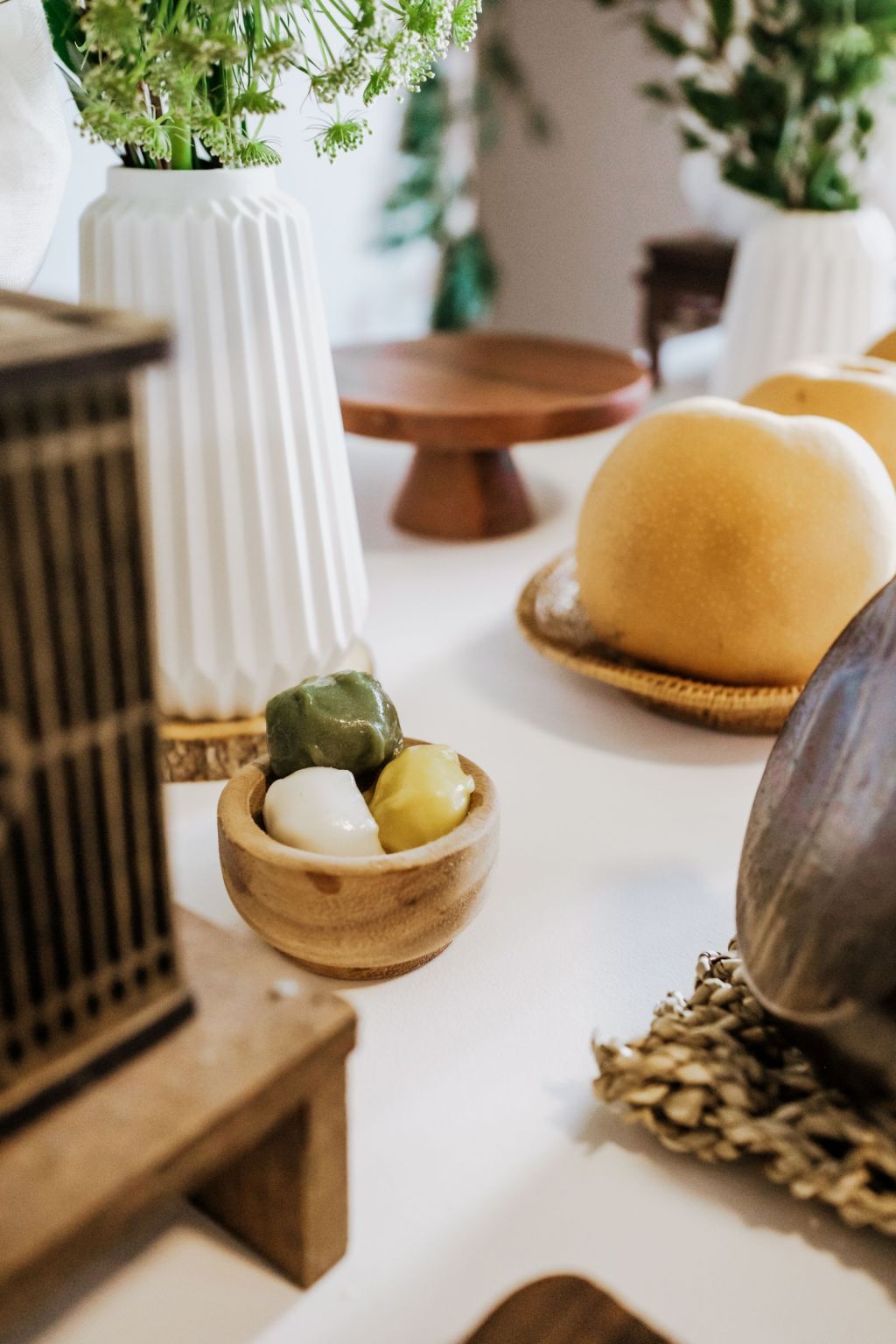
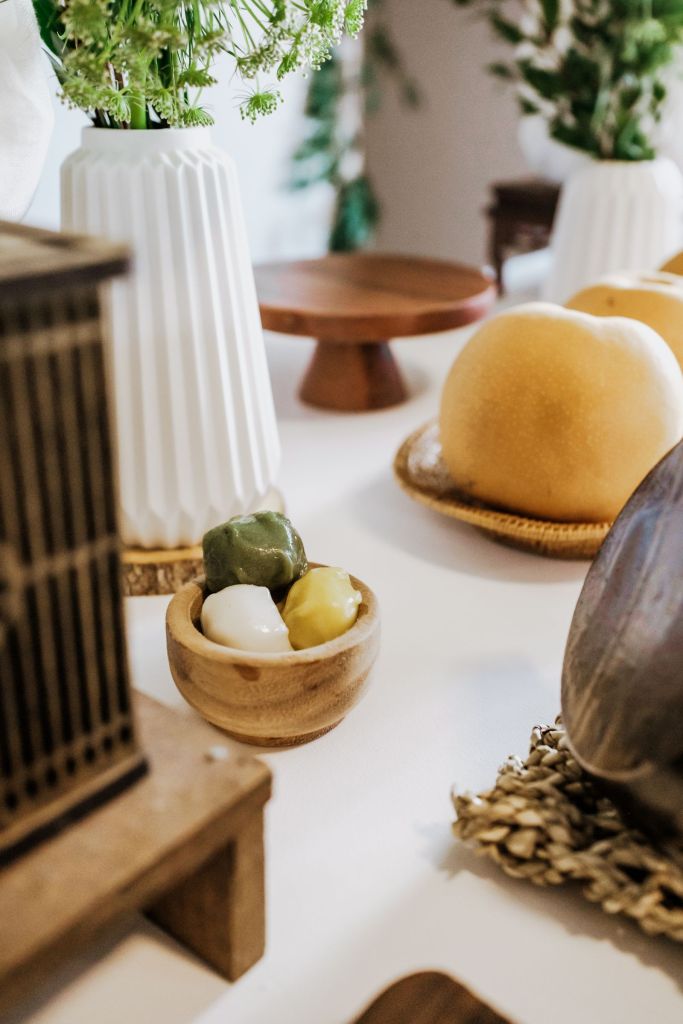
Half-moon rice cakes stuffed with sesame, beans or chestnut and steamed over pine needles for Chuseok.
Baekseolgi
A snow-white steamed rice cake made for a baby’s 100th-day celebration.
Mujigae-tteok
Colorful layered “rainbow” rice cake for parties and birthdays.
Garaetteok
The long cylinder rice cakes used for tteokguk and tteokbokki are made from regular rice – learn more in our tteok guide.
Easy Songpyeon Recipe (Makes about 20 pieces)
Ingredients
- 2 cups (about 250 g) wet-milled maepssal-garu, thawed (or dry rice flour)
- 1/4 tsp salt (skip if your flour is pre-salted)
- About 1/3–1/2 cup boiling water (more for dry flour)
- 1 tsp sesame oil mixed with 1 tsp neutral oil, for brushing
Sesame filling
- 4 tbsp toasted sesame seeds, lightly ground
- 2 tbsp sugar or brown sugar
- 1 tbsp honey and a pinch of salt
Instructions
- Sift the rice flour and salt into a bowl. Add boiling water a spoonful at a time, mixing with a spoon, then knead with your hands for 5 minutes until the dough is smooth and soft like play dough. Cover it with a damp towel so it doesn’t dry out.
- Mix the sesame seeds, sugar, honey and salt into a crumbly, slightly sticky filling.
- Pinch off a walnut-size piece of dough, roll it into a ball and press a deep well into it with your thumb. Add 1/2 tsp filling, pinch the edges closed and shape into a half-moon. Repeat.
- Line a steamer basket with damp cheesecloth (or clean pine needles if you have them). Arrange the songpyeon without touching and steam over boiling water for 20–25 minutes, until they look slightly translucent.
- Rinse quickly under cold water to firm them up, drain and brush lightly with the oil mixture. Serve warm or at room temperature.
Tip: For colorful songpyeon like in the photo, knead a little mugwort powder, pumpkin powder or a few drops of beet juice into separate portions of dough. Toast your own seeds for the filling – see our kkaesogeum guide.
Where to Buy Maepssal-garu
United States
As an Amazon Associate, I earn from qualifying purchases.
Amazon
Search Korean rice flour on Amazon
Search bamboo steamer on Amazon
H-Mart
Search rice flour on H-Mart
Canada
Search Korean rice flour on Amazon.ca
Europe
Search Korean rice flour on Amazon.co.uk
At Korean markets, look for bags labeled 멥쌀가루 or “rice flour” – not 찹쌀가루 or “sweet rice flour.” Wet-milled flour is in the freezer section.
How to Store Maepssal-garu
Keep wet-milled flour frozen in a sealed bag and thaw only what you need; it spoils quickly at room temperature. Dry rice flour keeps in an airtight container in a cool, dry place until its best-by date. Finished songpyeon harden in the fridge, so freeze extras in a single layer and re-steam them for 5–10 minutes.
Maepssal-garu FAQ
What is the difference between maepssal-garu and chapssal-garu?
Maepssal-garu comes from regular rice and gives a soft, firm texture. Chapssal-garu comes from sticky rice and becomes very chewy and stretchy.
Can I use regular rice flour from the supermarket?
Yes, for songpyeon. Dry rice flour needs more hot water and gives a slightly firmer result than Korean wet-milled flour.
Is maepssal-garu gluten-free?
Rice is naturally gluten-free, but check the package for a gluten-free label if cross-contact matters to you.
Why is my songpyeon dough cracking?
It is too dry. Knead in a little more hot water and keep the dough covered while you work.
Conclusion
Maepssal-garu is the quiet workhorse of Korean rice cakes: plain rice flour that steams into soft, clean-tasting tteok. Start with a batch of sesame songpyeon, and once you are comfortable with the dough, explore chewy treats made with sweet rice flour too.


Leave a Reply