Introduction
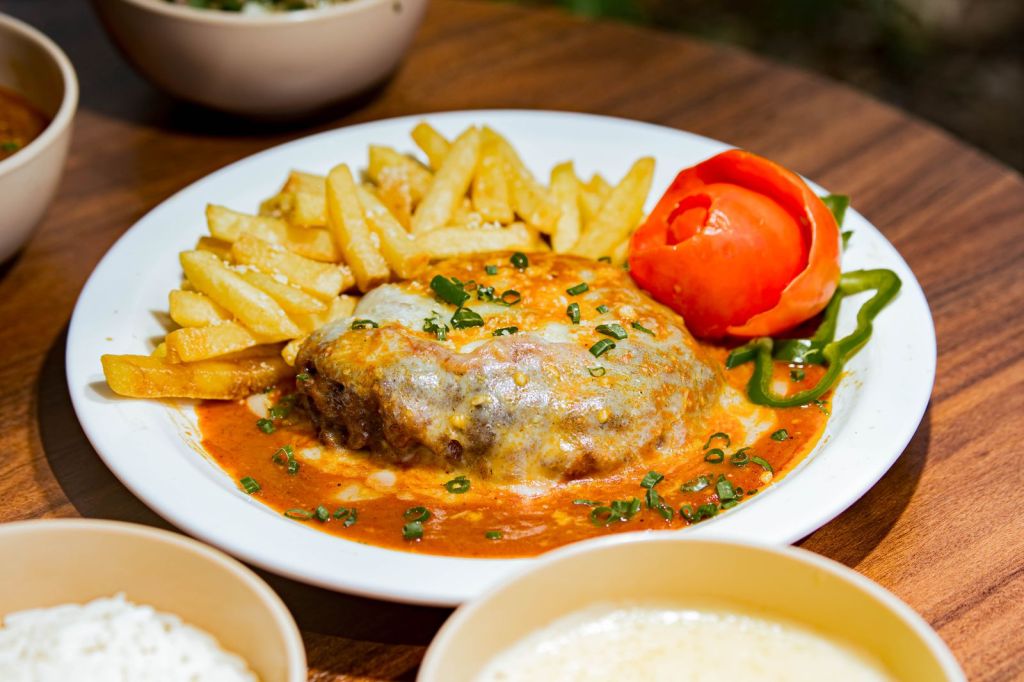
Hambak steak (함박스테이크, hambak seuteikeu) is the Korean name for hamburger steak – a thick, juicy patty of ground beef and pork served without a bun, smothered in a glossy brown sauce and often crowned with a sunny-side-up egg. It arrived in Korea through Japanese-style Western cooking and became a star of gyeongyangsik (Korean “light Western”) restaurants, school lunches and lunch boxes. The real hero is the sauce: sweet, tangy and savory, built from ketchup, Worcestershire-style sauce, soy sauce and butter. If you like our donkkaseu sauce, you will love this one.
Hambak Steak Sauce at a Glance
What it is
- A Korean-style brown pan sauce (similar to a quick demi-glace) for hamburger steak
Main ingredients
- Ketchup, Worcestershire sauce, soy sauce, sugar, butter, onion, water and the pan juices from the patties
Taste
- Sweet, tangy and meaty with a buttery finish – not spicy
Main uses
- Hambak steak, cheese hambak, omurice, lunch boxes (dosirak), meatballs and rice bowls
What is Hambak Steak Sauce Made Of?
Most home cooks make the sauce in the same pan used for the patties, so the browned meat juices add depth. Ketchup gives sweetness and color, Worcestershire (Koreans call it woseuteo sauce) adds tang and spice, soy sauce brings salt and umami, and butter makes it glossy. Common versions:
- Ketchup-Worcestershire sauce: the classic home style, ready in five minutes.
- Demi-glace style: made with a roux or store-bought demi-glace sauce mix for a darker, richer result.
- Mushroom sauce: sliced button mushrooms simmered in the sauce.
- Cheese hambak: the same sauce topped with melted mozzarella or a cheese slice.
What Does Hambak Steak Sauce Taste Like?
Think of a cross between a steakhouse brown sauce and a sweet barbecue glaze. It is fruity-tangy from ketchup and Worcestershire, savory from soy sauce and meat juices, and silky from butter. Kids love it, and it is excellent spooned over plain rice.
Popular Korean Dishes That Use Hambak Steak Sauce
Hambak Steak with Fried Egg
The classic plate: patty, sauce, a fried egg, rice, a little cabbage salad and corn.
Hambak Dosirak
Mini patties with sauce are a lunch-box and convenience-store favorite.
Omurice
Korean omelet rice is often finished with the same ketchup-based brown sauce.
Gyeongyangsik Combo Plates
Old-school Korean-Western restaurants serve hambak alongside pork cutlet and fish cutlet, all under brown sauce.
Easy Hambak Steak Recipe (Serves 4)
Ingredients
- 300 g (10 oz) ground beef and 200 g (7 oz) ground pork
- 1/2 onion, finely chopped and sautéed until soft, then cooled
- 1/2 cup panko or breadcrumbs soaked in 3 tbsp milk
- 1 egg, 1/2 tsp salt, 1/4 tsp black pepper, 1 tsp minced garlic
- 1 tbsp oil; 4 eggs for frying (optional)
Hambak Steak Sauce
- 5 tbsp ketchup
- 2 tbsp Worcestershire sauce
- 1 tbsp soy sauce, 1 tbsp sugar (or oligo syrup)
- 1/2 cup (120 ml) water
- 1 tbsp butter; 1/2 onion, sliced; a handful of sliced mushrooms (optional)
Instructions
- Mix the meats, cooled onion, soaked breadcrumbs, egg, garlic, salt and pepper. Knead for 2–3 minutes until sticky.
- Divide into 4 portions, toss each between your hands to remove air, and shape into thick ovals. Press a small dent in the center.
- Heat oil in a pan over medium heat. Brown the patties 3 minutes per side, then add 3 tbsp water, cover and cook on low for 7–8 minutes until the center reaches 160°F (71°C). Remove to plates.
- In the same pan, melt the butter and sauté the sliced onion and mushrooms for 2 minutes.
- Add ketchup, Worcestershire, soy sauce, sugar and water. Simmer 3–4 minutes, stirring, until glossy and slightly thick.
- Pour the sauce over the patties, top with a fried egg and serve with rice and a simple cabbage salad.
Tip: Ground meat must be cooked through – use a thermometer and aim for 160°F (71°C) in the thickest part. Make extra patties and freeze them raw, separated by parchment, for quick weeknight dinners.
Where to Buy Hambak Steak Sauce
The sauce is easy to make from pantry staples, but Korean markets also sell ready-made hambak steak sauce and demi-glace sauce mixes.
United States
As an Amazon Associate, I earn from qualifying purchases.
Amazon
Search Korean hamburg steak sauce on Amazon
Search demi-glace sauce mix on Amazon
H-Mart
Search steak sauce on H-Mart
Canada
Search hamburg steak sauce on Amazon.ca
Europe
Search hamburg steak sauce on Amazon.co.uk
How to Store Hambak Steak Sauce
Homemade sauce keeps in a sealed jar in the fridge for 4–5 days; reheat gently with a splash of water. Cooked patties with sauce keep 3 days refrigerated or about 1 month frozen. Refrigerate opened bottled sauces and use them by the date on the label.
Hambak Steak Sauce FAQ
Is hambak steak the same as Salisbury steak?
They are close cousins. Korean hambak steak comes from Japanese hamburg steak; the sauce is sweeter and more ketchup-forward than a typical American Salisbury gravy.
Can I make the sauce without Worcestershire?
Yes – use a bit more soy sauce plus 1 tsp vinegar, or substitute tonkatsu/donkkaseu sauce.
Why do my patties fall apart or crack?
Knead the mixture until sticky, remove air pockets by tossing the patty between your hands, and don’t flip too early.
Is hambak steak sauce spicy?
No. It is sweet and tangy, which is why it is a favorite with children.
Conclusion
Hambak steak sauce turns a simple meat patty into a nostalgic Korean comfort meal in about five minutes, using ingredients you probably already have. For more Korean-Western flavors, try our soya bokkeum ketchup sauce or the sweet Korean street toast sauce.


Leave a Reply