Introduction
Doenjang is a traditional Korean fermented soybean paste that has been used in Korean cooking for centuries. It is one of the fundamental ingredients in Korean cuisine and is known for its strong savory flavor.
Made from fermented soybeans and salt, doenjang forms the base of many Korean soups, stews, and sauces. Together with gochujang and ganjang (soy sauce), it is one of the three essential jang, or fermented sauces, of the Korean kitchen.
Doenjang at a Glance
- What it is: A thick Korean fermented soybean paste, similar to miso
- Main ingredients: Soybeans and salt (fermented as meju blocks); many store-bought versions also contain wheat
- Taste: Salty, deeply savory and earthy, not spicy
- Main uses: Doenjang jjigae, soybean paste soups, ssamjang, and seasoned vegetable side dishes
What is Doenjang Made Of?
Doenjang is traditionally made from fermented soybean blocks called meju. These blocks are created by boiling soybeans, crushing them, and allowing them to ferment.
The fermented soybeans are then aged in salt water. During this process soy sauce separates as liquid while the remaining paste becomes doenjang.
What Does Doenjang Taste Like?
Doenjang has a very strong savory taste with deep umami flavor. It is saltier and more pungent than Japanese miso.
Because of its powerful flavor, only a small amount is needed to enhance soups and sauces.
Popular Korean Dishes That Use Doenjang
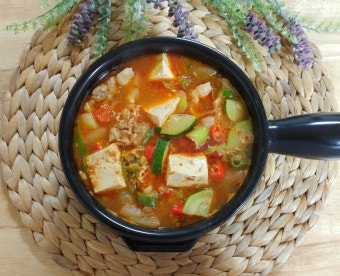
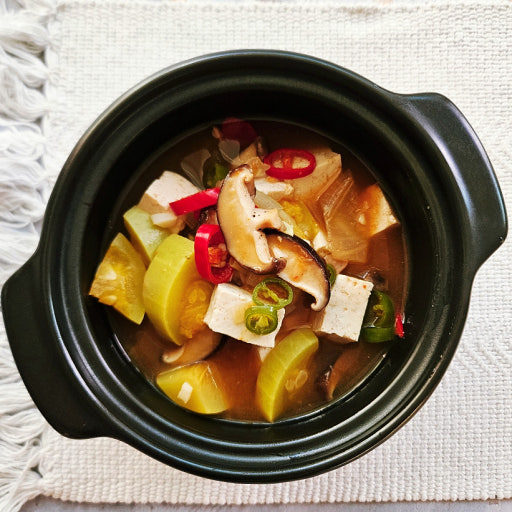
Doenjang Jjigae
A traditional Korean soybean paste stew made with tofu, vegetables, and pork.
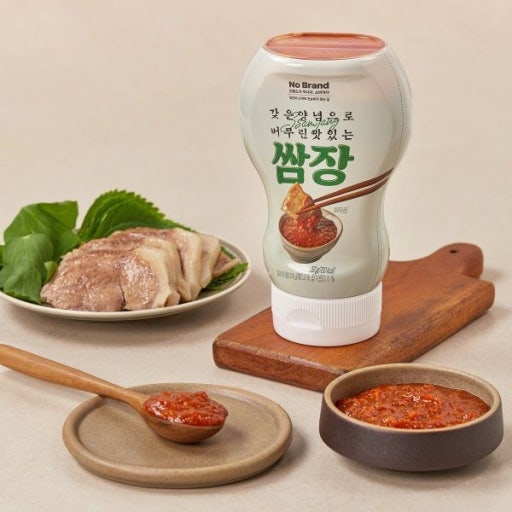
Ssamjang
A Korean barbecue dipping sauce made by mixing doenjang with gochujang. Learn more in our guide to ssamjang.
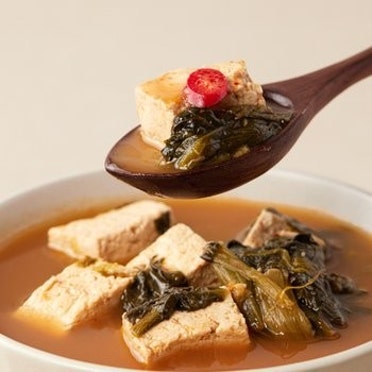
Doenjang Soup
Many Korean vegetable soups use doenjang as the base seasoning.
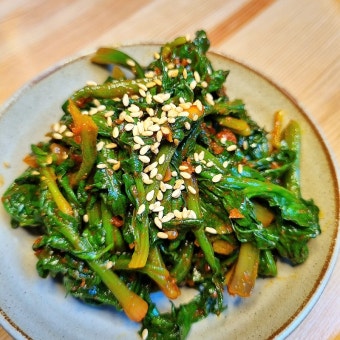
Seasoned Vegetable Dishes
Doenjang is sometimes used to season vegetable side dishes.
Easy Doenjang Jjigae Recipe
Doenjang jjigae is the everyday Korean stew made with soybean paste. This simple version serves 2 and is ready in about 25 minutes.
Ingredients
- 2½ cups (600 ml) water or anchovy-kelp broth
- 2–2½ tablespoons doenjang
- 1 small potato, cubed (optional)
- ½ onion, diced
- ½ zucchini, cubed
- A handful of mushrooms, sliced
- ½ block (about 7 oz / 200 g) firm or medium tofu, cubed
- 1 teaspoon minced garlic
- ½ teaspoon gochugaru (optional)
- 1 green onion and 1 green chili, sliced
Instructions
- Pour the water or broth into a small pot and stir in the doenjang until it fully dissolves.
- Bring to a boil, add the potato and onion, and cook for about 5 minutes.
- Add the zucchini, mushrooms, garlic, and gochugaru. Simmer for 4–5 minutes until the vegetables are tender.
- Gently add the tofu and simmer for 2–3 more minutes.
- Top with green onion and green chili, taste, and serve bubbling hot with steamed rice.
Tip: Brands differ in saltiness, so start with 2 tablespoons of doenjang and add more at the end if needed. Pressing the paste through a small sieve into the broth keeps the stew smooth.
Where to Buy Doenjang
United States
H-Mart
https://www.hmart.com/search?type=product&q=doenjang
As an Amazon Associate, I earn from qualifying purchases.
Amazon
https://www.amazon.com/s?k=doenjang
Walmart
https://www.walmart.com/search?q=doenjang
Canada
H-Mart Canada
https://www.hmart.ca
Amazon Canada
https://www.amazon.ca/s?k=doenjang
Europe
Sous Chef
https://www.souschef.co.uk/search?q=doenjang
Oriental Mart
https://www.orientalmart.co.uk/search?type=product&q=doenjang
Asia Market
https://www.asiamarket.ie/?s=doenjang
How to Store Doenjang
Doenjang should be stored in the refrigerator after opening. Because it is a fermented food, it can last for a long time when stored properly.
Keeping the paste in an airtight container helps maintain its flavor and freshness.
Doenjang FAQ
What is the difference between doenjang and miso?
Both are fermented soybean pastes, but traditional doenjang is made mainly from soybeans and salt, while Japanese miso is usually fermented with koji made from rice or barley. As a result, doenjang tastes saltier, earthier, and more pungent, and miso is generally milder and sweeter.
Is doenjang spicy?
No. Doenjang contains no chili, so it is salty and savory rather than hot. Any heat in doenjang jjigae comes from added chili peppers or gochugaru, or from mixing it with gochujang as in ssamjang.
What can I use as a substitute for doenjang?
Red or darker miso is the closest substitute and works well in stews and soups. Because miso is milder, you may need to use a little more and add a pinch of salt to get a similar depth of flavor.
Does doenjang go bad?
Doenjang is very salty and fermented, so it keeps for many months in the refrigerator once opened. It may slowly darken and grow stronger in flavor, which is normal, but throw it out if you see fuzzy mold or notice an unpleasant sour or rotten smell.
Conclusion
Doenjang is a traditional Korean fermented soybean paste that plays a central role in Korean cooking. Its deep savory flavor makes it an essential ingredient for soups, sauces, and many traditional Korean dishes. Start with a simple pot of doenjang jjigae, then try mixing it into ssamjang for your next Korean BBQ night.


Leave a Reply