Introduction
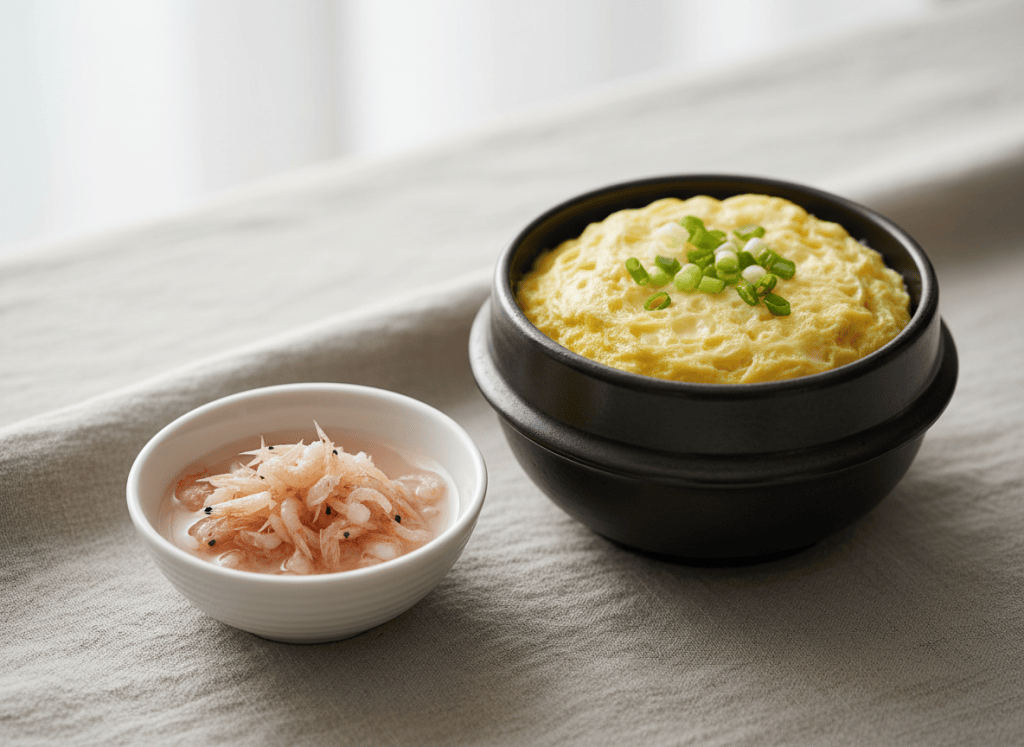
Saeujeot (새우젓) is Korean salted fermented shrimp. It is made from tiny shrimp packed in salt and left to ferment, and it is one of the most widely used types of jeotgal, Korea’s family of salted seafood.
If you have ever made kimchi from a Korean recipe, you have probably seen saeujeot on the ingredient list. A small spoonful adds deep, savory flavor and natural saltiness to kimchi, soups, steamed eggs, and dipping sauces.
What is Saeujeot Made Of?
Saeujeot is made from just two ingredients: very small shrimp and salt. The shrimp are mixed with a generous amount of salt and fermented for weeks or months, which preserves them and develops their umami. The shrimp keep their shape and sit in a cloudy, salty brine.
Saeujeot is often named after the season when the shrimp were caught:
- Yukjeot (육젓) – made from shrimp caught in June; plump and rich, and the most prized type for kimchi
- Ojeot (오젓) – made from shrimp caught in May; smaller and lighter
- Chujeot (추젓) – made from autumn shrimp; often used for everyday cooking and seasoning
What Does Saeujeot Taste Like?
Saeujeot is very salty, with a clean, briny ocean flavor and a savory depth from fermentation. It is milder and less pungent than fish sauce, and it has a light natural sweetness from the shrimp.
Because it is so salty, saeujeot is used like a seasoning rather than eaten on its own. A little goes a long way.
Popular Korean Dishes That Use Saeujeot
Kimchi
Saeujeot is a classic seasoning for napa cabbage kimchi and radish kimchi, adding savory depth and helping fermentation along.
Bossam (Boiled Pork Wraps)
Tender slices of boiled pork are often dipped in a little saeujeot. Its saltiness and umami balance the rich meat perfectly.
Gyeran-jjim (Steamed Egg)
Fluffy Korean steamed eggs are commonly seasoned with saeujeot instead of plain salt for a rounder flavor.
Hobak Bokkeum (Stir-Fried Zucchini)
A simple banchan of Korean zucchini stir-fried with garlic and seasoned with saeujeot.
Easy Gyeran-jjim Recipe (Serves 2)
Soft, savory Korean steamed eggs made in a small pot on the stove in about 15 minutes.
Ingredients
- 3 eggs
- 3/4 cup (180 ml) water or anchovy-kelp broth
- 1 tsp saeujeot, finely chopped (plus a little brine)
- 1 green onion, finely sliced
- 1/2 tsp sesame oil
- Toasted sesame seeds, to garnish
Instructions
- Beat the eggs. Whisk the eggs well in a bowl. Stir in the chopped saeujeot.
- Heat the broth. Bring the water or broth to a boil in a small earthenware pot (ttukbaegi) or small saucepan.
- Add the eggs. Reduce the heat to medium-low and pour in the eggs. Stir gently from the bottom for about 1 minute so they do not stick.
- Add green onion. When the eggs begin to set, sprinkle in most of the green onion.
- Steam. Cover with a lid (or an upside-down bowl) and cook on low heat for 5–7 minutes, until the eggs are puffed and fully set in the center.
- Serve. Drizzle with sesame oil and top with the remaining green onion and sesame seeds. Serve hot.
Tip: Taste the brine before adding more. Brands vary in saltiness, so start with 1 teaspoon and adjust next time.
Where to Buy Saeujeot
Saeujeot is sold in jars or tubs in the refrigerated or frozen section of Korean grocery stores. Look for “salted shrimp,” “fermented shrimp,” or “saeujeot.”
United States
As an Amazon Associate, I earn from qualifying purchases.
Amazon
https://www.amazon.com/s?k=korean+salted+shrimp+saeujeot
H-Mart
https://www.hmart.com/search?type=product&q=salted shrimp
Canada
Amazon Canada
https://www.amazon.ca/s?k=korean+salted+shrimp
Europe
Amazon UK
https://www.amazon.co.uk/s?k=korean+salted+shrimp
How to Store Saeujeot
Keep saeujeot tightly sealed in the refrigerator, or in the freezer for long-term storage. Thanks to its high salt content it does not freeze solid, so you can scoop out what you need straight from the freezer. Always use a clean spoon.
Conclusion
Saeujeot is a tiny ingredient with a big job. These salted fermented shrimp bring savory depth to kimchi, steamed eggs, and pork dishes, and a single jar will last you a long time in the fridge or freezer.


Leave a Reply