Introduction
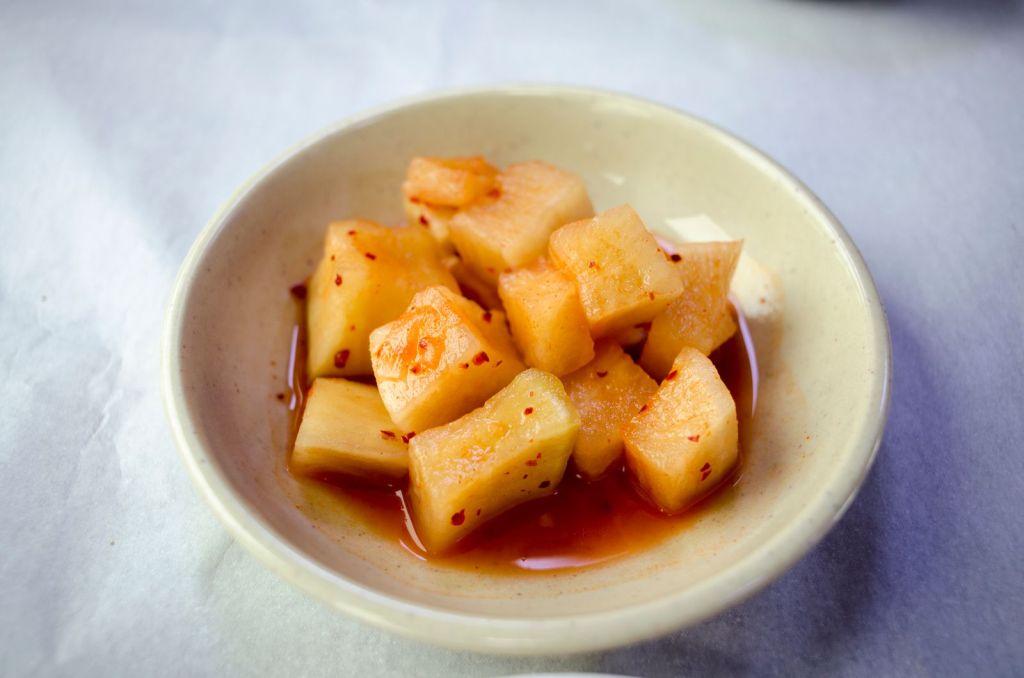
Kkakdugi (깍두기) is Korean cubed radish kimchi. Chunks of Korean radish (mu) are lightly salted and tossed in a red chili seasoning, then left to ferment until crunchy, juicy and tangy. It is the kimchi Koreans reach for with hearty soups such as seolleongtang (ox bone soup) and gukbap, and it is a favorite partner for fried chicken. Because it needs no cabbage leaves to stuff, it is also one of the easiest kimchi to make at home.
Kkakdugi at a Glance
Quick facts
- What it is: fermented cubed radish kimchi
- Main ingredients: Korean radish, gochugaru, fish sauce, salted shrimp, garlic, ginger, sugar, green onion
- Taste: crunchy, juicy, sweet-spicy and tangy
- Main uses: side dish for soups, gukbap, fried chicken, noodles and fried rice
What is Kkakdugi Made Of?
The star is Korean radish, which is denser, sweeter and less watery than daikon. The cubes are seasoned with a kimchi paste of gochugaru, fish sauce, salted shrimp, garlic and ginger, with a little sugar to balance the radish’s natural bite.
Types of radish kimchi
- Kkakdugi: cubed radish kimchi, the classic.
- Chonggak kimchi: whole young “ponytail” radishes with their greens.
- Seokbakji: larger, flat-cut radish kimchi.
- Dongchimi: mild water kimchi made with whole radishes in brine.
What Does Kkakdugi Taste Like?
Fresh kkakdugi is crisp, juicy and sweet with a spicy, garlicky coating. After a few days of fermentation it turns pleasantly sour and fizzy, and the radish juice becomes a tangy red brine that many people love to spoon into their soup.
Popular Korean Dishes Served with Kkakdugi
Seolleongtang and gomtang
Milky beef bone soups are almost always served with kkakdugi.
Gukbap
Soup with rice, where a splash of kkakdugi brine adds tang.
Korean fried chicken
Its crunch cuts through crispy yangnyeom chicken.
Kkakdugi fried rice
Sour, well-fermented kkakdugi is chopped and fried with rice, just like kimchi fried rice.
Easy Kkakdugi Recipe (Makes about 1 1/2 quarts)
Ingredients
- 1 Korean radish (about 2 1/2 lb / 1.1 kg), peeled and cut into 3/4-inch cubes
- 1 tbsp coarse sea salt
- 1 tbsp sugar
- 3 green onions, cut into 1-inch pieces
Seasoning
- 4 tbsp gochugaru
- 2 tbsp fish sauce
- 1 tbsp salted shrimp, finely chopped
- 1 tbsp minced garlic
- 1 tsp grated ginger
- 1 tsp sugar
- 2 tbsp rice porridge (1 tbsp rice flour cooked with 1/4 cup water, cooled), optional
Instructions
- Toss the radish cubes with the salt and sugar in a large bowl. Let them sit for 30–45 minutes, tossing once, until slightly softened and they release liquid.
- Drain off the liquid, but do not rinse. Save 2–3 tbsp of it.
- Add the gochugaru to the radish and toss first so the cubes turn red, then add the fish sauce, salted shrimp, garlic, ginger, sugar and rice porridge. Mix well with food-safe gloves. Add a little of the saved liquid if it looks dry.
- Fold in the green onions.
- Pack into a clean jar, pressing down, and leave about an inch of space at the top. Leave at room temperature for 1–2 days until it tastes slightly sour, then refrigerate.
Tip: Taste a piece of radish before buying or salting. Bitter or very spicy radish benefits from an extra teaspoon of sugar in the seasoning.
Where to Buy Kkakdugi
United States
As an Amazon Associate, I earn from qualifying purchases.
Amazon
Search kkakdugi radish kimchi on Amazon
H-Mart
Search radish kimchi on H-Mart
Canada
Search radish kimchi on Amazon.ca
Europe
Search radish kimchi on Amazon.co.uk
How to Store Kkakdugi
Once it has started to ferment, keep kkakdugi in a sealed container in the refrigerator, pressing the radish under its juices. It keeps for several weeks and gets more sour over time. Always use clean utensils to take some out, and store it in a separate container or a kimchi box, as the smell is strong.
Kkakdugi FAQ
Can I make kkakdugi with daikon?
Yes. Daikon is more watery and milder, so salt it a little longer and drain it well.
How long does kkakdugi take to ferment?
About 1–2 days at room temperature, depending on how warm your kitchen is, then it continues slowly in the fridge.
Is kkakdugi the same as chicken-mu?
No. Chicken-mu is white radish pickled in sweet vinegar brine, while kkakdugi is spicy fermented kimchi. Both are served with fried chicken; see our Korean chicken shop guide for chicken-mu.
Conclusion
Kkakdugi is the crunchy, juicy kimchi that makes a bowl of soup or a plate of fried chicken complete. With just a radish and a few pantry seasonings, you can have a jar fermenting in under an hour. For the classic cabbage version, read our kimchi guide.


Leave a Reply