Introduction
Kimchi paste, called kimchi yangnyeom or kimchi-so (김치 양념 / 김치소) in Korean, is the red seasoning mixture that is rubbed into salted vegetables to make kimchi. It is a thick blend of Korean chili flakes, garlic, ginger, fish sauce and salted shrimp, usually loosened with a little rice porridge. Once you can make a good paste, you can turn cabbage, radish, cucumber or green onions into kimchi in your own kitchen. Ready-made jars of kimchi paste are also sold for people who want a shortcut.
Kimchi Paste at a Glance
Quick facts
- What it is: the seasoning paste used to make kimchi
- Main ingredients: gochugaru, garlic, ginger, fish sauce, salted shrimp, rice porridge, a little sugar
- Taste: spicy, garlicky, salty and deeply savory
- Main uses: napa cabbage kimchi, radish kimchi, cucumber kimchi, quick fresh kimchi
What is Kimchi Paste Made Of?
The color and heat come from gochugaru, Korean chili flakes. Savory depth comes from aekjeot (fish sauce) and saeujeot (salted shrimp), which also feed the fermentation. Garlic and ginger add punch, a small amount of sugar or grated Asian pear balances the heat, and a cooked rice-flour porridge (chapssal-pul) helps the paste cling to the vegetables.
Types of kimchi paste
- Traditional: with fish sauce and salted shrimp; the most common style.
- Vegan: uses soy sauce, kelp broth or miso-style paste instead of seafood.
- Mild / white: little or no chili, used for baek-kimchi style.
- Store-bought jars: ready-to-use pastes you just mix with salted vegetables.
What Does Kimchi Paste Taste Like?
Fresh kimchi paste is bold: chili heat, a strong garlic and ginger bite and a salty, oceanic savoriness from the seafood. It mellows once it coats the vegetables, and as the kimchi ferments it becomes tangy and more rounded.
Popular Korean Dishes That Use Kimchi Paste
Mak kimchi
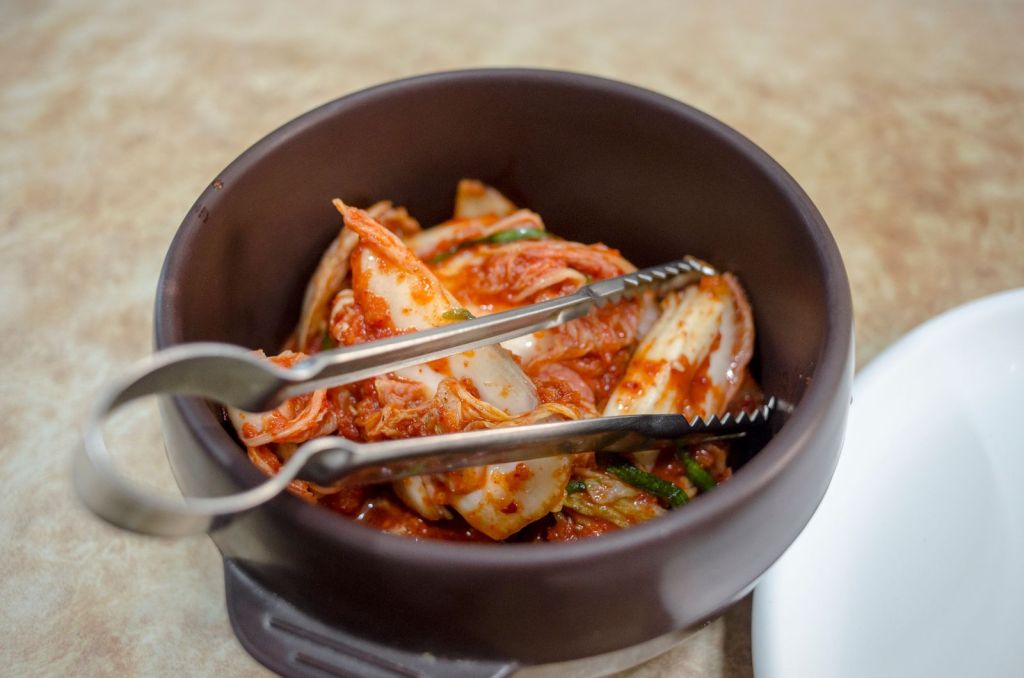
Easy “cut” cabbage kimchi made with bite-size pieces. Recipe below.
Kkakdugi
Cubed radish kimchi, crunchy and juicy.
Oi sobagi
Stuffed cucumber kimchi, popular in spring and summer.
Pa kimchi
Green onion kimchi, a classic partner for grilled meat and noodles.
Easy Mak Kimchi Recipe (Makes about 2 quarts)
Ingredients
- 1 medium napa cabbage (about 4 lb / 2 kg)
- 1/2 cup coarse sea salt (not iodized)
- 1 cup Korean radish or daikon, cut into matchsticks
- 4 green onions, cut into 1-inch pieces
Kimchi paste
- 1 tbsp sweet rice flour + 1/2 cup water (for the porridge)
- 1/2 cup gochugaru
- 3 tbsp fish sauce
- 1 tbsp salted shrimp, finely chopped
- 8 cloves garlic, minced
- 1 tsp grated ginger
- 1 tbsp sugar (or 1/4 grated Asian pear)
Instructions
- Cut the cabbage into quarters, remove the core and cut into bite-size pieces. Rinse, then toss with the salt in a large bowl.
- Let it sit for about 1 1/2–2 hours, tossing every 30 minutes, until the thick white parts bend without snapping.
- Meanwhile, cook the sweet rice flour and water in a small pot over medium heat, stirring, until it thickens like glue (2–3 minutes). Cool completely.
- Mix the cooled porridge with the gochugaru, fish sauce, salted shrimp, garlic, ginger and sugar to make the paste.
- Rinse the salted cabbage 3 times in cold water and drain well for 20–30 minutes.
- Wearing food-safe gloves, toss the cabbage, radish and green onions with the paste until evenly red.
- Pack tightly into clean jars, pressing down to remove air and leaving some space at the top. Leave at room temperature for 1–2 days until it smells slightly sour, then refrigerate.
Tip: Taste a piece of cabbage after rinsing. It should be pleasantly salty like a potato chip; if it is too salty, soak it in fresh water for 10 minutes.
Where to Buy Kimchi Paste
United States
As an Amazon Associate, I earn from qualifying purchases.
Amazon
Search Korean kimchi paste on Amazon
H-Mart
Search kimchi seasoning on H-Mart
Canada
Search kimchi paste on Amazon.ca
Europe
Search kimchi paste on Amazon.co.uk
How to Store Kimchi Paste
Homemade paste keeps in a sealed container in the refrigerator for about 1–2 weeks, and it freezes well in small portions for up to 3 months. Store-bought jars should be refrigerated after opening and used by the label date. Finished kimchi belongs in the fridge, where it keeps fermenting slowly and gets more sour over time.
Kimchi Paste FAQ
Is kimchi paste the same as gochujang?
No. Gochujang is a fermented chili paste, while kimchi paste is a fresh mix based on chili flakes, garlic and fish sauce. Most kimchi recipes do not use gochujang.
Can I make vegan kimchi paste?
Yes. Replace the fish sauce and salted shrimp with soy sauce and a little kelp broth, and add a bit more salt to taste.
How much paste do I need for one cabbage?
Roughly 1 1/2 to 2 cups of paste for a medium napa cabbage of about 4 lb.
Can I use regular chili powder?
It is not recommended. Gochugaru is milder, sweeter and brighter red; cayenne or chili powder blends will be much hotter or taste different.
Conclusion
Kimchi paste is the heart of every red kimchi: gochugaru for color, garlic and ginger for punch and fish sauce and salted shrimp for depth. Make a batch, toss it with salted cabbage, and enjoy watching your own mak kimchi ferment. Once it turns sour, use it in kimchi fried rice or kimchijeon.


Leave a Reply