Introduction
Konggaru (콩가루) means “bean powder.” In Korean cooking it usually refers to soybeans that have been roasted and ground into a fine, golden-yellow powder. It is best known as the sweet, nutty coating on injeolmi, chewy rice cakes made from glutinous rice, and as the topping on injeolmi bingsu, a hugely popular Korean shaved-ice dessert. Konggaru is naturally gluten-free and adds a toasty, peanut-like flavor to desserts, drinks and toast.
Konggaru at a Glance
Quick facts
- What it is: roasted soybean powder
- Main ingredients: roasted yellow (or green) soybeans; sweetened versions add sugar and salt
- Taste: nutty, toasty, lightly sweet, similar to peanut butter
- Main uses: injeolmi, bingsu, injeolmi toast, lattes, rice cake coatings
What is Konggaru Made Of?
Dried soybeans are cleaned, roasted until fragrant and then finely milled. The roasting is important: raw soybean flour tastes beany and is not eaten uncooked, while roasted konggaru can be eaten straight from the bag. Plain konggaru is unsweetened, but many packages for desserts are pre-mixed with sugar and a pinch of salt. It is similar to Japanese kinako.
Types of konggaru
- Yellow konggaru: made from yellow soybeans; the most common type.
- Green soybean konggaru (cheong-tae konggaru): pale green powder made from green-fleshed soybeans, often used on festive rice cakes.
- Sweetened konggaru: pre-mixed with sugar for bingsu and injeolmi.
- Soybean powder for kongguksu: a different bean powder blended into the broth for cold soybean noodle soup.
What Does Konggaru Taste Like?
Konggaru tastes nutty and toasty, a little like roasted peanuts or graham crackers. It is dry and powdery on its own, so it is usually paired with something sticky or creamy – rice cakes, condensed milk, honey or ice cream – where it turns soft and almost buttery.
Popular Korean Dishes That Use Konggaru
Injeolmi
Pounded glutinous rice cakes cut into squares and rolled in konggaru. One of the oldest and most loved types of tteok.
Injeolmi bingsu
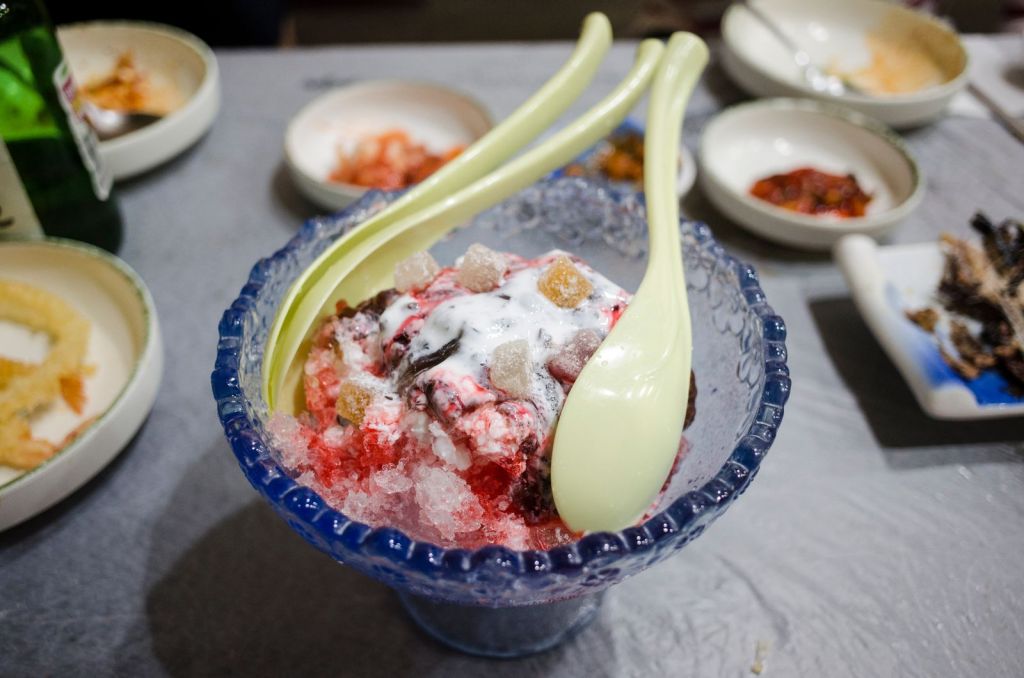
Fluffy milk shaved ice covered in konggaru, small rice cakes and condensed milk. Recipe below.
Injeolmi toast
Buttered toast with melted rice cake or mochi inside, finished with konggaru and honey.
Konggaru latte
Warm or iced milk whisked with sweetened konggaru, similar to a misutgaru latte.
Easy Injeolmi Bingsu Recipe (Serves 2)
Ingredients
- 2 cups (480 ml) whole milk
- 3 tbsp sweetened condensed milk, plus more to drizzle
- 4 tbsp konggaru (sweetened, or plain mixed with 1 tbsp sugar and a pinch of salt)
- 1 cup bite-size injeolmi or small mochi pieces
- 2 tbsp sliced almonds, toasted (optional)
- 2 tbsp sweet red bean paste (pat), optional
Instructions
- Stir the condensed milk into the milk until dissolved. Pour into a shallow freezer container (or ice cube trays) and freeze for at least 5–6 hours, until solid.
- Chill two serving bowls in the freezer for 10 minutes.
- Let the frozen milk sit 3–5 minutes, then shave it with a bingsu machine, or scrape it with a fork into fluffy flakes. A blender in short pulses also works with milk ice cubes.
- Pile the milk snow into the chilled bowls, sprinkling a spoon of konggaru between the layers.
- Top with rice cake pieces, the remaining konggaru, almonds and red bean paste. Drizzle with condensed milk and serve immediately.
Tip: Keep store-bought injeolmi at room temperature until serving. Frozen or refrigerated rice cakes turn hard, so warm them briefly in the microwave and let them cool before topping.
Where to Buy Konggaru
United States
As an Amazon Associate, I earn from qualifying purchases.
Amazon
Search Korean roasted soybean powder on Amazon
Search injeolmi on Amazon
H-Mart
Search roasted soybean powder on H-Mart
Canada
Search Korean roasted soybean powder on Amazon.ca
Europe
Search roasted soybean powder on Amazon.co.uk
How to Store Konggaru
Soybeans contain natural oils, so konggaru can go stale or rancid. Seal the bag tightly, keep it in a cool, dry place for a few weeks after opening, and store it in the refrigerator or freezer for longer keeping (up to several months). If it smells bitter or like old oil, replace it.
Konggaru FAQ
Is konggaru the same as kinako?
They are very similar – both are roasted soybean flour – and can be used interchangeably in most recipes.
Is konggaru gluten-free?
Pure konggaru contains only soybeans, so it is naturally gluten-free. Check the label for blends and cross-contact warnings, and remember that it is not suitable for people with soy allergies.
Can I use regular soy flour instead?
Only if you toast it first. Stir soy flour in a dry pan over low heat until golden and fragrant, then cool and sift.
What is the difference between konggaru and misutgaru?
Konggaru is made only from soybeans, while misutgaru is a blend of many roasted grains and beans used mainly for drinks.
Conclusion
Konggaru is a small bag of Korean flavor that turns simple rice cakes, milk ice and toast into nutty, comforting treats. To make your own injeolmi, start with chapssal-garu (sweet rice flour), and explore other Korean powders like deulkkaegaru.


Leave a Reply