Introduction
Chamchi tongjorim (참치 통조림), usually just called chamchi-can or “tuna can,” is canned tuna as Koreans know it: chunks of cooked tuna packed in vegetable oil in a small easy-open can. It is one of the most common items in a Korean pantry and a classic holiday gift set. Students, office workers and home cooks all rely on it for quick meals such as tuna kimchi stew, tuna gimbap, tuna mayo rice bowls and tuna pancakes. Korean brands also sell flavored versions with chili, vegetables or soy seasoning that can be eaten straight from the can with rice.
Chamchi Tongjorim at a Glance
Quick facts
- What it is: Korean-style canned tuna, usually in oil
- Main ingredients: cooked tuna (often skipjack), vegetable oil, salt; flavored types add chili, vegetables or sauce
- Taste: mild, savory and rich from the oil
- Main uses: kimchi jjigae, gimbap, tuna mayo rice, jeon (pancakes), fried rice
What is Chamchi Tongjorim Made Of?
Most Korean canned tuna is made from skipjack tuna that is cooked, broken into chunks and sealed with vegetable oil (often soybean or sunflower oil) and salt. Compared with water-packed tuna common in the U.S., the oil-packed Korean style is softer and richer, and the oil itself is often used in cooking – for example, to sauté kimchi at the start of a stew.
Types of Korean canned tuna
- Light standard tuna (ilban): plain tuna in oil, the all-purpose choice.
- Light or low-sodium tuna: less oil or salt for salads and diets.
- Gochu chamchi (hot pepper tuna): tuna in a sweet-spicy chili sauce with vegetables, eaten with rice.
- Yachae chamchi and other flavors: tuna with vegetables, curry or soy-based sauces.
Do not confuse it with chamchi-aek, which is a liquid seasoning made from tuna extract, not canned fish.
What Does Chamchi Tongjorim Taste Like?
Plain Korean canned tuna tastes mild and savory with a soft, flaky texture and a rich mouthfeel from the oil. It is less fishy than sardines or mackerel, which is why it blends so easily into stews, rice and mayonnaise. Flavored hot-pepper tuna is sweet, spicy and saucy, a bit like a ready-made side dish.
Popular Korean Dishes That Use Chamchi Tongjorim
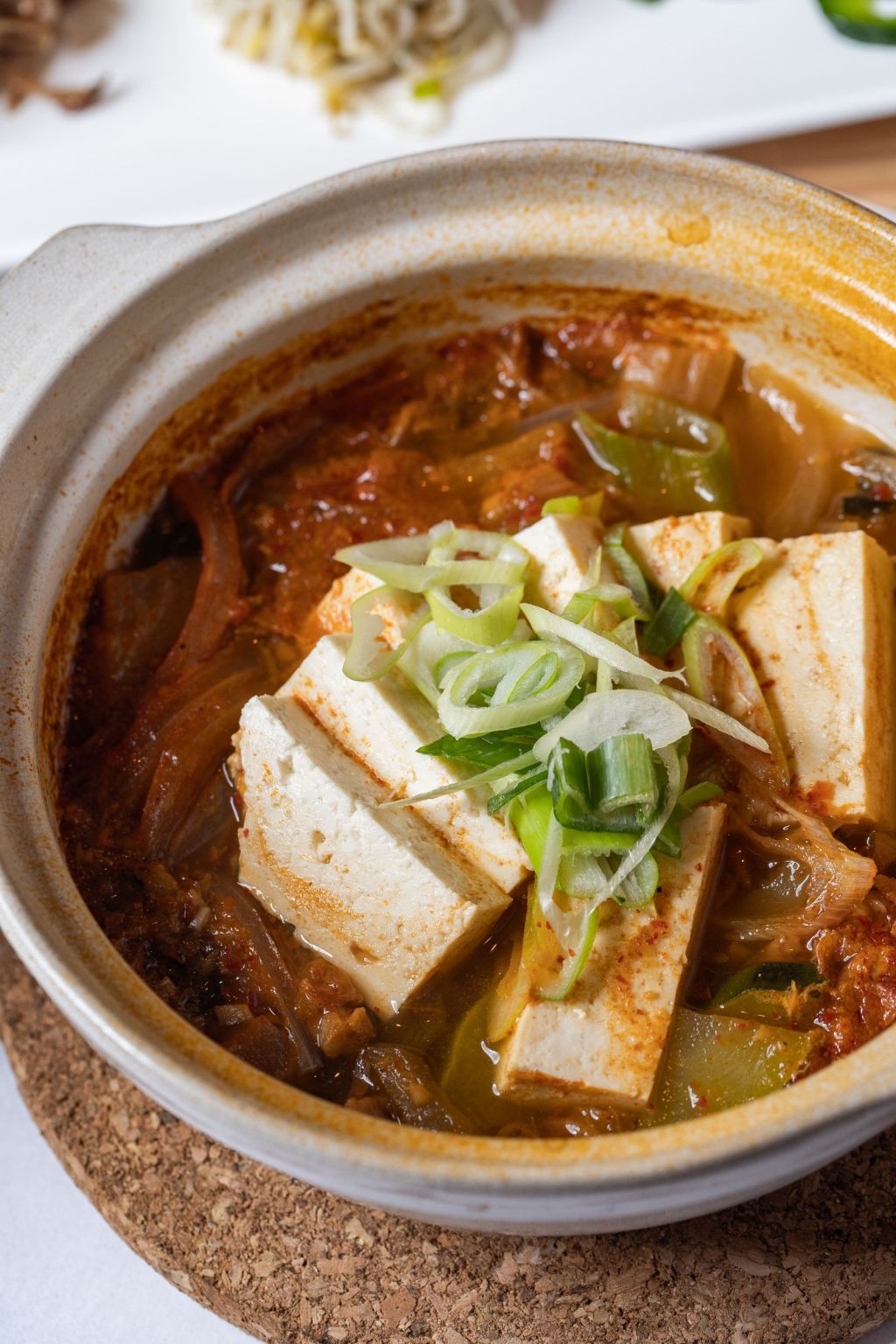
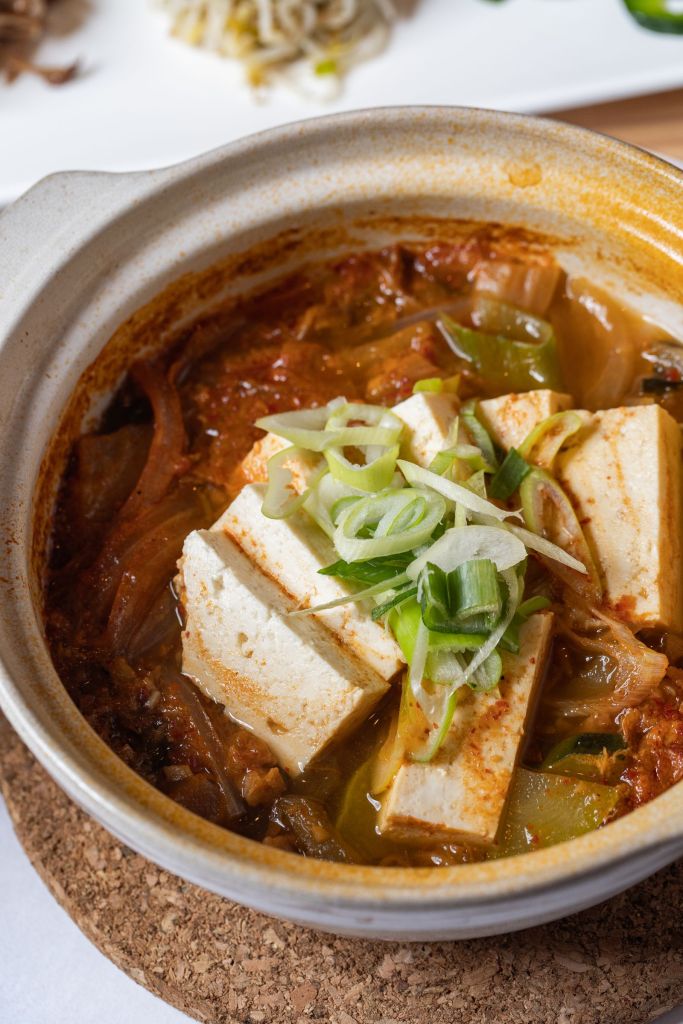
Chamchi kimchi jjigae
Sour kimchi stew made with canned tuna instead of pork. Recipe below.
Chamchi gimbap
Seaweed rice rolls filled with tuna mayo, perilla leaves and the usual gimbap fillings.
Chamchi mayo deopbap
Rice topped with tuna mayo, scrambled egg, seaweed flakes and a drizzle of soy sauce.
Chamchi jeon
Small pan-fried patties of tuna, egg, onion and carrot – a lunch-box favorite.
Easy Tuna Kimchi Jjigae Recipe (Serves 2)
Ingredients
- 1 can (about 5 oz / 150 g) Korean canned tuna in oil
- 1 1/2 cups well-fermented (sour) napa cabbage kimchi, chopped, plus 3 tbsp kimchi juice
- 1/2 onion, sliced
- 1/2 block (7 oz / 200 g) firm or medium tofu, sliced
- 1 green onion, sliced, and 1 green chili, sliced (optional)
- 2 cups (480 ml) water or anchovy broth
Seasoning
- 1 tbsp gochugaru
- 1/2 tbsp gochujang (optional)
- 1 tsp minced garlic
- 1 tsp soy sauce or fish sauce
- 1/2 tsp sugar (if the kimchi is very sour)
Instructions
- Drain 1 tablespoon of oil from the tuna can into a pot. Keep the tuna aside.
- Heat the pot over medium heat and stir-fry the kimchi and onion in the tuna oil for 3–4 minutes until soft and fragrant.
- Add the gochugaru, gochujang, garlic and sugar and stir for 30 seconds.
- Pour in the water and kimchi juice, bring to a boil, then simmer for 10 minutes so the kimchi flavor goes into the broth.
- Add the tofu and tuna (in large chunks) and simmer 5 more minutes. Taste and season with soy sauce or fish sauce.
- Top with green onion and chili and serve bubbling hot with rice.
Tip: Add the tuna near the end and stir gently. If it boils too long it breaks into tiny flakes and the stew turns cloudy.
Where to Buy Korean Canned Tuna
United States
As an Amazon Associate, I earn from qualifying purchases.
Amazon
Search Korean canned tuna on Amazon
Search Korean hot pepper tuna on Amazon
H-Mart
Search tuna on H-Mart
Canada
Search Korean canned tuna on Amazon.ca
Europe
Search Korean canned tuna on Amazon.co.uk
How to Store Korean Canned Tuna
Unopened cans keep in a cool, dry pantry until the best-before date (usually a few years). Do not use cans that are bulging, leaking or deeply dented. Once opened, move leftover tuna to a glass or plastic container, refrigerate and use within 2–3 days. Tuna mayo should be refrigerated and eaten within 1–2 days.
Chamchi Tongjorim FAQ
Can I use American canned tuna for Korean recipes?
Yes. Oil-packed chunk light tuna is closest. If you use water-packed tuna, add a tablespoon of oil when stir-frying the kimchi.
Should I drain the oil?
For stews and fried rice, Koreans often use some of the oil for flavor. For tuna mayo and salads, drain it well.
Is tuna kimchi jjigae as good as pork kimchi jjigae?
It is lighter and quicker, and many Koreans prefer it for everyday meals. Pork gives a richer, fattier broth.
What is gochu chamchi?
It is canned tuna in a sweet and spicy chili sauce, ready to eat with rice or mixed into fried rice.
Conclusion
A can of chamchi is one of the easiest ways to cook Korean food on a busy day. Keep a few in the cupboard with kimchi and tofu and dinner is 20 minutes away. For more pantry staples, see our guides to dubu (Korean tofu) and eomuk fish cakes.


Leave a Reply