Introduction
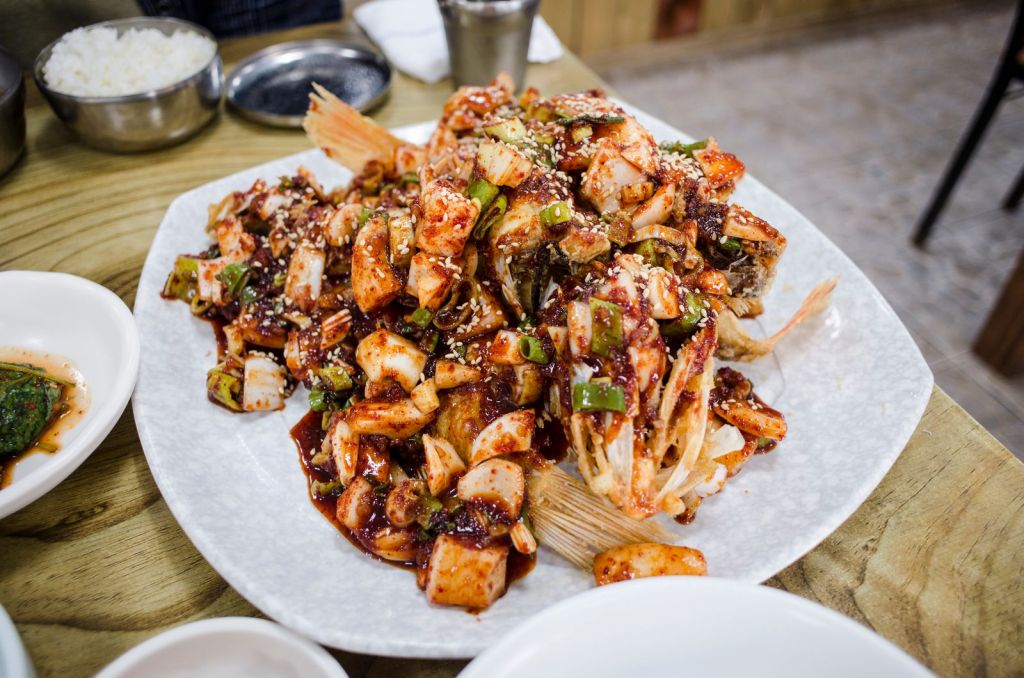
Haemul-jjim sauce (해물찜 양념) is the red, garlicky sauce used to make haemul-jjim, a big platter of seafood and crunchy bean sprouts braised in a thick, spicy glaze. “Haemul” means seafood and “jjim” means a braised or steamed dish. Its famous cousin is agujjim, made with monkfish and associated with the port city of Masan. These dishes are made for sharing, usually with soju, and finished by stir-frying rice in the leftover sauce.
Haemul-jjim Sauce at a Glance
Quick facts
- What it is: a spicy braising sauce for seafood and bean sprouts
- Main ingredients: gochugaru, soy sauce, garlic, ginger, sugar, fish sauce or salted shrimp, seafood broth, starch slurry
- Taste: spicy, savory, garlicky with a clean seafood sweetness
- Main uses: haemul-jjim, agujjim (monkfish), kodari-jjim (semi-dried pollock), spicy braised octopus
What is Haemul-jjim Sauce Made Of?
The heart of the sauce is a large amount of gochugaru mixed with soy sauce, lots of minced garlic, a little ginger, sugar and a salty seafood seasoning such as fish sauce or salted shrimp. Unlike many Korean red sauces, it usually contains little or no gochujang, which keeps the color bright and the flavor clean. After the seafood and sprouts are cooked, a potato-starch slurry thickens everything so the sauce clings to each piece.
Types of haemul-jjim sauce
- Classic gochugaru sauce: chili flakes, garlic, soy sauce and seafood broth.
- Agujjim style: drier and spicier, sometimes with minari (water dropwort).
- Mild or soy-based jjim sauce: less chili and more soy sauce for kids.
- Ready-made jjim seasoning: pouches sold at Korean markets for seafood or monkfish jjim.
What Does Haemul-jjim Sauce Taste Like?
It is spicy and garlicky first, with a savory, slightly sweet finish from the seafood juices. The thickened sauce coats your mouth, and the cool, crunchy bean sprouts balance the heat. Compared with nakji bokkeum sauce, it is less sweet and more about chili and garlic.
Popular Korean Dishes That Use Haemul-jjim Sauce
Haemul-jjim
Mixed seafood braised with soybean sprouts. Recipe below.
Agujjim
Monkfish braised with bean sprouts and minari in a fiery sauce.
Kodari-jjim
Semi-dried pollock braised with radish in a similar spicy sauce.
Bokkeumbap finish
Leftover sauce stir-fried with rice, seaweed flakes and sesame oil at the end of the meal.
Easy Haemul-jjim Recipe (Serves 3–4)
Ingredients
- 1 1/2 lb (700 g) mixed seafood: shrimp, squid rings, mussels or clams, and octopus or crab (fresh or thawed frozen)
- 1 lb (450 g) soybean sprouts, rinsed
- 1/2 onion, sliced
- 2 green onions or a handful of minari, cut into 2-inch pieces
- 1 cup (240 ml) anchovy-kelp broth or water
- 2 tbsp potato starch mixed with 3 tbsp water
- 1 tbsp sesame oil and 1 tbsp sesame seeds, to finish
Haemul-jjim sauce
- 4 tbsp gochugaru
- 2 tbsp soy sauce
- 1 tbsp fish sauce or 1 tbsp chopped salted shrimp
- 2 tbsp minced garlic
- 1 tsp minced ginger
- 1 tbsp sugar
- 2 tbsp rice wine
- 1/4 tsp black pepper
Instructions
- Mix all the sauce ingredients in a bowl and let them sit for 10 minutes so the chili flakes hydrate.
- Clean the seafood: devein the shrimp, scrub mussels or clams and discard any with cracked shells or that stay open when tapped.
- Put the bean sprouts in a large, wide pot with the broth. Cover and cook over medium-high heat for 4–5 minutes. Do not lift the lid during this time, which helps prevent a raw, grassy smell.
- Add the seafood, onion and the sauce. Stir well, cover and cook for 5–7 minutes, stirring once or twice, until the shrimp are pink and opaque and the shellfish have opened. Discard any shellfish that do not open.
- Stir the starch slurry again and pour it in gradually while stirring. Cook 1–2 minutes until the sauce is thick and glossy.
- Add the green onion or minari, turn off the heat and finish with sesame oil and sesame seeds. Serve on a large platter with rice.
Tip: Seafood turns rubbery if overcooked, so add squid and shrimp at the same time and stop cooking as soon as they turn opaque.
Where to Buy Haemul-jjim Sauce Ingredients
United States
As an Amazon Associate, I earn from qualifying purchases.
Amazon
Search gochugaru on Amazon
Search Korean seafood jjim sauce on Amazon
H-Mart
Search haemul on H-Mart
Canada
Europe
Search gochugaru on Amazon.co.uk
How to Store Haemul-jjim Sauce
Mixed sauce (without starch) keeps in a sealed jar in the refrigerator for about 1 week, and the flavor actually improves after a day. Cooked haemul-jjim is best eaten right away; refrigerate leftovers within 2 hours and eat within 1–2 days, reheating until steaming hot. Bean sprouts get soggy when reheated, so make only what you will eat.
Haemul-jjim Sauce FAQ
What is the difference between haemul-jjim and haemul-tang?
Haemul-jjim is a thick, saucy braise eaten from a platter, while haemul-tang is a brothy seafood soup eaten with a spoon.
Can I use frozen seafood mix?
Yes. Thaw it in the refrigerator, rinse and pat dry so the sauce does not get watery.
Is haemul-jjim very spicy?
Restaurant versions can be very hot. With 4 tablespoons of regular gochugaru it is medium-hot; use 2 tablespoons for a milder dish.
Why do you thicken it with starch?
Seafood and sprouts release a lot of liquid. The starch turns it into a glossy sauce that sticks to every bite.
Conclusion
Haemul-jjim sauce turns a simple mix of seafood and bean sprouts into a bold, shareable Korean feast. Make the broth with our anchovy-kelp broth recipe, and for another spicy seafood dish, try saengseon jorim sauce.


Leave a Reply