Introduction
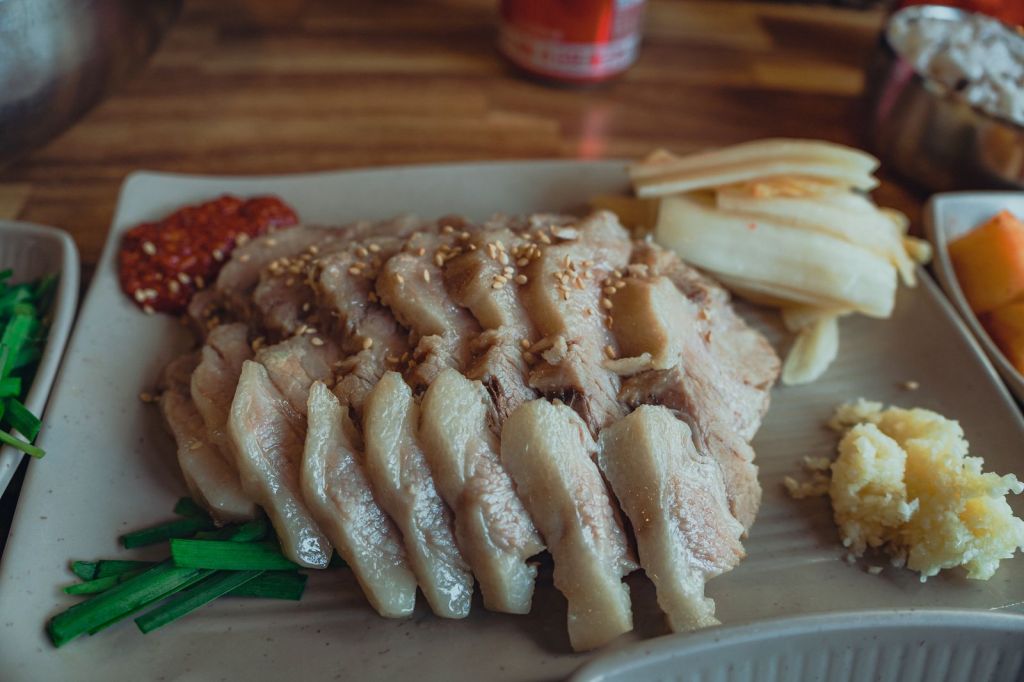
Bossam is one of Korea’s favorite shared dishes: tender slices of boiled pork wrapped in cabbage or lettuce leaves. But what makes bossam memorable is not just the pork – it is the small dishes of sauce served next to it. When people search for “bossam sauce,” they usually mean this set of condiments: a salty saeujeot (salted shrimp) dip, savory ssamjang, and a bright red spicy radish salad often called bossam kimchi or mu-saengchae. In this guide we explain each one and show you how to make a complete bossam meal at home.
Bossam Sauce at a Glance
What it is
- The group of dipping sauces and seasoned sides eaten with bossam (Korean boiled pork wraps)
Main ingredients
- Salted shrimp, doenjang, gochujang, gochugaru, Korean radish, garlic, sesame oil
Taste
- Salty and briny (shrimp dip), nutty and savory (ssamjang), sweet-spicy-tangy (radish salad)
Main uses
- Bossam, jokbal (braised pig’s trotters), grilled pork belly, lettuce wraps
What is Bossam Sauce Made Of?
There is no single bottled “bossam sauce” in Korean cooking. Instead, a bossam table usually includes two or three of the following:
- Saeujeot dip: finely chopped salted shrimp (saeujeot) with a little gochugaru, sesame oil, sesame seeds and green onion. It is the classic partner for boiled pork.
- Ssamjang: a thick dipping paste made from doenjang and gochujang. See our ssamjang guide for a homemade version.
- Spicy radish salad (bossam kimchi / mu-saengchae): julienned Korean radish dressed with gochugaru, garlic, fish sauce, sugar and vinegar.
- Extras: sliced raw garlic, green chili peppers, fresh kimchi or a simple soy-based dipping sauce.
What Does Bossam Sauce Taste Like?
Each sauce plays a different role. The saeujeot dip is intensely salty and full of ocean umami, so you only need a tiny dab on each slice of pork. Ssamjang is earthy, slightly sweet and garlicky. The radish salad is crunchy, sweet, sour and spicy, cutting through the richness of the pork belly. Together they turn a plain boiled meat into a lively, balanced bite.
Popular Korean Dishes That Use Bossam Sauce
Bossam (Boiled Pork Wraps)
The main event: sliced pork belly or shoulder wrapped in salted napa cabbage or lettuce with a little of each sauce.
Jokbal
Soy-braised pig’s trotters are traditionally served with a saeujeot dip, just like bossam.
Kimjang Day Bossam
During kimjang (the late-autumn kimchi-making season), families eat freshly boiled pork with the newly made kimchi filling.
Samgyeopsal Ssam
The same ssamjang and radish salad also work beautifully with grilled pork belly lettuce wraps.
Easy Bossam Recipe (Serves 4)
Ingredients
- 2 lb (900 g) pork belly or pork shoulder, in one or two thick pieces
- 1 onion, halved
- 3 green onions (white parts)
- 6 garlic cloves and 1 thumb of ginger, sliced
- 1 Tbsp doenjang
- 1 tsp whole black peppercorns, 1 bay leaf
- 1 tsp instant coffee (optional, for color and to reduce porky smell)
- Napa cabbage leaves or lettuce for wrapping
Saeujeot Dip
- 1 Tbsp saeujeot, finely chopped
- 1 tsp water, 1/4 tsp gochugaru, a few drops sesame oil
- 1/2 tsp sesame seeds, 1 tsp minced green onion
Spicy Radish Salad
- 10 oz (300 g) Korean radish, julienned, and 1 tsp salt
- 2 Tbsp gochugaru, 1 Tbsp fish sauce, 1 Tbsp sugar, 1 Tbsp rice vinegar
- 1 tsp minced garlic, 1 chopped green onion, 1 tsp sesame seeds
Instructions
- Put the onion, green onions, garlic, ginger, doenjang, peppercorns, bay leaf and coffee in a large pot with enough water to cover the pork. Bring to a boil.
- Add the pork, return to a boil, then lower the heat to a steady simmer. Cover partly and cook 50–60 minutes, until a chopstick slides in easily. The pork must reach at least 145°F (63°C) inside; for tender bossam it will go well beyond that.
- While the pork cooks, toss the radish with salt and let it sit 20 minutes. Squeeze out the liquid, then mix with the remaining radish salad ingredients.
- Stir together the saeujeot dip ingredients in a small dish.
- Lift the pork out and rest it for 10 minutes, then slice about 1/4 inch (6 mm) thick.
- To eat, place a slice of pork on a cabbage or lettuce leaf, add a little radish salad, a dab of saeujeot dip or ssamjang, wrap and enjoy.
Tip: Saeujeot is very salty – start with just a few shrimp per bite. If you cannot find it, a dipping sauce of a little aekjeot (fish sauce), water and gochugaru is a quick stand-in.
Where to Buy Bossam Sauce Ingredients
United States
As an Amazon Associate, I earn from qualifying purchases.
Amazon
Search Korean salted shrimp (saeujeot) on Amazon
Search ssamjang on Amazon
H-Mart
Search salted shrimp on H-Mart
Canada
Search Korean salted shrimp on Amazon.ca
Europe
Search Korean salted shrimp on Amazon.co.uk
How to Store Bossam Sauce
Keep opened saeujeot tightly sealed in the refrigerator (many cooks keep it in the freezer, where it stays soft because of the salt). The mixed saeujeot dip is best used within a few days. Spicy radish salad keeps 3–4 days in a sealed container in the fridge, though it softens and releases liquid over time. Store leftover pork separately in the fridge for up to 3 days and reheat by steaming.
Bossam Sauce FAQ
What sauce is served with bossam?
Most often a salted shrimp (saeujeot) dip and ssamjang, plus a spicy radish salad or kimchi.
Is bossam sauce spicy?
The shrimp dip and ssamjang are only mildly spicy. The radish salad is the spiciest part, and you can reduce the gochugaru to taste.
What can I use instead of saeujeot?
Ssamjang alone works well, or mix a little fish sauce with water, gochugaru and sesame oil.
Which pork cut is best for bossam?
Pork belly is the most popular for its layers of fat; pork shoulder is a leaner option.
Conclusion
Bossam sauce is really a small team of condiments – salty saeujeot dip, savory ssamjang and a crunchy spicy radish salad – that bring boiled pork to life. Make all three, or start with just one, and you will have an easy Korean feast for family or friends. For more pork pairings, try our gireumjang sesame oil dip.


Leave a Reply