Introduction
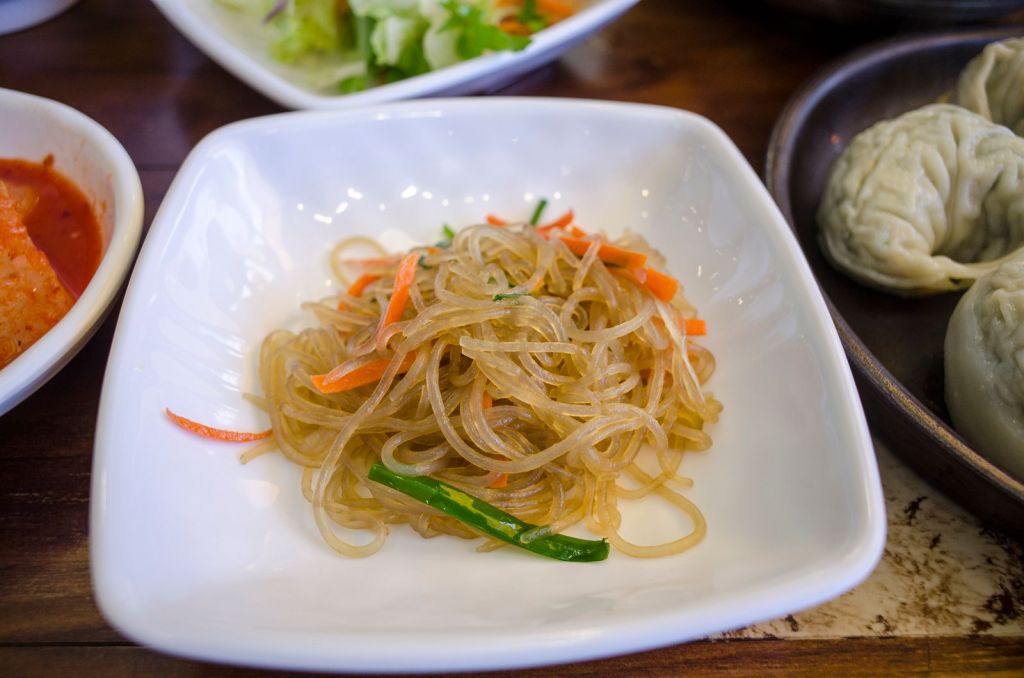
Japchae (잡채) is the glossy Korean noodle dish served at birthdays, holidays and potlucks, and its flavor comes almost entirely from one simple sauce. Japchae sauce is a sweet-savory mix of soy sauce, sugar, sesame oil and garlic that coats chewy sweet potato glass noodles and colorful vegetables. Once you know the basic ratio, you can make japchae from scratch without a bottled sauce. If you are new to the noodles themselves, read our guide to dangmyeon (Korean glass noodles) first.
Japchae Sauce at a Glance
What it is
- A sweet soy and sesame seasoning for Korean stir-fried glass noodles
Main ingredients
- Soy sauce, sugar (or syrup), toasted sesame oil, garlic, black pepper, sesame seeds
Taste
- Sweet and salty, nutty and aromatic, not spicy
Main uses
- Japchae, japchae-bap (japchae over rice), glass noodle fillings for mandu, stir-fried vegetables
What is Japchae Sauce Made Of?
The classic home ratio is roughly 2 parts soy sauce : 1 part sugar : 1 part sesame oil, plus garlic and pepper. Many cooks split the seasoning: a little goes into the beef as a marinade, a pinch of salt goes into each vegetable as it is stir-fried, and the main sauce goes into the noodles. Common variations:
- Classic sauce: soy sauce, sugar, sesame oil, garlic, black pepper.
- Glossy sauce: part of the sugar replaced with rice syrup or oligosaccharide syrup for shine.
- Bottled japchae sauce: ready-made sweet soy sauces sold in Korean markets.
- Spicy japchae: a little gochugaru or chili oil added at the end.
What Does Japchae Sauce Taste Like?
It is close to a lighter, garlicky bulgogi marinade without the fruit: sweet and salty up front, with a strong toasted aroma from the sesame oil. Glass noodles soak it up quickly, so the finished dish tastes evenly seasoned and slightly sweet, never sour or spicy.
Popular Korean Dishes That Use Japchae Sauce
Japchae
Sweet potato glass noodles stir-fried with beef, spinach, carrot, onion and mushrooms.
Japchae-bap
Japchae served over rice, often with a little extra sauce, a popular Korean-Chinese restaurant dish.
Gimmari
Seasoned glass noodles rolled in seaweed, battered and deep-fried as street food.
Mandu Filling
Chopped seasoned glass noodles are a common filler in Korean dumplings.
Easy Beef Japchae Recipe (Serves 4)
Ingredients
- 8 oz (225 g) Korean sweet potato glass noodles (dangmyeon)
- 5 oz (150 g) beef (ribeye or sirloin), cut into thin strips
- 1 small onion, sliced
- 1 carrot, julienned
- 4–5 shiitake mushrooms, sliced
- 1 bunch spinach (about 5 oz)
- 2 green onions, cut into 2-inch pieces
- Cooking oil, salt
- 1 tbsp toasted sesame seeds
Beef Marinade
- 1 tbsp soy sauce, 1/2 tbsp sugar, 1 tsp minced garlic, 1 tsp sesame oil, pinch of black pepper
Japchae Sauce
- 4 tbsp soy sauce
- 2 tbsp sugar (or 1 tbsp sugar + 1 tbsp rice syrup)
- 2 tbsp toasted sesame oil
- 1 tbsp minced garlic
- 1/4 tsp black pepper
Instructions
- Mix the beef with the marinade and set aside. Stir the japchae sauce ingredients together until the sugar dissolves.
- Cook the noodles in boiling water according to the package (usually 6–8 minutes) until soft and chewy. Drain, rinse briefly, and cut a few times with kitchen scissors.
- Toss the warm noodles with about half of the japchae sauce so they absorb the flavor.
- Blanch the spinach for 30 seconds, rinse in cold water, squeeze dry and season with a pinch of salt and a drop of sesame oil.
- In a large pan with a little oil, stir-fry the onion, carrot and mushrooms separately with a pinch of salt each until just tender; set aside.
- Stir-fry the beef until cooked through.
- Return the noodles to the pan with the remaining sauce and stir-fry for 2 minutes. Add the beef, vegetables, spinach and green onion and toss until glossy and evenly coated.
- Taste, adjust with a little more soy sauce or sugar, and finish with sesame seeds.
Tip: Season the noodles while they are still warm. Cold glass noodles turn stiff and do not absorb the sauce well.
Where to Buy Japchae Sauce Ingredients
United States
As an Amazon Associate, I earn from qualifying purchases.
Amazon
Search japchae sauce on Amazon
Search Korean glass noodles on Amazon
H-Mart
Search japchae on H-Mart
Canada
Search japchae sauce on Amazon.ca
Europe
Search japchae sauce on Amazon.co.uk
How to Store Japchae Sauce
Homemade japchae sauce with fresh garlic keeps about a week in a sealed jar in the refrigerator; shake before using. Bottled japchae sauce should be refrigerated after opening and used by the date on the label. Leftover japchae keeps 2–3 days in the fridge; reheat it in a pan with a splash of water so the noodles soften again.
Japchae Sauce FAQ
What is the ratio for japchae sauce?
A reliable starting point is 2 parts soy sauce, 1 part sugar and 1 part sesame oil, plus garlic and black pepper, for about 8 oz of dry noodles.
Is japchae sauce the same as bulgogi sauce?
They are similar, but bulgogi marinade usually includes grated pear or onion and is used on meat. Japchae sauce is simpler and has more sesame oil.
Is japchae gluten-free?
The sweet potato noodles are naturally gluten-free, but regular soy sauce contains wheat. Use a gluten-free tamari if needed.
Why are my japchae noodles clumping?
Glass noodles stick as they cool. Toss them with sauce or a little sesame oil right after draining, and cut them shorter with scissors.
Conclusion
Japchae sauce is proof that a few pantry staples can make a festive dish. Mix soy sauce, sugar, sesame oil and garlic, season the noodles while warm, and you will have glossy, restaurant-style japchae. For the key aromatic, see our guide to chamgireum (Korean sesame oil).


Leave a Reply