Introduction
Nokdu (녹두) is the Korean word for mung beans, the small green legumes used across Asia. In Korean cooking they show up in many forms: ground into batter for crispy bindaetteok pancakes, turned into silky cheongpomuk jelly, sprouted into sukju bean sprouts, and simmered with rice into a gentle porridge called nokdu-juk. Korean grocery stores usually sell both whole green mung beans and split, hulled yellow ones. Here is how to tell them apart and use them.
Nokdu at a Glance
What it is
- Dried mung beans, whole or hulled and split
Main ingredients
- 100% mung beans (Vigna radiata)
Taste
- Mild, nutty and slightly sweet, with a soft, creamy texture when cooked
Main uses
- Bindaetteok, nokdu-juk, cheongpomuk, mung bean rice, rice cake fillings
What is Nokdu Made Of?
Nokdu is simply the dried seed of the mung bean plant. You will usually see these forms in Korean markets:
- Whole green mung beans (tong-nokdu): with the green skin on; used for porridge, mung bean rice and sprouting.
- Hulled split mung beans (geopi-nokdu): yellow inside, skin removed; quicker to cook and the standard choice for bindaetteok batter and smooth porridge.
- Mung bean starch: used to make cheongpomuk jelly.
- Bindaetteok mix: ready-made ground mung bean powder for pancakes.
What Does Nokdu Taste Like?
Cooked mung beans are mild and earthy with a light sweetness, a bit like a cross between lentils and peas. Hulled beans break down into a smooth, creamy texture, which is perfect for porridge and batters. Whole green beans keep more bite and have a slightly grassier flavor.
Popular Korean Dishes That Use Nokdu
Bindaetteok (Mung Bean Pancake)
Soaked hulled mung beans ground into a batter with kimchi, pork and bean sprouts, then pan-fried until crispy. Wheat-based pancakes use buchim garu instead.
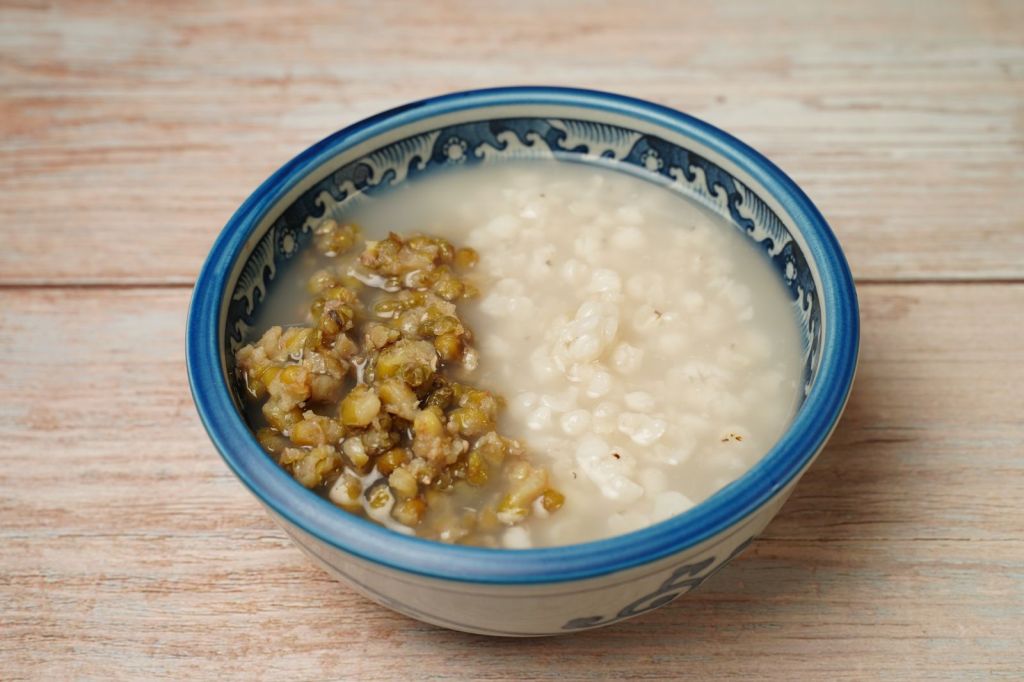
Nokdu-juk (Mung Bean Porridge)
A soft, savory porridge of mung beans and rice, often eaten when someone needs gentle comfort food.
Cheongpomuk and Tangpyeongchae
Mung bean starch jelly, served sliced with seasoned soy sauce or mixed with vegetables and beef in the royal dish tangpyeongchae.
Sukju Namul
Mung bean sprouts blanched and seasoned with sesame oil and salt, a common banchan.
Easy Nokdu-juk Recipe (Serves 3–4)
Ingredients
- 1 cup whole green mung beans (or hulled mung beans)
- 1/2 cup short-grain rice (or half glutinous rice), soaked 30 minutes
- 8–9 cups water
- 1 tsp sesame oil
- Salt to taste
- Toasted sesame seeds and kimchi to serve
Instructions
- Rinse the mung beans several times, removing any discolored beans or small stones.
- Put the beans in a pot with 6 cups of water. Bring to a boil, then simmer partly covered for 30–40 minutes (about 20 minutes for hulled beans) until very soft.
- For a smooth porridge, mash or blend the beans with their cooking liquid. Leave them whole if you prefer texture.
- Heat the sesame oil in a heavy pot, add the drained rice and stir for 1–2 minutes until the grains turn slightly translucent.
- Add the mung bean mixture and 2–3 more cups of water. Simmer over low heat for 20–25 minutes, stirring often so it does not stick, until the rice is soft and the porridge is thick.
- Season with salt, or let each person season their own bowl. Top with sesame seeds and serve with kimchi.
Tip: The porridge thickens a lot as it cools. Stir in a splash of hot water when reheating.
Where to Buy Nokdu
United States
As an Amazon Associate, I earn from qualifying purchases.
Amazon
Search Korean mung beans on Amazon
Search hulled split mung beans on Amazon
H-Mart
Search mung beans on H-Mart
Canada
Search mung beans on Amazon.ca
Europe
Search mung beans on Amazon.co.uk
How to Store Nokdu
Keep dried mung beans in an airtight container in a cool, dry, dark place; they keep for many months. In warm or humid weather, store them in the refrigerator or freezer to prevent bugs. Cooked nokdu-juk keeps 2–3 days in the fridge, and cooked beans can be frozen for about a month.
Nokdu FAQ
Do mung beans need to be soaked?
Not for porridge – they cook without soaking. For bindaetteok batter, hulled beans are soaked for several hours so they can be ground smoothly.
What is the difference between green and yellow mung beans?
They are the same bean. Yellow ones have had the green skin removed and been split, so they cook faster and become creamier.
Are bean sprouts in Korean food made from mung beans?
Some are. Sukju are mung bean sprouts, while kongnamul are soybean sprouts with a larger yellow head.
Is nokdu-juk sweet or savory?
Traditional nokdu-juk is lightly savory, seasoned with salt. Sweet bean porridges are usually made with red beans, like danpat.
Conclusion
Nokdu is a humble pantry bean with a big role in Korean food, from crispy bindaetteok to soothing porridge. Pick up a bag of whole or hulled mung beans and start with an easy pot of nokdu-juk. For more Korean grains, see our japgok multigrain rice guide.


Leave a Reply