Introduction
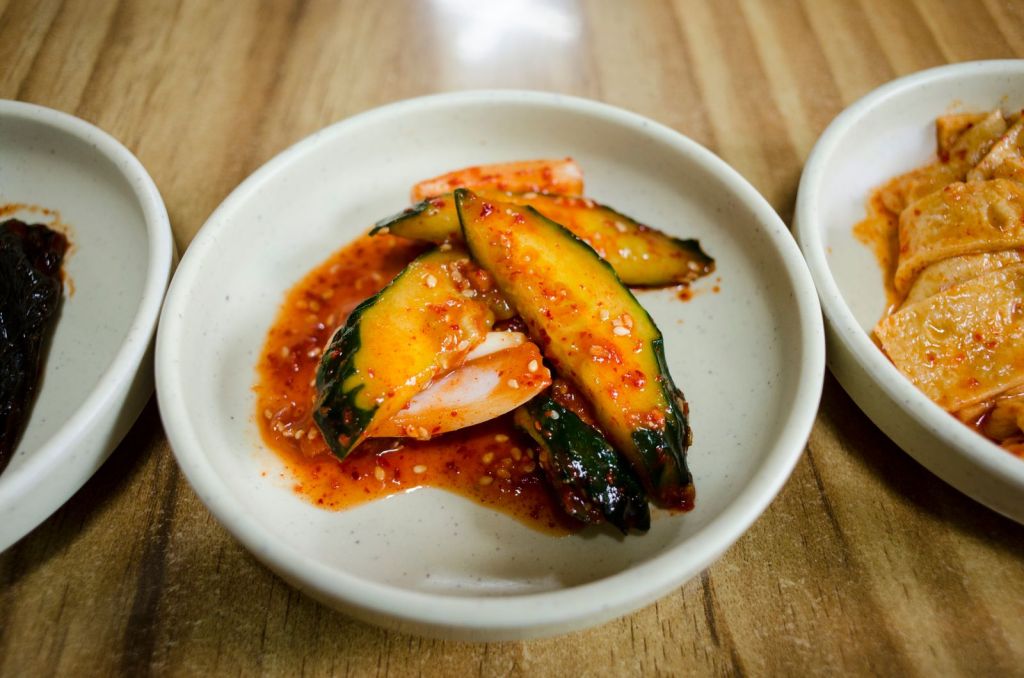
Oi-sobagi (오이소박이) is Korean stuffed cucumber kimchi. Short lengths of cucumber are slit into a cross, lightly salted, then packed with a bright red filling of garlic chives, chili flakes and fish sauce. It is a spring and summer favorite because it is ready in a day or two and tastes fresh, crunchy and cooling next to rich grilled meat or a bowl of noodles.
Oi-sobagi at a Glance
What it is
- A quick-fermented kimchi made from cucumbers stuffed with seasoned vegetables
Main ingredients
- Korean or Kirby cucumbers, salt, garlic chives (buchu), carrot, onion, gochugaru, fish sauce, salted shrimp, garlic
Taste
- Crunchy, juicy and refreshing, spicy and garlicky, turning pleasantly tangy as it ferments
Main uses
- Banchan with rice, Korean BBQ, noodles, bossam and summer meals
What is Oi-sobagi Made Of?
“Oi” means cucumber and “sobagi” refers to something stuffed. Thin-skinned, small-seeded cucumbers are best because they stay crunchy. The filling uses the same seasonings as other kimchi – gochugaru, garlic, fish sauce and salted shrimp – with lots of garlic chives. Related cucumber kimchi styles include:
- Classic oi-sobagi: cucumber pieces slit in a cross and stuffed.
- Oi-kimchi (chopped): cucumber cut into chunks and tossed with the same seasoning – faster to make.
- Baek oi-sobagi: a white, non-spicy version stuffed with radish, pear and pine nuts in a clear brine.
- Vegan oi-sobagi: soy sauce or salt replaces fish sauce and salted shrimp.
What Does Oi-sobagi Taste Like?
Freshly made oi-sobagi tastes like a spicy, garlicky cucumber salad with a crisp snap. After a day or two of fermentation it develops a gentle sourness and the cucumber juice mixes with the seasoning into a tasty brine. It is lighter and juicier than cabbage kimchi and is best eaten within a couple of weeks while it is still crunchy.
Popular Ways to Eat Oi-sobagi
With Korean BBQ
The cool crunch balances fatty grilled pork belly.
With Noodles
A classic side for kalguksu, naengmyeon and somyeon noodle soups.
Oi-sobagi Bibim-guksu
Chopped well-fermented oi-sobagi and its juice make a quick topping for cold mixed noodles.
Everyday Banchan
Simply served with rice and soup on a summer table.
Easy Oi-sobagi Recipe (Makes about 1 quart / 1 L jar)
Ingredients
- 6 Korean or Kirby cucumbers (about 2 lb / 900 g)
- 4 cups water + 1/4 cup coarse sea salt (for the brine)
Filling
- 1 packed cup garlic chives (buchu), cut into 1/2-inch pieces
- 1/2 small carrot and 1/4 onion, finely julienned
- 3 tbsp gochugaru
- 2 tbsp fish sauce
- 1 tbsp salted shrimp (saeujeot), finely chopped
- 1 tbsp minced garlic, 1 tsp grated ginger
- 1 tsp sugar, 1 tbsp toasted sesame seeds
- 2 tbsp water
Instructions
- Rub the cucumbers with a little salt, rinse and trim the ends. Cut into 3–4 inch (8–10 cm) pieces.
- Stand each piece upright and cut a deep cross from the top down, leaving the bottom 1/2 inch uncut so it holds together.
- Bring the water and salt to a boil and pour it over the cucumbers in a heatproof bowl. Soak 1 hour, until the cucumbers bend slightly without snapping.
- Meanwhile, mix the gochugaru with the fish sauce, saeujeot, garlic, ginger, sugar and water. Gently fold in the chives, carrot, onion and sesame seeds.
- Rinse the cucumbers once in cold water and drain well, gently squeezing out excess water.
- Wearing gloves, open each cross and stuff it with filling, then rub a little seasoning on the outside.
- Pack the cucumbers into a clean jar or container. Rinse the mixing bowl with 2–3 tbsp water and pour it over the top.
- Leave at cool room temperature for 6–12 hours, then refrigerate. It tastes great from the next day.
Tip: Pouring boiling brine over the cucumbers seasons them quickly and helps them stay crunchy longer than cold salting.
Where to Buy Oi-sobagi
United States
As an Amazon Associate, I earn from qualifying purchases.
Amazon
Search cucumber kimchi on Amazon
Search Korean gochugaru on Amazon
H-Mart
Search cucumber kimchi on H-Mart
Canada
Search cucumber kimchi on Amazon.ca
Europe
Search cucumber kimchi on Amazon.co.uk
How to Store Oi-sobagi
Keep oi-sobagi in an airtight container in the refrigerator, pressed down under its juices. It is crunchiest within the first week and still good for about 2 weeks; after that the cucumbers soften and turn quite sour. Use well-fermented leftovers in noodles or fried rice. Freezing is not recommended.
Oi-sobagi FAQ
Which cucumbers are best for oi-sobagi?
Korean cucumbers or Kirby (pickling) cucumbers. English and Persian cucumbers work but soften faster; avoid large, seedy slicing cucumbers.
Why did my cucumber kimchi get soggy?
It was probably salted too long, left warm too long, or kept for several weeks. Refrigerate after a short room-temperature rest.
Can I eat oi-sobagi right away?
Yes. It is tasty fresh like a salad, and tangier after 1–2 days.
Can I make it without fish sauce?
Yes. Replace the fish sauce and salted shrimp with 1 1/2 tbsp soy sauce and a pinch of salt.
Conclusion
Oi-sobagi is the perfect kimchi for beginners: quick, crunchy and refreshing. Stock up on the basics with our guides to gochugaru, aekjeot fish sauce and saeujeot.


Leave a Reply