Introduction
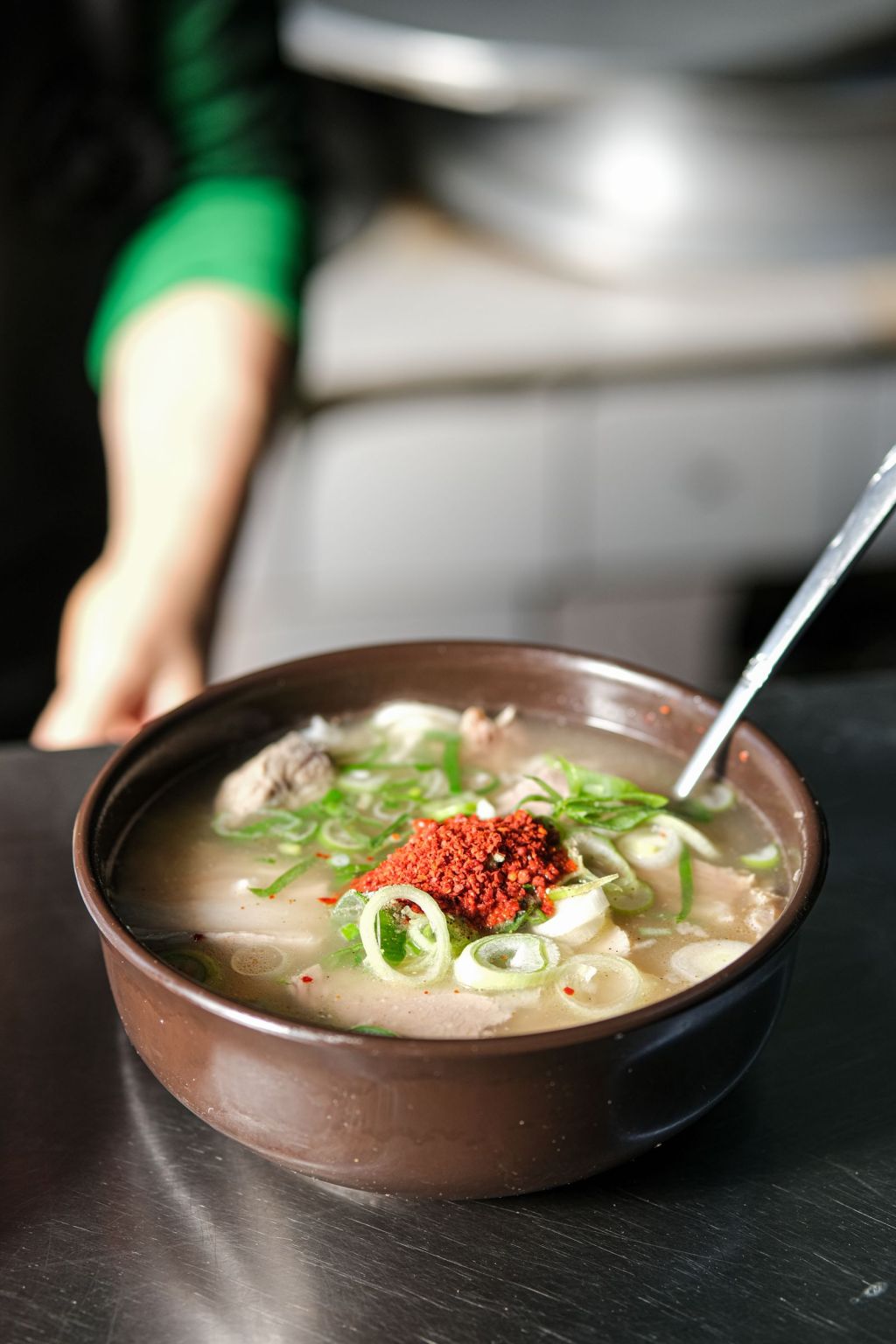
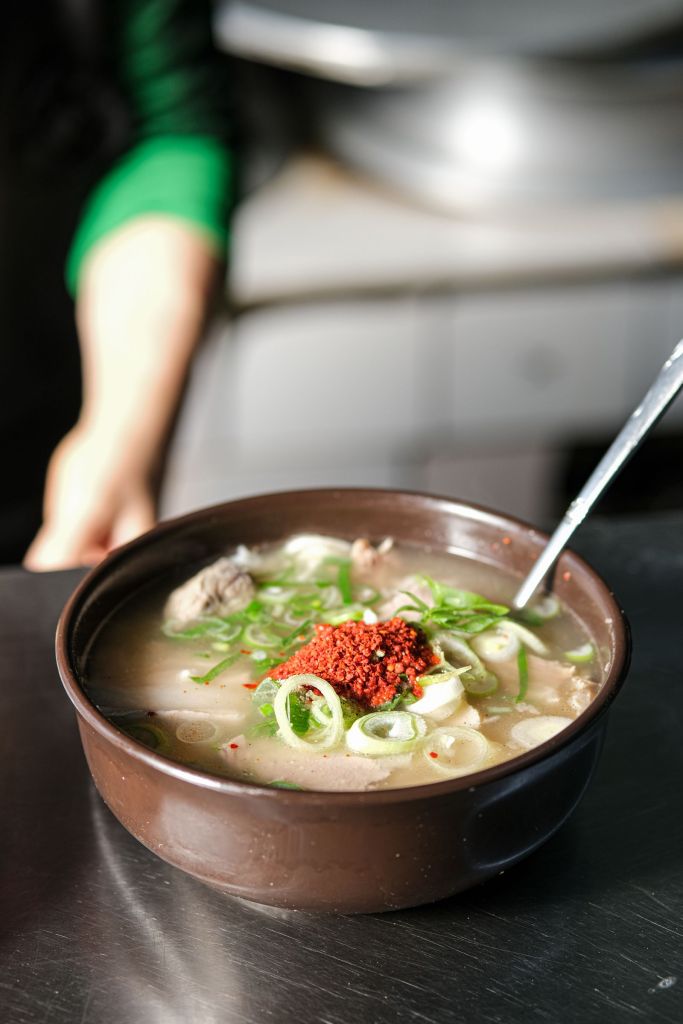
Sagol yuksu (사골육수) is Korean beef bone broth. “Sagol” refers to beef leg bones and “yuksu” means broth. Simmered for many hours, the bones turn the water cloudy and milky white, creating the rich base for comforting soups like seolleongtang and gomtang. Making it from scratch takes most of a day, so Korean grocery stores sell ready-to-use sagol broth in pouches, cartons and concentrates – one of the most useful packaged foods for quick Korean meals.
Sagol Yuksu at a Glance
What it is
- Milky Korean broth made by long-simmering beef bones
Main ingredients
- Beef leg bones (and sometimes knuckle, oxtail or brisket), water; packaged versions may add salt and seasonings
Taste
- Mild, rich and beefy, creamy-tasting but usually unseasoned
Main uses
- Seolleongtang, gomtang, tteokguk, mandu-guk, ramyeon upgrades, stews
What is Sagol Yuksu Made Of?
Traditionally, beef leg bones are soaked to remove blood, blanched, then simmered for many hours, often with the broth poured off and the bones re-boiled several times. Collagen and fat emulsify into the water, which gives the broth its milky color. In stores you will see:
- Ready-to-heat pouches: plain sagol broth or seasoned sagol gomtang, sold shelf-stable.
- Cartons: larger family-size broth packs.
- Concentrates and powders: diluted with water; often more seasoned.
- Frozen homemade-style broth: sold at some Korean butchers and markets.
What Does Sagol Yuksu Taste Like?
Plain sagol broth tastes gentle and rich rather than strong. It has a deep beef flavor and a silky, almost creamy body, but very little salt. That is intentional: Koreans season seolleongtang at the table with salt, black pepper and chopped green onion, so each bowl is adjusted to taste. Compared with an instant stock powder like dashida, it is much milder and more natural-tasting.
Popular Korean Dishes That Use Sagol Yuksu
Seolleongtang
Milky ox bone soup with sliced beef, rice and thin noodles, seasoned at the table.
Gomtang
A beef soup that relies more on meat, often clearer than seolleongtang.
Tteokguk and Mandu-guk
Rice cake and dumpling soups taste richer when made with bone broth.
Sagol Ramyeon
Instant noodles cooked in bone broth instead of water for a creamier soup.
Easy Seolleongtang Recipe (Serves 2)
Ingredients
- 4 cups (about 1 liter) store-bought sagol broth (unseasoned)
- 6 oz (170 g) beef brisket or shank, in one piece
- 2 oz (55 g) somyeon thin wheat noodles
- 2 bowls cooked short-grain rice
- 2 green onions, finely chopped
- 1 tsp minced garlic (optional)
- Salt and black pepper, to serve
- Kkakdugi or kimchi, to serve
Instructions
- Put the beef in a pot with the broth and 1 cup of water. Bring to a boil, skim off any foam, then simmer partly covered for 45–60 minutes until the beef is tender.
- Remove the beef, let it cool slightly and slice it thinly against the grain.
- Meanwhile, cook the somyeon in a separate pot according to the package, rinse in cold water and drain.
- Add the garlic to the broth if using and return the sliced beef to warm through.
- Divide the noodles between two large bowls, ladle in the hot broth and beef, and top with green onion.
- Serve rice on the side (or in the soup) and let everyone season their bowl with salt and black pepper. Enjoy with kkakdugi.
Tip: Check the label – if your broth is already seasoned (often labeled “gomtang”), add salt only after tasting.
Where to Buy Sagol Yuksu
United States
As an Amazon Associate, I earn from qualifying purchases.
Amazon
Search Korean beef bone broth on Amazon
Search Korean gomtang soup on Amazon
H-Mart
Search bone broth on H-Mart
Canada
Search Korean beef bone broth on Amazon.ca
Europe
Search Korean beef bone broth on Amazon.co.uk
How to Store Sagol Yuksu
Unopened shelf-stable pouches and cartons can be kept in the pantry until the date on the package. Once opened, refrigerate and use within 2–3 days, or freeze in portions for up to 2–3 months. Homemade bone broth should be cooled quickly, refrigerated, and the hardened fat layer lifted off before reheating.
Sagol Yuksu FAQ
Why is Korean bone broth white?
Long, vigorous boiling breaks down collagen and fat from the bones and emulsifies them into the water, making it milky.
What is the difference between seolleongtang and gomtang?
Seolleongtang is usually made mainly from bones and is milky white. Gomtang typically uses more meat and can be clearer, though styles overlap.
Why is seolleongtang served without salt?
It is a tradition to let each person season their own bowl with salt, pepper and green onion.
Can I use sagol broth for other recipes?
Yes. Use it anywhere you would use beef stock, such as rice cake soup, dumpling soup or noodle soup.
Conclusion
A pouch of sagol yuksu turns a day-long Korean soup into a 1-hour meal. Keep a few in the pantry for seolleongtang, rice cake soup or a richer bowl of ramyeon. To complete the meal, add a nest of somyeon noodles to every bowl.


Leave a Reply