Introduction
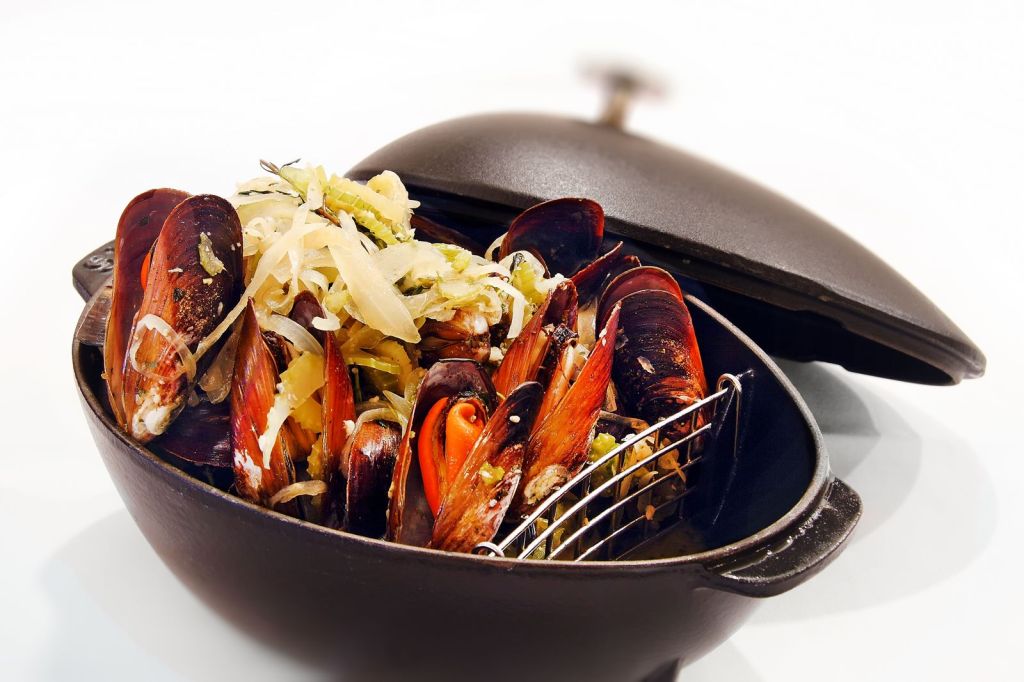
Honghap-tang (홍합탕) is a clear Korean mussel soup: a big pot of mussels simmered with garlic, scallion and a spicy green chili until they open and release a naturally sweet, briny broth. It is cheap, fast and loved in winter, when mussels are at their best. In Korea you will find it bubbling at street-food tents (pojangmacha) next to soju, often served free as a side, and it is a popular hangover soup too.
Honghap-tang Broth at a Glance
What it is
- A clear Korean soup base made by simmering mussels in water
Main ingredients
- Mussels, water, garlic, scallion, cheongyang chili, salt (sometimes a splash of soju or fish sauce)
Taste
- Light, briny and naturally sweet with a clean peppery kick
Main uses
- Honghap-tang, kalguksu and ramyeon broth, jjamppong base, seafood rice porridge
What is Honghap-tang Broth Made Of?
The broth gets nearly all its flavor from the mussels themselves, so it needs very little seasoning. In Korean markets the everyday mussel sold as honghap is usually the farmed blue mussel (jinju-damchi); true wild honghap is a larger, thicker-shelled mussel and more expensive. Ways to vary the pot:
- Clear and classic: mussels, garlic, scallion, chili and salt.
- Extra depth: start with an anchovy-kelp stock or add a slice of radish.
- Spicy red: a spoon of gochugaru for a reddish broth.
- Pojangmacha style: a splash of soju or cooking wine to freshen the aroma.
What Does Honghap-tang Taste Like?
Honghap-tang tastes like the sea in a good way: lightly salty, sweet from the mussel juices and savory without any heaviness. Sliced cheongyang chili adds a sharp, clean heat and garlic rounds it out. It is the kind of broth you sip straight from the bowl.
Popular Korean Dishes That Use Honghap-tang Broth
Honghap-tang
The simple mussel soup itself. Recipe below.
Honghap Kalguksu
Knife-cut noodles cooked in mussel broth – see our kalguksu guide.
Jjamppong
The spicy Korean-Chinese seafood noodle soup relies on mussels for much of its flavor (see our jjamppong guide).
Honghap-juk
Rice porridge simmered with chopped mussels and sesame oil.
Easy Honghap-tang Recipe (Serves 3–4)
Ingredients
- 2 lb (900 g) fresh live mussels
- 6 cups (1.4 L) water
- 1 tbsp minced garlic
- 1–2 cheongyang or jalapeño chilies, sliced
- 2 scallions, chopped
- 1 tbsp soju or cooking wine (optional)
- Salt or a few drops of fish sauce to taste; black pepper
Instructions
- Sort the mussels: discard any with cracked shells or that stay open after a firm tap.
- Scrub the shells under cold running water, rubbing them against each other, and pull off the hairy “beard” by tugging it toward the hinge. Rinse until the water runs clear.
- Put the mussels and water in a pot and bring to a boil over high heat. Skim off the foam that rises.
- When the shells open (about 3–5 minutes after boiling), add garlic, chili and soju. Simmer 2 more minutes – overcooking makes mussels tough.
- Taste before salting; mussels are naturally salty. Add salt or fish sauce only if needed, then the scallions and a pinch of pepper.
- Discard any mussels that did not open. Serve in big bowls with an empty bowl for shells.
Tip: Don’t salt the water at the start. Mussels release briny juice as they open, and seasoning at the end keeps the broth from becoming too salty.
Where to Buy Mussels and Honghap-tang Ingredients
Buy fresh live mussels from a fish counter you trust; Korean and Asian supermarkets often sell them in mesh bags. Frozen cooked mussels work for noodles and porridge but give a weaker broth.
United States
As an Amazon Associate, I earn from qualifying purchases.
Amazon
Search Korean fish sauce on Amazon
Search Korean soup bowls on Amazon
H-Mart
Search mussels on H-Mart
Canada
Search Korean fish sauce on Amazon.ca
Europe
Search Korean fish sauce on Amazon.co.uk
How to Store Mussels and the Broth
Live mussels need to breathe: keep them in the fridge in an open bowl covered with a damp cloth (never in water or a sealed bag) and cook them within 1–2 days. Cooked honghap-tang keeps in the fridge for 1–2 days; remove the meat from the shells for easier storage and reheat until steaming. The strained broth can be frozen for up to 2 months.
Honghap-tang FAQ
What does honghap mean?
Honghap is the Korean word for mussel; tang means soup.
When are mussels in season in Korea?
Late autumn through winter, which is why honghap-tang is a cold-weather favorite.
Why is my mussel soup gritty?
The mussels were not scrubbed well enough. Clean the shells thoroughly and let the broth settle a minute before ladling.
Is honghap-tang spicy?
Only lightly, from the sliced green chili. Leave it out for a completely mild soup.
Conclusion
Honghap-tang shows how little a great Korean broth sometimes needs: good mussels, garlic and a green chili. Make a big pot on a cold night and use any leftover broth for noodles. Pair it with a glass of soju the Korean way – our soju guide has more pairing ideas.


Leave a Reply