Introduction
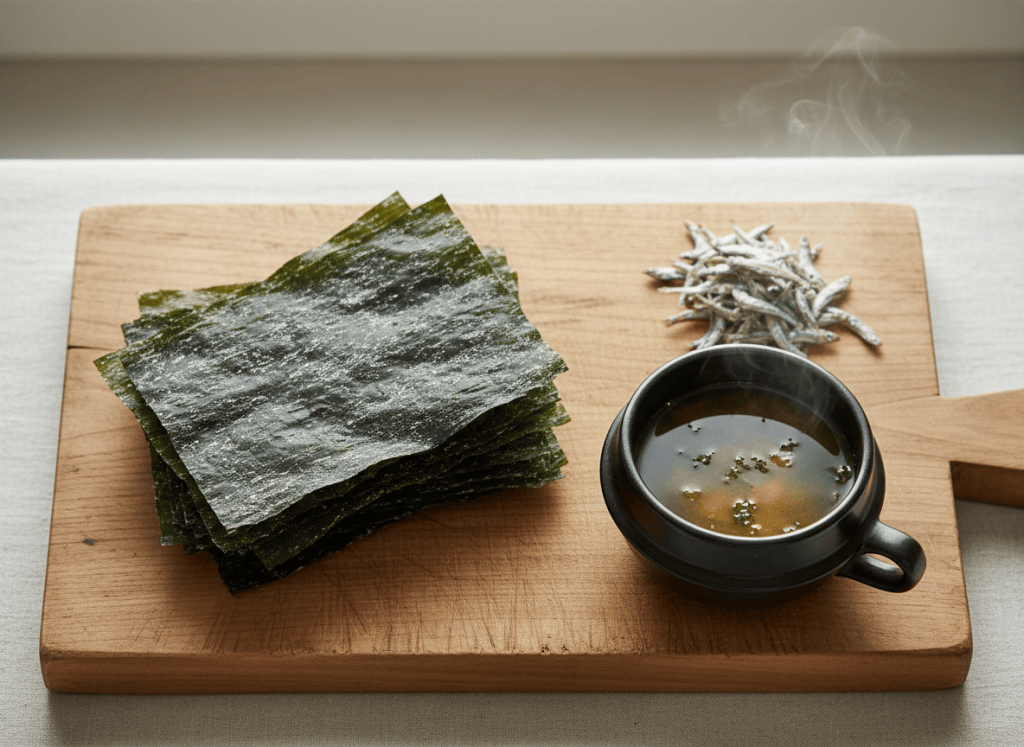
Dasima (다시마) is dried kelp, a thick, dark green seaweed that is one of the foundations of Korean cooking. It is the same type of seaweed known in Japan as kombu.
Most Korean soups and stews start with a broth made from dasima and dried anchovies. A few squares of kelp add a deep, savory flavor without any meat, which is why so many Korean home cooks keep a bag in the pantry.
What is Dasima Made Of?
Dasima is simply kelp that has been harvested from the sea and dried in the sun or by machine. The dried sheets are stiff and often covered with a fine white powder. This powder is natural and contains much of the kelp’s savory flavor, so it should not be washed off.
- Whole dried dasima sheets – large pieces you cut with scissors as needed
- Pre-cut dasima squares – convenient small squares for broth
- Broth packs – tea-bag style packs that combine dasima with dried anchovies and other ingredients
- Dasima snacks – fried or seasoned kelp chips, such as dasima-bugak
What Does Dasima Taste Like?
Dasima has a mild, clean ocean flavor with a lot of natural umami. In broth it does not taste fishy; instead it makes soups taste fuller and more rounded.
If it is boiled too long, kelp can turn slimy and give the broth a slightly bitter taste, so it is usually removed after a short simmer.
Popular Korean Dishes That Use Dasima
Doenjang-jjigae
Korea’s everyday soybean paste stew tastes best made with anchovy-kelp broth as its base.
Eomuk-guk (Fish Cake Soup)
The light, savory broth sold with fish cake skewers at Korean street stalls relies on dasima for its flavor.
Tteokbokki
Many home recipes simmer the rice cakes in kelp broth instead of plain water for a deeper sauce.
Dasima Twigak (Fried Kelp Chips)
Pieces of kelp fried until crisp and sprinkled with sugar, a crunchy snack or side dish.
Easy Anchovy-Kelp Broth Recipe (Makes about 1.5 L)
The all-purpose Korean soup stock (myeolchi-dasima yuksu), ready in about 25 minutes.
Ingredients
- 2 pieces dasima, about 10 x 10 cm each
- 15–20 large dried anchovies (for broth), heads and guts removed
- 2 L cold water
- 1/4 onion and a 5 cm piece of Korean radish (optional)
- 1 green onion root or white part (optional)
Instructions
- Wipe the kelp. Gently wipe the dasima with a damp paper towel to remove any dust. Do not rinse off the white powder.
- Toast the anchovies. Dry-roast the cleaned anchovies in a pot over medium heat for 1–2 minutes until fragrant. This reduces any fishy smell.
- Add water and vegetables. Add the cold water, dasima, and any optional vegetables to the pot.
- Bring to a boil. Heat over medium-high heat. Once it boils, simmer for about 10 minutes, then remove the dasima.
- Simmer. Continue simmering the anchovies and vegetables for another 10 minutes on medium-low heat.
- Strain. Strain the broth through a fine sieve and use it right away, or let it cool and refrigerate.
Tip: Do not throw away the cooked kelp. Slice it thinly and braise it with soy sauce and a little sugar for a quick side dish.
Where to Buy Dasima
Dasima is sold in the dried seafood or seaweed aisle of Korean and Asian grocery stores. Look for “dried kelp,” “dasima,” or “kombu.”
United States
As an Amazon Associate, I earn from qualifying purchases.
Amazon
https://www.amazon.com/s?k=korean+dried+kelp+dasima
H-Mart
https://www.hmart.com/search?type=product&q=dried kelp
Canada
Amazon Canada
https://www.amazon.ca/s?k=korean+dried+kelp+dasima
Europe
Amazon UK
https://www.amazon.co.uk/s?k=korean+dried+kelp+dasima
How to Store Dasima
Keep dried dasima in an airtight bag or container in a cool, dry place, away from humidity. It keeps for a long time this way. In a humid climate, store it in the refrigerator or freezer. Homemade broth keeps for about 3–4 days in the fridge, or can be frozen in portions.
Conclusion
Dasima is the quiet hero of Korean cooking. A couple of squares of dried kelp turn plain water into a savory broth that makes stews, soups, and tteokbokki taste the way they do in Korea.


Leave a Reply