Introduction
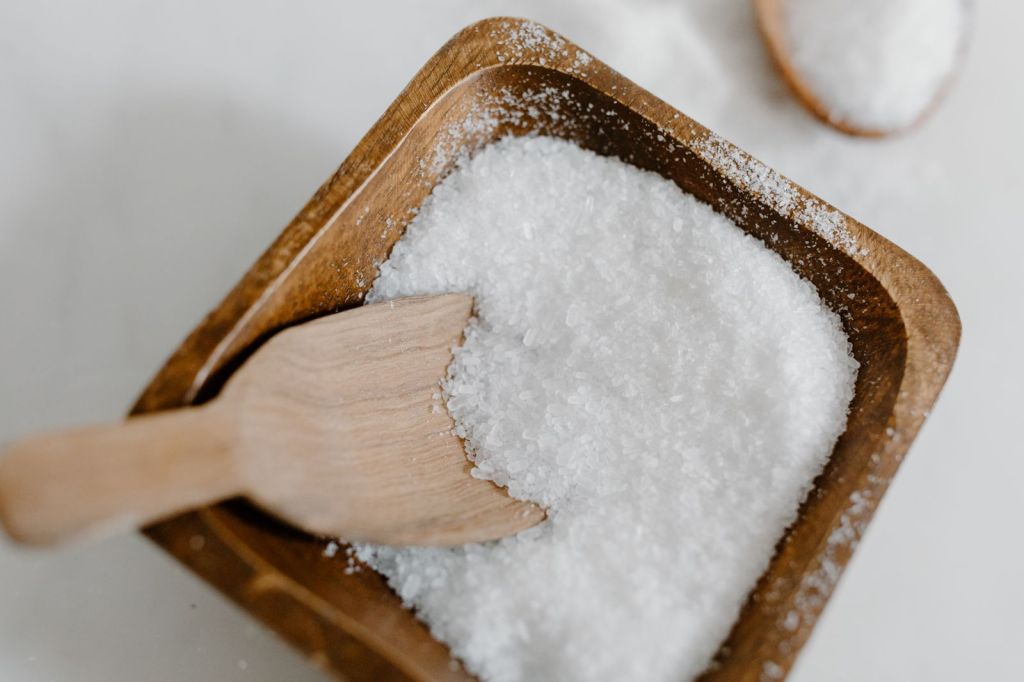
Cheonilyeom (천일염) is Korean solar sea salt, made by letting seawater evaporate under the sun and wind in coastal salt fields. Much of it comes from the tidal flats of Korea’s southwest coast, especially Sinan County in South Jeolla Province. If you have ever read a Korean kimchi recipe that calls for “coarse sea salt,” this is the salt it means. Its large, slightly moist crystals dissolve slowly and season evenly, which is exactly what you want when salting napa cabbage or making pickles.
Cheonilyeom at a Glance
Quick facts
- What it is: coarse, sun-dried Korean sea salt
- Main ingredients: seawater evaporated in salt fields; contains sodium chloride plus natural minerals
- Taste: salty with a rounder, less sharp finish than table salt
- Main uses: brining kimchi cabbage, making jang and jeotgal, pickles, seasoning soups
What is Cheonilyeom Made Of?
Seawater is let into shallow fields, called yeomjeon, and moved through a series of ponds as the sun and wind concentrate it. When the brine is strong enough, salt crystals form and are raked up by hand. Fresh salt contains bitter magnesium-rich liquid called gansu (bittern), so Korean cooks prefer salt that has been stored for a year or more to let the bittern drain away. Aged cheonilyeom tastes milder and less bitter.
Types of Korean salt
- Cheonilyeom / gulgeun sogeum: coarse solar salt for brining kimchi and making jang.
- Kkotsogeum: “flower salt,” the delicate crystals that form on the surface of the brine.
- Kkaekkeuthan sogeum / gogeum: fine salt, often cheonilyeom that has been washed, dried or roasted, for everyday seasoning.
- Jugyeom: bamboo salt, roasted inside bamboo tubes, sold as a premium product.
What Does Cheonilyeom Taste Like?
It is clearly salty, but many cooks find it rounder and less harsh than refined table salt, with a faint mineral note. Because the crystals are large, a spoonful of coarse salt weighs less than a spoonful of fine salt, so do not swap them one-for-one by volume.
Popular Korean Dishes That Use Cheonilyeom
Baechu kimchi
Napa cabbage is salted with coarse sea salt before it is mixed with kimchi paste.
Oiji
Cucumbers pickled in a hot salt brine. Recipe below.
Kkakdugi
Radish cubes are salted first to draw out water; see our kkakdugi guide.
Doenjang and ganjang
Traditional soybean paste and soy sauce are made by soaking meju in salt brine.
Easy Oiji Recipe (Makes about 10 pickles)
Ingredients
- 10 small pickling cucumbers (Kirby cucumbers), firm and fresh
- 8 cups water
- 3/4 cup coarse Korean sea salt (cheonilyeom)
- A clean glass jar or food-safe container with a weight (a small plate or a zip bag filled with water)
Instructions
- Wash the cucumbers well, rubbing off any bumps, and pack them snugly into a clean, heat-safe container.
- Bring the water and salt to a rolling boil until the salt dissolves.
- Carefully pour the boiling brine over the cucumbers so they are completely covered. Place a weight on top so they stay under the brine.
- When cool, cover and leave at cool room temperature for 3–4 days.
- Drain the brine into a pot, bring it to a boil again, let it cool slightly and pour it back over the cucumbers. This helps them stay crunchy and keeps the brine clean.
- Leave for another 3–4 days, until the cucumbers turn yellow-green and wrinkled, then refrigerate.
- To serve, slice thinly, soak in cold water for 10–20 minutes to remove excess salt, squeeze dry and season with a little gochugaru, garlic, green onion and sesame oil, or float the slices in cold water as oiji naengguk.
Tip: Always keep the cucumbers fully under the brine. Anything above the surface can spoil; if you see mold or the pickles turn soft and slimy, throw them out.
Where to Buy Cheonilyeom
United States
As an Amazon Associate, I earn from qualifying purchases.
Amazon
Search Korean coarse sea salt on Amazon
H-Mart
Search sea salt on H-Mart
Canada
Search Korean coarse sea salt on Amazon.ca
Europe
Search Korean coarse sea salt on Amazon.co.uk
How to Store Cheonilyeom
Salt does not spoil. Keep it in a covered container in a dry place. Coarse sea salt is naturally a little damp; some Korean households store large bags in a basket or on a slatted rack so any remaining bittern can drip out over time. If it clumps, break it up or dry it briefly in a low oven.
Cheonilyeom FAQ
Can I use table salt for kimchi?
It is not recommended. Fine table salt is denser, easy to oversalt with, and some contains iodine or anti-caking agents. Coarse sea salt brines cabbage more evenly.
What is a substitute for Korean sea salt?
Any coarse, additive-free sea salt works, such as coarse grey sea salt. Kosher salt can be used for brining, but weigh it rather than measuring by volume.
Why is aged sea salt better?
Aging lets the bitter bittern drain out, giving a milder, cleaner salty taste, which matters most in kimchi and jang.
Conclusion
Cheonilyeom is the humble foundation of Korean fermentation: kimchi, jang and pickles all start with a good coarse sea salt. Try it in crunchy oiji, then use it to salt cabbage for homemade kimchi, or mix a pinch with sesame oil for gireumjang.


Leave a Reply