Introduction
Gul sauce (굴소스) is simply the Korean name for oyster sauce – gul means oyster. It came into Korean kitchens through Korean-Chinese cooking, and today a bottle sits next to the ganjang and sesame oil in many Korean homes. A spoonful adds savory depth and a glossy finish to stir-fried vegetables, fried rice, japchae and even tteokbokki. If you see “gul sauce” in a Korean recipe, any good oyster sauce will work.
Gul Sauce at a Glance
What it is
- A thick, dark-brown oyster sauce used as an umami seasoning in Korean home cooking
Main ingredients
- Oyster extract, sugar, salt, water and starch (often with soy sauce and caramel color)
Taste
- Salty, slightly sweet and deeply savory, without a strong fishy flavor
Main uses
- Vegetable stir-fries, fried rice, japchae, stir-fried udong and quick marinades
What is Gul Sauce Made Of?
Oyster sauce is made by cooking down oyster extract and seasoning it with sugar and salt, then thickening it with starch. Labels vary a lot, so it is worth reading the ingredient list. Common types you will find in Korean and Asian grocery stores:
- Premium oyster sauce: oyster extract is listed first or near the top – richer and less sweet.
- Regular oyster sauce: more sugar, salt and starch; fine for everyday stir-fries.
- Squeeze-bottle oyster sauce: the same sauce in a handy bottle, popular in Korean kitchens.
- Vegetarian “oyster” sauce: made with mushrooms instead of oysters, for plant-based cooking.
What Does Gul Sauce Taste Like?
Straight from the bottle it is salty and intense, with a caramel-like sweetness and a rounded, savory finish. Once cooked into a dish, the seafood note fades into the background and you mainly notice a deeper, meatier flavor and a shiny coating on the ingredients. It is less salty than soy sauce per spoonful but much thicker, so a little goes a long way.
Popular Korean Dishes That Use Gul Sauce
Chaeso Bokkeum (Stir-Fried Vegetables)
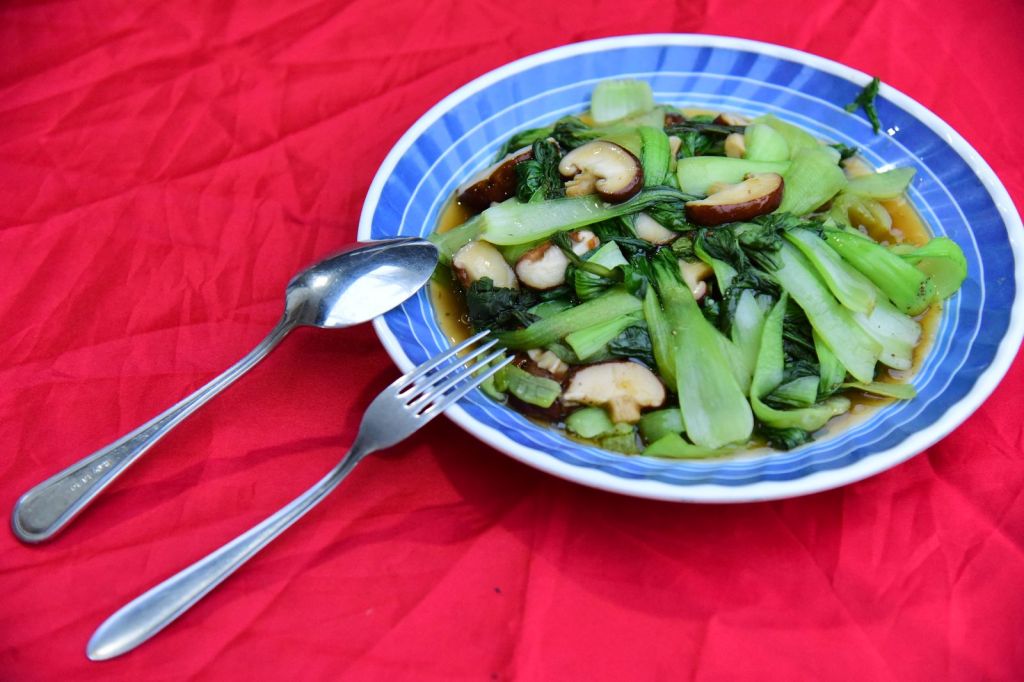
Bok choy, mushrooms, cabbage or zucchini stir-fried with garlic and a spoonful of oyster sauce – the recipe below.
Bokkeumbap (Fried Rice)
Many Korean fried rice recipes add a little oyster sauce for a restaurant-style savory taste and golden color.
Japchae
Some cooks add a teaspoon of oyster sauce to the soy-sugar japchae sauce for extra depth.
Gungjung Tteokbokki and Bokkeum Udong
Soy-based rice cake and noodle stir-fries often use oyster sauce to balance sweetness and saltiness.
Easy Bok Choy Mushroom Stir-Fry Recipe (Serves 2)
Ingredients
- 4 baby bok choy (about 10 oz / 300 g), halved or quartered
- 5 oz (150 g) shiitake or oyster mushrooms, sliced
- 3 cloves garlic, sliced
- 1 tbsp neutral oil
- 1/2 tsp sesame oil and toasted sesame seeds, to finish
Sauce
- 1 1/2 tbsp gul sauce (oyster sauce)
- 1 tsp soy sauce
- 1 tsp sugar
- 2 tbsp water
- 1/2 tsp potato or corn starch (optional, for a thicker glaze)
Instructions
- Wash the bok choy well, especially at the base where soil hides, and pat dry.
- Stir the sauce ingredients together in a small bowl.
- Heat the oil in a wok or large pan over medium heat and fry the garlic for 30 seconds until fragrant.
- Turn the heat to high, add the mushrooms and stir-fry for 2 minutes.
- Add the bok choy stems first, then the leaves, and stir-fry for 1–2 minutes until bright green.
- Pour in the sauce and toss for 30 seconds until glossy. Turn off the heat, drizzle with sesame oil and sprinkle with sesame seeds.
Tip: Cook on high heat and do not cover the pan – bok choy releases water quickly and turns limp if steamed.
Where to Buy Gul Sauce
United States
As an Amazon Associate, I earn from qualifying purchases.
Amazon
Search Korean oyster sauce on Amazon
Search premium oyster sauce on Amazon
H-Mart
Search oyster sauce on H-Mart
Canada
Search oyster sauce on Amazon.ca
Europe
Search oyster sauce on Amazon.co.uk
How to Store Gul Sauce
Unopened bottles keep in a cool, dark cupboard until the best-by date. After opening, close the cap tightly and refrigerate; most brands recommend using it within a few months. Always use a clean, dry spoon, and discard the sauce if it smells sour, grows mold or separates in an unusual way.
Gul Sauce FAQ
Is Korean gul sauce different from Chinese oyster sauce?
Not really. Gul sauce is the Korean word for oyster sauce, and Korean shelves carry both Korean-made and Chinese-style brands. They can be used interchangeably.
What can I use instead of oyster sauce?
Mix soy sauce with a little sugar, or use vegetarian mushroom “oyster” sauce. Yondu also adds savory depth, though it is thinner and not sweet.
Is oyster sauce gluten-free?
Many brands contain wheat (from soy sauce or flour). Look for a bottle labeled gluten-free if you need one.
Does oyster sauce taste fishy?
Only slightly. Its flavor is mostly sweet-salty and savory, and the seafood note mellows once cooked.
Conclusion
Gul sauce is the easiest way to give Korean stir-fries a savory, glossy, restaurant-style finish. Keep a bottle in the fridge, start with a tablespoon, and try it in the bok choy stir-fry above. For more pantry staples, read our guides to mat-ganjang and Korean sesame oil.


Leave a Reply