Introduction
Chonggak kimchi (총각김치) is kimchi made from small, finger-length Korean radishes called chonggak-mu or altari-mu, fermented whole with their leafy green tops still attached. In English it is often called “ponytail radish kimchi” because the long greens look like a ponytail. It is famous for its loud crunch, and many Koreans consider a well-fermented piece of chonggak kimchi the perfect partner for a bowl of ramyeon or a simple meal of rice and soup.
Chonggak Kimchi at a Glance
What it is
- Whole baby radish kimchi with the greens attached
Main ingredients
- Ponytail radish, salt, gochugaru, fish sauce, salted shrimp, garlic, ginger, rice porridge
Taste
- Very crunchy, spicy, savory and tangy as it ferments; slightly peppery radish bite
Main uses
- Side dish (banchan) with rice, ramyeon, gukbap and noodle soups; braised with fish when sour
What is Chonggak Kimchi Made Of?
The star is the ponytail radish: a small, firm, oblong white radish only a few inches long with plenty of green leaves. The radishes are salted to draw out water, then coated in a kimchi paste of gochugaru, aekjeot (fish sauce), saeujeot (salted shrimp), garlic, ginger and a little rice porridge that helps the paste stick. Related radish kimchi you may see:
- Chonggak kimchi: whole small radishes with greens, the subject of this guide.
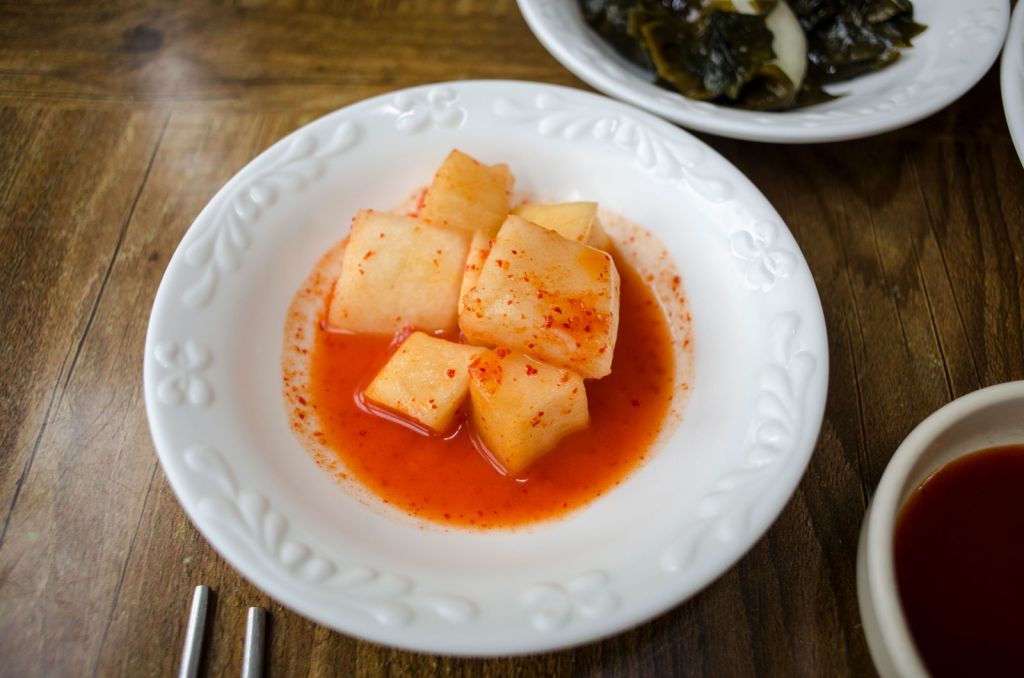
- Kkakdugi: large Korean radish cut into cubes – see our kkakdugi guide.
- Yeolmu kimchi: made mostly from the tender greens of young radish.
- Dongchimi: a mild, non-spicy radish water kimchi.
What Does Chonggak Kimchi Taste Like?
Freshly made chonggak kimchi is spicy, salty and sharply radishy, with greens that taste a bit like mustard leaves. After a few days of fermentation it turns pleasantly sour and fizzy while the radish stays very crisp – that dense crunch is the main reason people love it. The greens soften and soak up the seasoning, becoming the most flavorful part.
Popular Korean Dishes That Use Chonggak Kimchi
Ramyeon with Chonggak Kimchi
A crunchy bite of radish between slurps of noodles is a classic Korean comfort combo.
Gukbap and Seolleongtang
Radish kimchi is the standard side for rich, mild bone-broth soups.
Chonggak Kimchi Jjim
Sour, well-aged chonggak kimchi braised with pork or mackerel until tender.
Kimchi Fried Rice
Chopped chonggak radish adds extra crunch to fried rice.
Easy Chonggak Kimchi Recipe (Makes about 2 quarts)
Ingredients
- 2 bunches ponytail radish (about 4 lb / 1.8 kg)
- 1/2 cup coarse Korean sea salt
- 4 scallions, cut into 2-inch pieces
Kimchi paste
- 2 tbsp sweet rice flour + 1 cup water (for rice porridge)
- 1/2 cup gochugaru
- 1/4 cup fish sauce
- 2 tbsp salted shrimp, finely chopped
- 3 tbsp minced garlic and 1 tsp minced ginger
- 1 tbsp sugar (or 1/4 grated Korean pear)
Instructions
- Trim the root tips and any yellow leaves. Scrub the radishes well with a brush or knife edge, keeping the greens attached, and rinse off all soil. Cut large radishes in half lengthwise.
- Sprinkle the salt over the radishes and greens, toss and let sit for 1 1/2–2 hours, turning every 30 minutes, until the stems bend easily. Rinse 2–3 times and drain well.
- Whisk the sweet rice flour into the water in a small pot and cook over medium heat, stirring, until it thickens into a thin porridge. Let it cool completely.
- Mix the cooled porridge with the gochugaru, fish sauce, salted shrimp, garlic, ginger and sugar. Wearing gloves, coat the radishes and greens thoroughly, then mix in the scallions.
- Fold each bunch of greens around its radish to make neat bundles and pack them tightly into a clean jar, leaving some space at the top. Leave at room temperature for 1–2 days until slightly sour, then refrigerate.
Tip: Chonggak radish is dense, so it needs about a week in the fridge to taste its best. Pick radishes that are firm, smooth and not too fat – they will be crisper and less bitter.
Where to Buy Chonggak Kimchi
United States
As an Amazon Associate, I earn from qualifying purchases.
Amazon
Search Korean radish kimchi on Amazon
Search kimchi containers on Amazon
H-Mart
Search chonggak on H-Mart
Search radish kimchi on H-Mart
Canada
Search Korean radish kimchi on Amazon.ca
Europe
Search Korean radish kimchi on Amazon.co.uk
Fresh ponytail radishes appear in Korean grocery produce sections, especially in autumn. Ready-made chonggak kimchi is sold in the refrigerated kimchi aisle.
How to Store Chonggak Kimchi
Keep chonggak kimchi in an airtight container in the fridge, pressed down so the radishes stay under the brine. It keeps for several months and gets more sour over time. Always use clean utensils, and once it is very sour, use it for braises and stews.
Chonggak Kimchi FAQ
What is the difference between chonggak kimchi and kkakdugi?
Chonggak kimchi uses whole small radishes with greens. Kkakdugi uses a large Korean radish cut into cubes.
Why is it called ponytail radish kimchi?
The long leafy tops resemble a ponytail. “Chonggak” was an old word for an unmarried young man’s braided hair.
Can I make chonggak kimchi with regular radishes?
Small daikon or red radishes with tops can work, but the texture will be softer and less crunchy.
How do you eat chonggak kimchi?
Pick up a whole radish with chopsticks and bite off a piece, or cut it into chunks with scissors at the table.
Conclusion
Chonggak kimchi brings the crunchiest bite in the whole kimchi family, and it only needs a few bunches of ponytail radish and a basic kimchi paste. Make a jar in autumn, let it ripen in the fridge, and enjoy it with ramyeon and soups all season. For a quicker radish kimchi, try our kkakdugi recipe.


Leave a Reply