Introduction
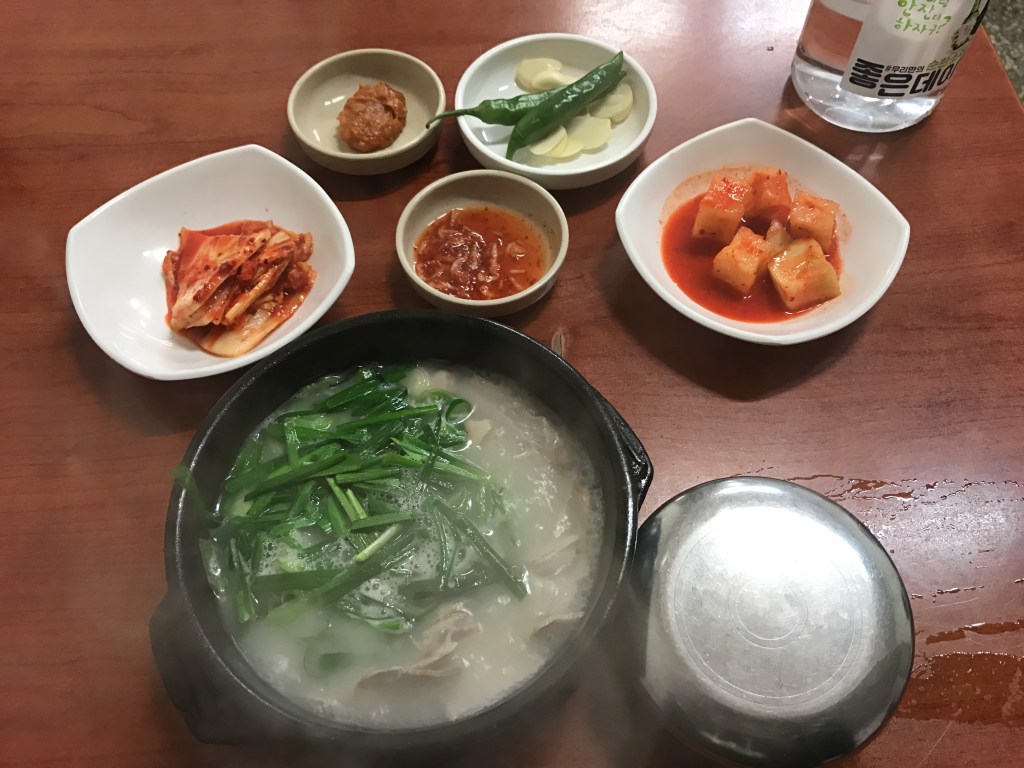
Dwaeji gukbap (돼지국밥) – literally “pork soup with rice” – is the signature comfort food of Busan. A bowl of steaming, milky pork bone broth is filled with tender slices of boiled pork and served with rice, and every diner seasons it to taste at the table with salted shrimp, chives and spicy paste. The heart of the dish is the broth: pork bones and meat simmered for hours until the liquid turns rich and cloudy. It is the pork counterpart of beef-based sagol yuksu.
Dwaeji Gukbap Broth at a Glance
What it is
- A long-simmered pork bone and pork meat broth, served lightly seasoned
Main ingredients
- Pork bones, pork shoulder or belly, onion, garlic, ginger, green onion
Taste
- Rich, porky, creamy and mild – salty and spicy only once you season it
Main uses
- Dwaeji gukbap, sundae-guk, pork noodle soups, suyuk (boiled pork)
What is Dwaeji Gukbap Broth Made Of?
Restaurants boil pork leg and neck bones at a strong rolling boil for many hours so the collagen and fat emulsify into a milky broth, often adding pork meat and aromatics like onion, garlic, ginger and green onion. The broth itself is barely salted – seasoning happens at the table. Common styles:
- Milky (bone) style: thick, cloudy and rich, the classic Busan bowl.
- Clear (meat) style: made mostly from pork meat, lighter and cleaner.
- Sundae gukbap: the same broth with Korean blood sausage and offal.
- Packaged broth: ready-made pork bone soup in pouches, a handy shortcut.
What Does Dwaeji Gukbap Broth Taste Like?
On its own the broth is mellow, creamy and deeply porky, with a gentle sweetness from the bones. The fun comes next: a spoonful of saeujeot adds briny saltiness, chive salad brings freshness, and a dollop of dadaegi turns the soup red and spicy. Each bowl ends up seasoned exactly the way the diner likes it.
Popular Korean Dishes That Use Dwaeji Gukbap Broth
Dwaeji Gukbap
Pork, broth and rice in one bowl – the recipe below.
Sundae-guk
The same broth with slices of sundae (Korean blood sausage) and offal.
Suyuk Baekban
A set meal where the boiled pork is served on a plate and the broth and rice come on the side.
Milmyeon Pairing
In Busan, gukbap shops often sit next to milmyeon (wheat cold noodle) restaurants, and many locals alternate between the two.
Easy Dwaeji Gukbap Recipe (Serves 4)
Ingredients
- 2 lb (900 g) pork neck bones or trotters
- 1 lb (450 g) pork shoulder or belly, in one piece
- 1 onion, halved; 8 garlic cloves; 1 thumb ginger, sliced; 2 green onions
- About 14 cups water
- 4 bowls cooked rice
Table seasonings
- Saeujeot (salted shrimp) and salt
- Buchu muchim: 1 bunch garlic chives, cut, tossed with 1 tbsp gochugaru, 1 tsp fish sauce, 1 tsp sugar, 1 tsp vinegar and 1 tsp sesame oil
- Dadaegi or gochugaru, chopped green onion and black pepper
Instructions
- Soak the bones in cold water for 1 hour, changing the water once, to draw out blood.
- Blanch the bones in boiling water for 10 minutes. Drain, rinse each bone and clean the pot.
- Return the bones to the pot with the fresh water. Boil hard, partly covered, for 3–4 hours, topping up with hot water to keep the bones covered. A strong boil (not a gentle simmer) is what makes the broth milky.
- For the last hour, add the pork shoulder, onion, garlic, ginger and green onion. Cook until the pork is tender, then remove the meat and cool slightly. Strain the broth and skim off excess fat.
- Slice the pork thinly. To serve, put rice and pork slices in each bowl, pour over very hot broth, and let everyone season with saeujeot, chives, dadaegi and pepper.
Tip: Short on time? Simmer the pork shoulder and aromatics for 1 hour in 8 cups of store-bought unsalted pork or chicken bone broth. It will be lighter than the Busan original but still comforting. Serve with kkakdugi on the side.
Where to Buy Dwaeji Gukbap Ingredients
United States
As an Amazon Associate, I earn from qualifying purchases.
Amazon
Search Korean pork bone soup on Amazon
Search Korean salted shrimp on Amazon
H-Mart
Search pork bone on H-Mart
Canada
Search Korean pork bone soup on Amazon.ca
Europe
Search Korean pork bone soup on Amazon.co.uk
Pork neck bones and trotters are sold at Korean, Chinese and Latin American butchers; ask for bones “for soup.”
How to Store Dwaeji Gukbap Broth
Cool the broth quickly (divide it into shallow containers), then refrigerate for up to 3–4 days or freeze for up to 3 months. The fat will set on top and can be lifted off. Store sliced pork separately in a little broth. Always bring the broth back to a full boil before serving.
Dwaeji Gukbap Broth FAQ
Why is dwaeji gukbap broth white?
Boiling bones hard for hours breaks down collagen and fat into tiny droplets that stay suspended, turning the broth milky.
Why is dwaeji gukbap famous in Busan?
It became a cheap, filling staple in the port city and is widely linked to the period of the Korean War, when many refugees settled in Busan. Today it is the city’s best-known soup.
How do you season dwaeji gukbap?
Add saeujeot or salt for saltiness, chive salad for freshness and dadaegi or chili flakes for heat, a little at a time.
Is dwaeji gukbap the same as gamjatang?
No. Both use pork bones, but gamjatang is a spicy stew with potatoes and perilla seeds, while dwaeji gukbap is a mild, milky soup seasoned at the table.
Conclusion
Dwaeji gukbap broth is simple ingredients, plenty of time and a strong boil. Make a big pot on a weekend, freeze some for later, and season each bowl your way with salted shrimp, chives and spicy paste for a true taste of Busan. For the beef version, try our sagol yuksu and seolleongtang guide.


Leave a Reply