Introduction
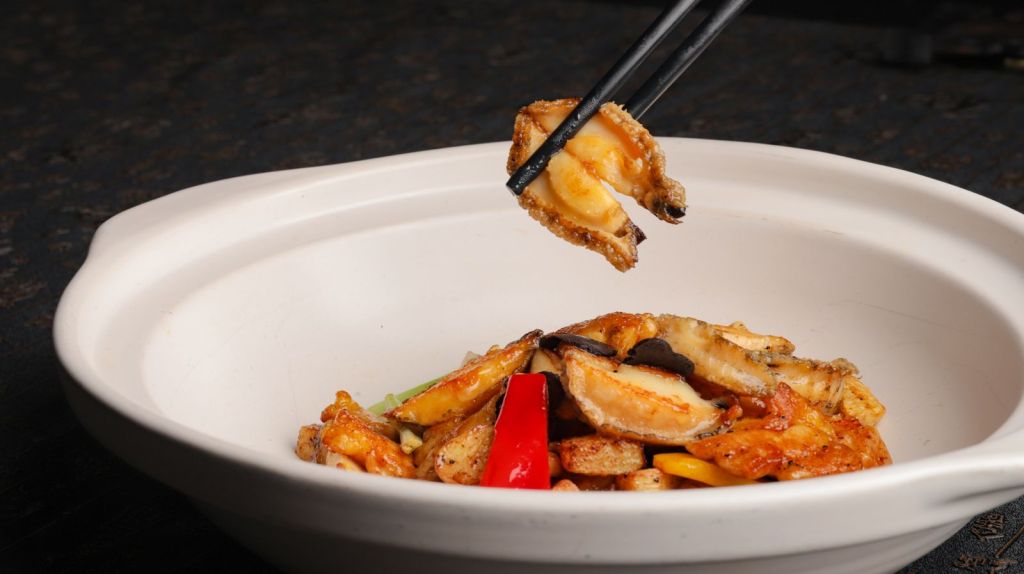
Yusanseul (유산슬) is a classic Korean-Chinese (junghwa yori) dish of finely shredded seafood, pork and mushrooms stir-fried and bound in a light, glossy, starch-thickened sauce. The name comes from Chinese words meaning “three shredded ingredients cooked in sauce.” Unlike the sweet-sour tangsuyuk sauce or the fiery jjamppong base, yusanseul sauce is mild, savory and elegant – a dish often ordered for special meals and spooned over rice as yusanseul-bap.
Yusanseul Sauce at a Glance
What it is
- A clear-to-light-brown oyster-soy sauce thickened with starch for Korean-Chinese seafood stir-fries
Main ingredients
- Chicken or seafood stock, oyster sauce, soy sauce, cooking wine, scallion-ginger oil, potato starch slurry, sesame oil
Taste
- Mild, savory and silky with a gentle seafood sweetness – not spicy
Main uses
- Yusanseul, yusanseul-bap (over rice), seafood-mushroom stir-fries, braised tofu
What is Yusanseul Sauce Made Of?
The sauce starts with scallion and ginger sizzled in oil, then stock is added and seasoned with oyster sauce, a little soy sauce, salt and cooking wine. A potato-starch slurry thickens it into a glossy coating, and sesame oil goes in at the end. Typical ingredients in the dish:
- Seafood: shrimp, squid and – in restaurants – sea cucumber.
- Meat: thin strips of pork or beef.
- Mushrooms: shiitake, enoki, oyster or straw mushrooms.
- Vegetables: bamboo shoots, bok choy, garlic chives and onion.
What Does Yusanseul Sauce Taste Like?
Yusanseul tastes clean and savory, with the umami of oyster sauce and seafood, a light aroma of scallion oil and ginger, and a smooth, almost velvety texture from the starch. It is lighter than jjajang and far gentler than chili-based Korean-Chinese dishes, which makes it a good balance on a shared table.
Popular Korean Dishes That Use Yusanseul Sauce
Yusanseul
The platter version served as a main dish at Korean-Chinese restaurants.
Yusanseul-bap
The same stir-fry spooned generously over steamed rice as a one-dish meal.
Palbochae
A related, more luxurious stir-fry of many seafoods and vegetables in a similar savory sauce.
Japtang-bap
Mixed seafood and vegetables in a thickened savory sauce over rice.
Easy Yusanseul-bap Recipe (Serves 2–3)
Ingredients
- 150 g (5 oz) peeled shrimp, halved lengthwise
- 1 small squid body, cut into thin strips (or more shrimp)
- 100 g (3.5 oz) pork loin, cut into thin strips, mixed with 1 tsp cooking wine and a pinch of salt
- 4 shiitake mushrooms, sliced; 1 pack enoki mushrooms, trimmed
- 1/2 cup sliced bamboo shoots; 1/2 onion, sliced; a handful of garlic chives or bok choy
- 2 tbsp oil, 1 scallion (chopped), 1 tsp minced ginger, 1 tsp minced garlic
- Steamed rice for serving
Yusanseul Sauce
- 1 1/2 cups (360 ml) chicken stock
- 1 1/2 tbsp oyster sauce, 1 tsp soy sauce, 1 tbsp cooking wine
- Salt and white pepper to taste
- Slurry: 1 1/2 tbsp potato starch + 3 tbsp water
- 1 tsp sesame oil
Instructions
- Heat oil in a wok over medium heat and fry the scallion, ginger and garlic for 30 seconds until fragrant.
- Turn the heat to high, add the pork and stir-fry until no longer pink. Add the shrimp and squid and stir-fry 1 minute.
- Add onion, shiitake and bamboo shoots and stir-fry 1 minute, then pour in the cooking wine around the edge of the wok.
- Add the stock, oyster sauce and soy sauce. Bring to a boil, add the enoki and chives, and season with salt and white pepper.
- Stir the slurry again and drizzle it in while stirring until the sauce turns glossy and coats a spoon. Make sure the shrimp is opaque and cooked through.
- Turn off the heat, add the sesame oil and spoon over bowls of hot rice.
Tip: Cut everything into similar thin strips so it cooks evenly, and add the slurry little by little – you can always thicken more, but over-thick sauce turns gluey.
Where to Buy Yusanseul Sauce Ingredients
There is no common bottled “yusanseul sauce,” but the key ingredients – oyster sauce, potato starch and frozen seafood mixes – are easy to find.
United States
As an Amazon Associate, I earn from qualifying purchases.
Amazon
Search oyster sauce on Amazon
Search potato starch on Amazon
H-Mart
Search oyster sauce on H-Mart
Canada
Search oyster sauce on Amazon.ca
Europe
Search oyster sauce on Amazon.co.uk
How to Store Yusanseul
Yusanseul is best eaten fresh. Leftovers keep in a covered container in the fridge for 1–2 days; reheat until steaming hot with a splash of water, since starch sauces thicken as they cool. Unopened oyster sauce keeps in the pantry; refrigerate after opening.
Yusanseul Sauce FAQ
Is yusanseul spicy?
No. It is one of the mildest Korean-Chinese dishes; add chili oil at the table if you want heat.
What’s the difference between yusanseul and japchae-bap?
Korean-Chinese japchae-bap uses glass noodles and a darker soy-chili seasoning; yusanseul has no noodles and a lighter, starch-thickened oyster sauce.
Can I make it without sea cucumber?
Yes. Most home versions skip it and use shrimp, squid or a frozen seafood mix.
Can I use cornstarch instead of potato starch?
Yes. Cornstarch works; the sauce will be slightly less glossy.
Conclusion
Yusanseul sauce shows the gentle side of Korean-Chinese cooking: savory, glossy and full of seafood flavor without any heat. Once you master the slurry, you can turn almost any seafood and mushrooms into a comforting rice bowl. For another Korean-Chinese classic, see our gochujang guide and chunjang (black bean paste) guide.


Leave a Reply