Introduction
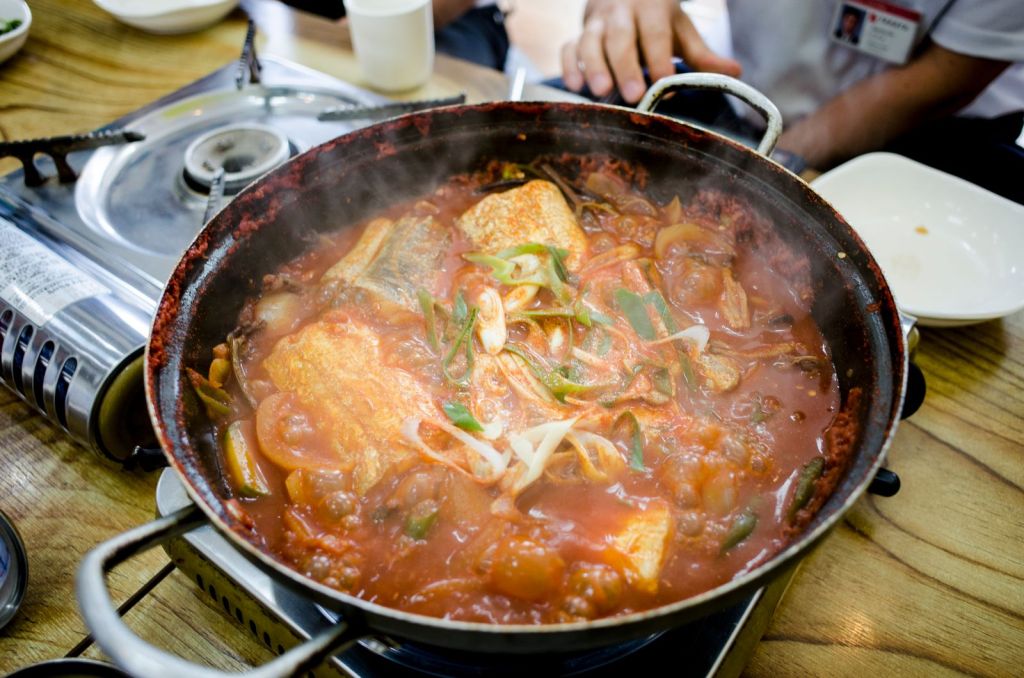
Agujjim (아구찜, also spelled agwi-jjim) is spicy braised monkfish piled high with soybean sprouts and minari, all coated in a thick, glossy red sauce. The dish is famously linked to the port city of Masan, where it was first made with dried monkfish. Today it is a favorite for sharing with friends and a drink. The secret is the sauce – a punchy mix of gochugaru, garlic and broth, thickened with starch so it clings to every sprout.
Agujjim Sauce at a Glance
What it is
- A thick, spicy chili-garlic braising sauce for monkfish and bean sprouts
Main ingredients
- Gochugaru, garlic, soy sauce, fish sauce, cooking wine, sugar, anchovy-kelp stock, potato starch slurry
Taste
- Hot, garlicky and savory with a silky, gravy-like texture
Main uses
- Agujjim, haemul-jjim (seafood braise), cod or squid braises, fried rice finish
What is Agujjim Sauce Made Of?
Unlike many Korean red sauces, agujjim sauce usually leans on gochugaru rather than gochujang, which gives it a brighter, cleaner heat. Garlic is used generously, and aekjeot (fish sauce) or soy sauce provides salt and depth. At the end, a potato or corn starch slurry thickens the braising liquid into a glossy coating. Variations:
- Masan style: made with semi-dried monkfish for a chewier texture.
- Fresh monkfish style: the softer, more common version in Seoul restaurants.
- Haemul agujjim: monkfish plus shrimp, squid, mussels and sea squirt.
- Mild version: less chili and a touch more sugar for spice-sensitive eaters.
What Does Agujjim Sauce Taste Like?
Expect strong heat up front, followed by lots of garlic and a savory seafood flavor. The starch makes the sauce smooth and thick, so it tastes richer than a soup. Crunchy bean sprouts and fragrant minari balance the spice, while the monkfish is mild, firm and slightly sweet – often compared to lobster.
Popular Korean Dishes That Use Agujjim Sauce
Agujjim
Braised monkfish with a mountain of bean sprouts and minari.
Haemul-jjim
The same style of braise made with mixed seafood like crab, shrimp and octopus.
Agu-tang
A spicy monkfish soup – similar seasoning but more broth and no starch.
Agujjim Bokkeumbap
Fried rice made in the leftover sauce with seaweed flakes and sesame oil.
Easy Agujjim Recipe (Serves 3)
Ingredients
- 800 g (1.8 lb) monkfish, cleaned and cut into chunks (or firm cod/pollock pieces)
- 400 g (14 oz) soybean sprouts, rinsed
- 1 handful minari or watercress, 2 green onions
- 1 1/2 cups anchovy-kelp stock
- 2 tbsp potato starch mixed with 4 tbsp water
- 1 tsp sesame oil, sesame seeds
Agujjim Sauce
- 4 tbsp gochugaru
- 2 tbsp minced garlic, 1/2 tsp minced ginger
- 2 tbsp soy sauce, 1 tbsp fish sauce
- 2 tbsp cooking wine, 1 tbsp sugar, 1/4 tsp black pepper
Instructions
- Mix the sauce ingredients and let them sit 10 minutes so the chili blooms.
- Rinse the fish, then blanch it in boiling water for 1 minute to remove impurities. Drain.
- In a wide pan, bring the stock to a boil. Add the fish and half the sauce, cover and simmer 7–8 minutes until the fish is opaque and flakes easily.
- Pile the bean sprouts on top, add the remaining sauce, cover and cook 4–5 minutes. Toss gently so the sprouts are coated.
- Stir the starch slurry and pour it in a little at a time while stirring, until the sauce turns thick and glossy.
- Add the minari and green onion, toss for 30 seconds, then finish with sesame oil and sesame seeds. Serve with rice.
Tip: Do not overcook the bean sprouts or they lose their crunch – and keep the lid on while they steam to avoid a raw, beany smell.
Where to Buy Agujjim Sauce Ingredients
Monkfish is sold at many fish counters and Korean markets (often frozen in chunks). Gochugaru and fish sauce are easy to find online.
United States
As an Amazon Associate, I earn from qualifying purchases.
Amazon
Search gochugaru on Amazon
Search Korean fish sauce on Amazon
H-Mart
Search monkfish on H-Mart
Canada
Europe
Search gochugaru on Amazon.co.uk
How to Store Agujjim Sauce
The mixed sauce (without starch) keeps about 2 weeks in a sealed jar in the fridge or 2 months frozen. Cooked agujjim is best eaten right away because the sprouts soften; leftovers keep 1–2 days refrigerated and should be reheated until piping hot.
Agujjim Sauce FAQ
What fish can replace monkfish?
Any firm white fish such as cod, pollock or halibut works. Squid and shrimp are also good additions.
Is agujjim very spicy?
Restaurant agujjim is quite spicy. At home, start with 2 tbsp gochugaru and add more to taste.
Why is starch added to agujjim?
The starch turns the thin braising liquid into a thick sauce that coats the bean sprouts and fish instead of pooling at the bottom.
Agujjim vs agwi-jjim – which is correct?
Agwi is the standard Korean word for monkfish, but agu is the everyday spelling you will see on most restaurant signs. Both refer to the same dish.
Conclusion
Agujjim sauce is simple to mix but delivers one of Korea’s boldest seafood dishes: fiery, garlicky and full of crunchy sprouts. Try it with monkfish or cod, and save some sauce for fried rice. For a soupier spicy fish dish, see our dadaegi and maeuntang guide.


Leave a Reply