Introduction
Ssamjang (쌈장) is a traditional Korean dipping sauce commonly served with Korean barbecue. It is made by mixing fermented soybean paste (doenjang), gochujang (Korean chili paste), garlic, sesame oil, and other seasonings. Ssamjang has a rich, savory flavor with a slightly spicy and nutty taste that pairs perfectly with grilled meat.
Ssamjang at a Glance
- What it is: a thick Korean dipping and wrapping sauce
- Main ingredients: doenjang, gochujang, garlic, sesame oil and sesame seeds
- Taste: savory and nutty with deep umami and mild heat
- Used in: Korean BBQ, lettuce wraps (ssam) and as a dip for fresh vegetables
What is Ssamjang Made Of?
Ssamjang is typically made with a combination of fermented soybean paste (doenjang) and gochujang. Garlic, sesame oil, sugar, green onions, and sesame seeds are often added to enhance the flavor. The result is a thick and flavorful dipping sauce widely used in Korean cuisine.
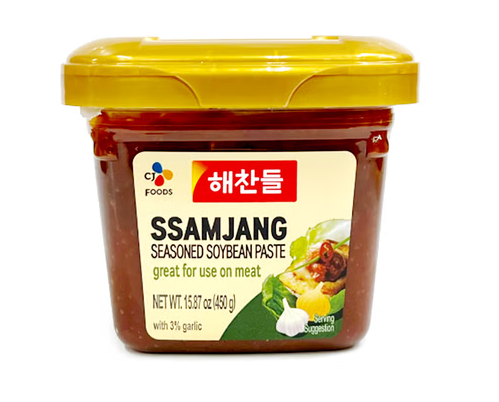
Ssamjang is sold ready-made in tubs, but it is also very easy to mix at home, which lets you adjust the balance of salty, sweet and spicy.
What Does Ssamjang Taste Like?
Ssamjang has a strong umami flavor from fermented soybean paste and a mild spiciness from gochujang. It also has a slightly nutty aroma from sesame oil and sesame seeds. The flavor is bold, savory, and slightly spicy.
How Koreans Use Ssamjang
In Korean cuisine, ssamjang is most commonly used as a dipping sauce for grilled meat. It is also used in lettuce wraps called “ssam,” where grilled meat, rice, and vegetables are wrapped in lettuce or perilla leaves.
Popular Korean Dishes That Use Ssamjang
Korean BBQ (Samgyeopsal)
Samgyeopsal is grilled pork belly that is commonly eaten with lettuce wraps. Ssamjang is added to the wrap to enhance the flavor of the meat.
Ssam (Korean Lettuce Wraps)
Ssam is a Korean dish where grilled meat, rice, and vegetables are wrapped in lettuce or perilla leaves. Ssamjang is usually spread inside the wrap. The name ssamjang literally means “sauce for ssam.”
Fresh Vegetable Dip
Raw cucumber sticks, carrot sticks and mild green chili peppers dipped in ssamjang are a simple and popular Korean side.
Easy Homemade Ssamjang Recipe (Serves 4)
Homemade ssamjang takes about 5 minutes and makes roughly 1/3 cup, enough for a Korean BBQ night for four.
Ingredients
- 2 tbsp doenjang
- 1 tbsp gochujang
- 1 tsp minced garlic
- 1 tsp honey or sugar
- 1 tsp sesame oil
- 1 tbsp finely chopped green onion
- 1 tsp toasted sesame seeds
- 1 tbsp finely chopped onion (optional)
Instructions
- Combine the pastes. In a small bowl, mix the doenjang and gochujang until smooth.
- Add the seasonings. Stir in the garlic, honey or sugar, and sesame oil.
- Finish. Fold in the green onion, onion (if using) and sesame seeds.
- Taste. Add a little more honey if it is too salty, or more gochujang if you want more heat. Loosen with a teaspoon of water if it is very thick.
Tip: Doenjang brands vary a lot in saltiness, so start with the amounts above and adjust after tasting.
Where to Buy Ssamjang
Ready-made ssamjang is sold in tubs in Korean grocery stores, usually next to the doenjang and gochujang.
United States
As an Amazon Associate, I earn from qualifying purchases.
Amazon
https://www.amazon.com/s?k=ssamjang
H-Mart
https://www.hmart.com/search?type=product&q=ssamjang
Weee! (online Asian grocery store)
https://www.sayweee.com
Canada
Amazon Canada
https://www.amazon.ca/s?k=ssamjang
H-Mart Canada
https://www.hmart.ca
Europe
Amazon UK
https://www.amazon.co.uk/s?k=ssamjang
How to Store Ssamjang
Store-bought ssamjang should be stored in the refrigerator after opening. Because it contains fermented ingredients, it can last for several months when properly sealed. Always use a clean, dry spoon.
Homemade ssamjang contains fresh garlic and green onion, so keep it in a sealed container in the fridge and use it within about a week.
Ssamjang FAQ
Is ssamjang spicy?
Ssamjang is usually mildly spicy because it contains gochujang. However, the flavor is balanced with fermented soybean paste and sesame oil, so it is not as spicy as pure chili paste.
What is the difference between ssamjang and gochujang?
Gochujang is a fermented chili paste used as a cooking base. Ssamjang is a ready-to-eat sauce that combines gochujang with doenjang and seasonings, so it is saltier, more savory and less spicy.
What can I eat with ssamjang besides Korean BBQ?
Try it with raw vegetables, on rice in lettuce wraps, with grilled chicken or tofu, or stirred into a bowl of bibimbap. For raw seafood, Koreans usually choose chogochujang instead.
Can I use miso instead of doenjang to make ssamjang?
Yes, in a pinch. Miso is usually milder and sweeter than doenjang, so the ssamjang will taste lighter; a darker miso gets closer to the real thing.
Conclusion
Ssamjang is the savory, slightly spicy sauce that brings Korean BBQ and lettuce wraps together. Buy a tub or mix your own in five minutes with the recipe above. To understand its two main ingredients, read our guides to doenjang and gochujang.


Leave a Reply