Introduction
Mu-mallaengi (무말랭이) is Korean radish that has been cut into strips and dried, traditionally under the autumn sun. Drying concentrates the radish’s natural sweetness and gives it a wonderfully chewy, crunchy texture once rehydrated. Its best-known use is mu-mallaengi muchim, a sweet-spicy banchan that keeps for weeks in the fridge – a little like a chewy cousin of kkakdugi. You’ll find it in bags in the dried-goods aisle of Korean markets.
Mu-mallaengi at a Glance
What it is
- Dried strips of Korean radish (mu)
Main ingredients
- 100% Korean radish, cut and dried
Taste
- Sweet and mildly earthy, with a chewy-crunchy bite
Main uses
- Mu-mallaengi muchim, mu-mallaengi kimchi, radish tea, stews and braises
What is Mu-mallaengi Made Of?
It is simply Korean radish, cut into thick matchsticks or strips and dried until leathery and pale tan. Nothing is usually added. Types you may see:
- Sun-dried strips: the traditional style, slightly darker and sweeter.
- Machine-dried strips: paler and more uniform.
- Thin shreds: rehydrate quickly, good for salads and stir-fries.
- Roasted radish (for tea): dried and roasted pieces for brewing mu-cha.
What Does Mu-mallaengi Taste Like?
Drying removes most of the radish’s sharp bite and leaves a concentrated, gentle sweetness. Once soaked, the strips become chewy and springy with a satisfying crunch – a texture fresh radish can’t give. They soak up seasoning well, so in muchim they taste sweet, spicy, savory and a little tangy all at once.
Popular Korean Dishes That Use Mu-mallaengi
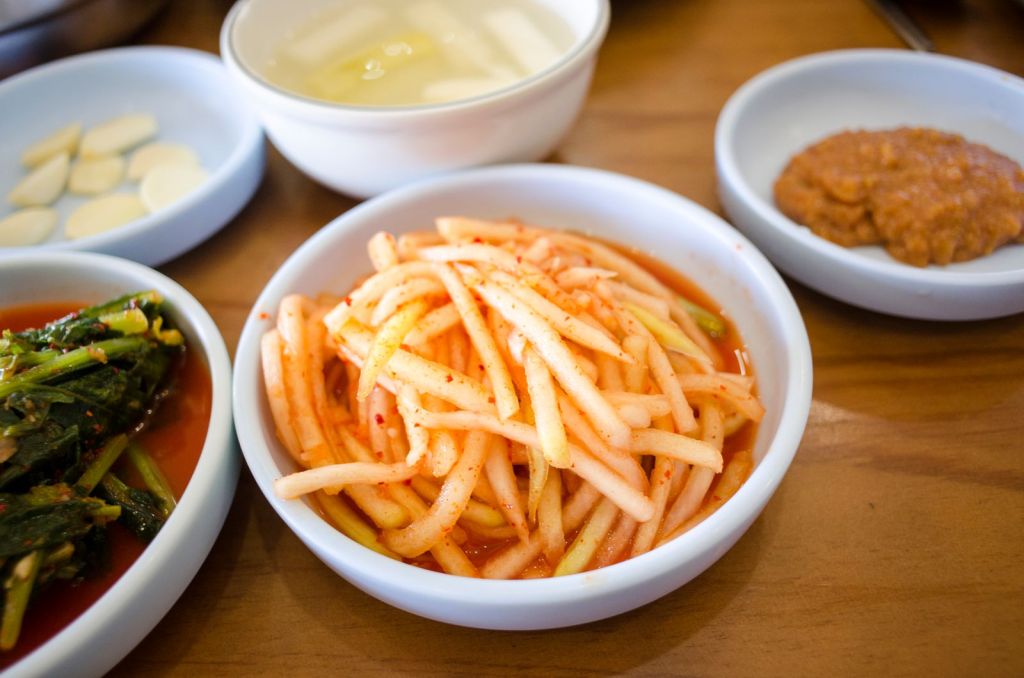
Mu-mallaengi Muchim
Rehydrated strips in a sweet gochugaru dressing. Recipe below.
Mu-mallaengi with Gochu-ip
A traditional version mixed with dried chili pepper leaves for extra flavor.
Bossam Side
The chewy, sweet-spicy strips are a favorite side for boiled pork wraps; see our bossam guide.
Soy-Braised Mu-mallaengi
A non-spicy version simmered gently with soy sauce and syrup.
Easy Mu-mallaengi Muchim Recipe (Serves 4 as a side dish)
Ingredients
- 1 1/2 oz (40 g) mu-mallaengi (dried radish strips)
- 1 scallion, finely chopped
Muchim seasoning
- 2 tbsp gochugaru
- 1 tbsp fish sauce (or 1 1/2 tbsp soy sauce)
- 2 tbsp rice syrup or mulyeot and 1 tsp sugar
- 1 tbsp gochujang (optional, for extra body)
- 1 tsp minced garlic, 1 tsp sesame oil, 1 tsp toasted sesame seeds
Instructions
- Rinse the dried radish 2–3 times, rubbing it between your hands to remove dust.
- Cover with cool water and soak for about 20–30 minutes, just until pliable but still firm. Don’t over-soak or it loses its crunch.
- Drain and squeeze out as much water as possible with your hands or a clean towel.
- Toss the radish with the gochugaru first and rub it in for a minute so the strips turn evenly red.
- Add the remaining seasoning and the scallion and mix well. Taste and adjust sweetness or salt. Serve right away or chill for a few hours for the best flavor.
Tip: Coating the strips with gochugaru before the wet seasonings gives a deeper red color. Wear food-safe gloves when mixing to protect your hands from the chili.
Where to Buy Mu-mallaengi
United States
As an Amazon Associate, I earn from qualifying purchases.
Amazon
Search Korean dried radish on Amazon
H-Mart
Search dried radish on H-Mart
Canada
Search Korean dried radish on Amazon.ca
Europe
Search dried radish strips on Amazon.co.uk
How to Store Mu-mallaengi
Keep unopened dried radish in a cool, dry, dark place. After opening, seal the bag tightly – it absorbs moisture easily – and store it in the fridge or freezer for several months to keep its color and prevent mold. Finished mu-mallaengi muchim keeps in an airtight container in the fridge for about 2–3 weeks.
Mu-mallaengi FAQ
How long should I soak mu-mallaengi?
About 20–30 minutes in cool water, until bendable but still chewy. Thin shreds need less time.
Is mu-mallaengi muchim a kimchi?
It is often called mu-mallaengi kimchi, but it is usually eaten fresh as a seasoned side dish rather than long-fermented.
Why is my dried radish dark?
Sun-dried radish naturally turns tan to light brown. Very dark, damp or moldy pieces should be discarded.
Can I make mu-mallaengi at home?
Yes. Cut radish into thick strips and dry them in a food dehydrator at low heat, or in a sunny, airy spot over several days, until fully dry and leathery.
Conclusion
Mu-mallaengi is a cheap, long-lasting pantry staple that turns into one of the most addictive Korean side dishes. A short soak, a squeeze and a sweet-spicy gochugaru seasoning is all it takes to add chewy crunch to your banchan lineup.


Leave a Reply