Introduction
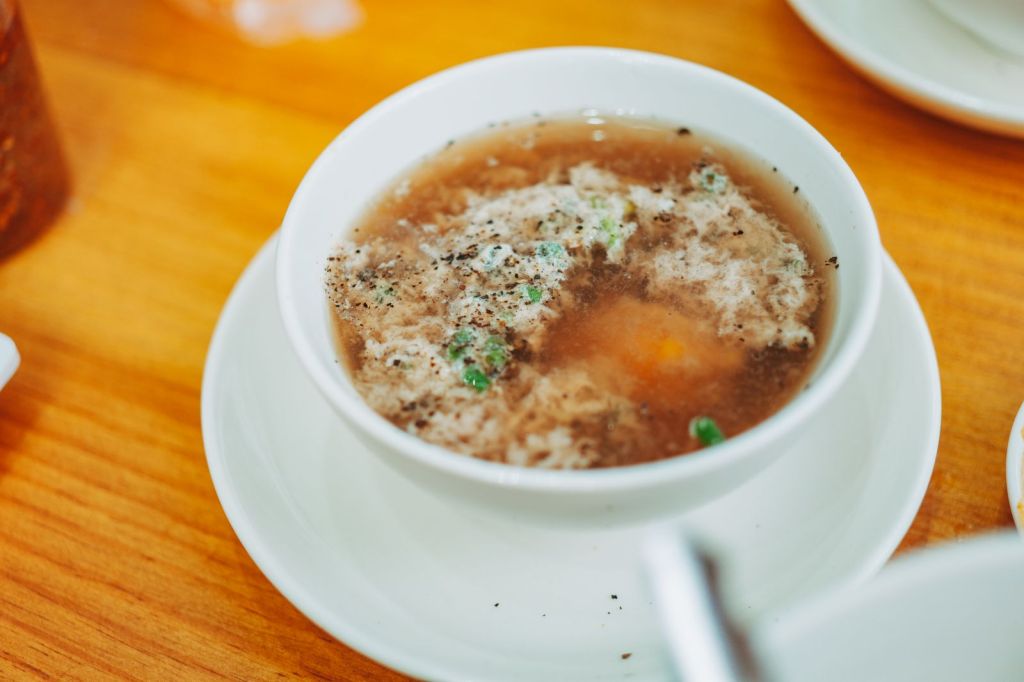
Ulmyeon (울면) is a Korean-Chinese noodle soup served in thick, silky broth full of seafood, vegetables and soft egg ribbons. While jjajangmyeon and spicy jjamppong get most of the attention, ulmyeon is the gentle, non-spicy choice on the Chinese restaurant menu – and a nostalgic favorite for many Koreans. Its broth is thickened with starch, so it clings to the noodles and stays hot for a long time. If you enjoy Korean-Chinese food, also see our yusanseul sauce guide.
Ulmyeon Broth at a Glance
What it is
- A mild, starch-thickened seafood and vegetable broth for Korean-Chinese noodles
Main ingredients
- Chicken or seafood stock, shrimp, squid, clams, vegetables, soy sauce, oyster sauce, potato starch, egg
Taste
- Mild, savory and briny with a thick, velvety texture; not spicy
Main uses
- Ulmyeon noodles, seafood rice soup (japtang-bap style), thick egg soups
What is Ulmyeon Broth Made Of?
The broth starts with a light stock that is seasoned with a little soy sauce, oyster sauce and salt. Shrimp, squid and clams cook briefly in it with sliced cabbage, carrot, mushrooms and onion. A potato starch slurry turns the liquid thick and glossy, and beaten egg is drizzled in at the end to form soft ribbons. Common styles:
- Seafood ulmyeon: the classic, with shrimp, squid and clams.
- Pork ulmyeon: thin strips of pork instead of or alongside seafood.
- Spicy ulmyeon: a modern variation with chili oil or gochugaru.
- Ulmyeon-bap: the same thick soup ladled over rice.
What Does Ulmyeon Broth Taste Like?
Think of a richer, seafood-packed egg drop soup. It is gently salty and full of savory seafood sweetness, with a silky, almost gravy-like body. Because it is not spicy, it is especially popular with children and anyone who wants a soothing bowl of noodles.
Popular Korean Dishes That Use Ulmyeon Broth
Ulmyeon
Thick wheat noodles in the seafood broth – the signature dish.
Ulmyeon-bap
The thick soup served over steamed rice.
Jjamppong (spicy cousin)
Similar seafood and vegetables in a fiery, thin broth instead of a mild thick one.
Easy Ulmyeon Recipe (Serves 2)
Ingredients
- 2 portions fresh thick wheat noodles (jjajangmyeon or udon noodles)
- 100 g (3.5 oz) shrimp, 1/2 small squid (sliced), a handful of clams or mussels
- 1 cup sliced napa cabbage, 1/4 carrot, 1/2 onion, 2 shiitake or wood ear mushrooms
- 1 green onion, 1 tsp minced garlic, 1 tbsp cooking oil
- 2 eggs, lightly beaten
Ulmyeon Broth
- 4 cups chicken stock or anchovy-kelp stock
- 1 tbsp soy sauce, 1 tbsp oyster sauce, salt and white pepper to taste
- 1 tbsp cooking wine
- 3 tbsp potato starch mixed with 6 tbsp cold water
- 1 tsp sesame oil to finish
Instructions
- Heat the oil in a pot and stir-fry the green onion and garlic for 30 seconds. Add the onion, carrot and mushrooms and stir-fry 2 minutes.
- Add the cooking wine and stock and bring to a boil. Add the cabbage and simmer 3 minutes.
- Add the shrimp, squid and clams and cook 2–3 minutes until the shrimp are pink and the clams open (discard any that stay closed). Season with soy sauce, oyster sauce, salt and white pepper.
- Meanwhile, cook the noodles according to the package, rinse briefly and divide between bowls.
- Stir the starch slurry and pour it into the simmering broth while stirring until it thickens. Slowly drizzle in the beaten egg without stirring for 10 seconds, then gently stir to form ribbons.
- Add the sesame oil and ladle the hot broth over the noodles.
Tip: Add the starch slurry gradually – you can always thicken more, but it is hard to thin out. Serve right away, because starch-thickened broth loosens as it sits.
Where to Buy Ulmyeon Broth Ingredients
Fresh or frozen Korean-Chinese noodles and frozen seafood mixes are sold at Korean markets; oyster sauce and potato starch are easy to find online.
United States
As an Amazon Associate, I earn from qualifying purchases.
Amazon
Search Korean potato starch on Amazon
Search Korean jjajangmyeon noodles on Amazon
H-Mart
Search frozen seafood mix on H-Mart
Canada
Search Korean potato starch on Amazon.ca
Europe
Search Korean potato starch on Amazon.co.uk
How to Store Ulmyeon Broth
Ulmyeon is best eaten fresh. If you want to make it ahead, refrigerate the seasoned broth with vegetables and seafood (before adding starch and egg) for up to 1 day, then reheat to a full boil and thicken just before serving. Store noodles separately.
Ulmyeon Broth FAQ
Is ulmyeon spicy?
No. Classic ulmyeon is mild and savory – the non-spicy alternative to jjamppong.
Why is ulmyeon broth so thick?
It is thickened with potato or corn starch, which gives it a silky body and keeps it hot.
What is the difference between ulmyeon and jjamppong?
Both use seafood and vegetables, but jjamppong has a thin, spicy red broth, while ulmyeon has a thick, mild, white broth with egg.
Can I use udon noodles?
Yes. Udon or any thick wheat noodle works well – see our udong guide.
Conclusion
Ulmyeon broth is proof that Korean-Chinese food isn’t all spice and black bean sauce: it is mellow, silky and deeply comforting. Make it on a cold night or when you need a gentle bowl of noodles. For another Korean-Chinese favorite with a silky starch-thickened sauce, try our mapa-dubu sauce guide.


Leave a Reply